Home Blog Page 524

Chamber of Deputies cleared to vote next month on controversial judicial reform

1
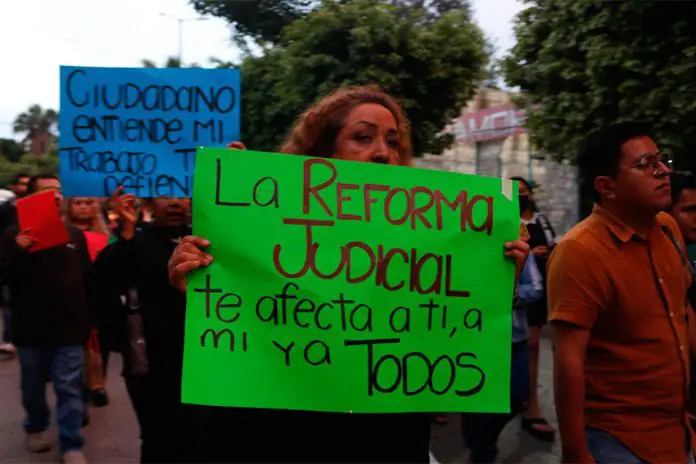
Mexican judges in Guerrero, Mexico, at a march protesting a controversial judicial reform bill, holding signs in Spanish
As Congress considers constitutional changes to Mexico's judicial system, legislators are debating the exact requirements of a Senate supermajority. (Dassaev Téllez Adame/Cuartoscuro)

One small step for President López Obrador’s judicial reform proposal, one sizable leap backward for the Mexican peso.

The Constitutional Points Committee of Mexico’s lower house of Congress approved a proposed judicial reform on Monday, paving the way for all 500 recently-elected deputies to vote on the constitutional bill once they assume their positions on Sept. 1.
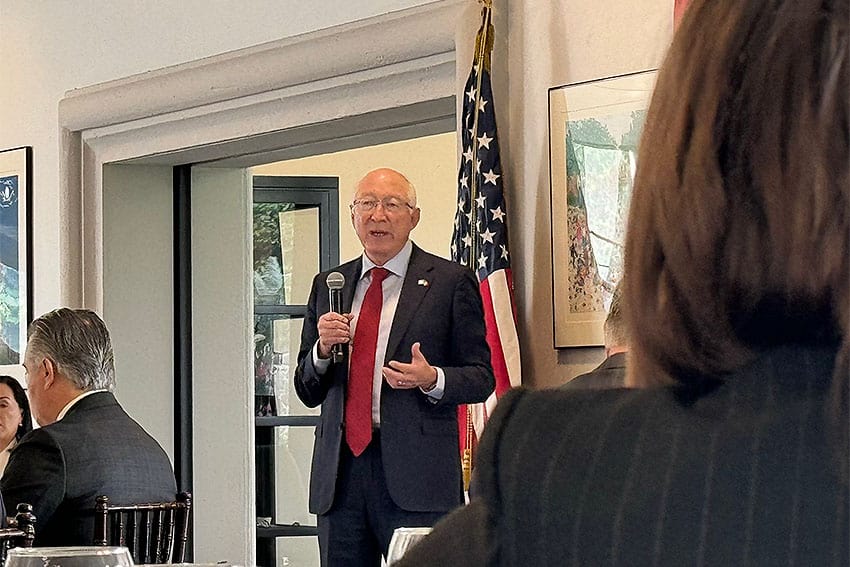
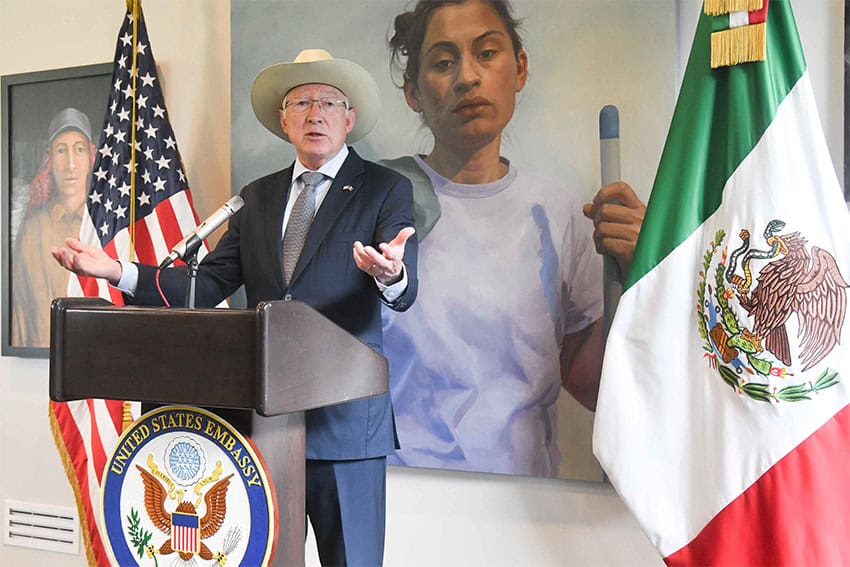
US Ambassador to Mexico Ken Salazar in a suit holding a microphone talking to a room of people.
The proposed judicial reforms have been a source of anxiety not only for some Mexicans but for US leaders and investors. US Ambassador to Mexico Ken Salazar, seen here, called the reform bill’s provision for direct popular vote of judges “a major risk to the functioning of Mexico’s democracy.” (Ken Salazar/X)

Meanwhile, the peso — which has taken a battering since Claudia Sheinbaum and the ruling Morena party won comprehensive election victories on June 2 — depreciated close to 2% against the US dollar on Tuesday to trade at 19.78 to the greenback at 4 p.m. Mexico City time.

Gabriela Siller, director of economic analysis at Banco Base, said on X that the depreciation was due to the “enormous risk” the controversial judicial reform proposal represents.

Causing the most concern both in Mexico and abroad is the bill’s provision that would allow Mexican citizens to directly elect thousands of judges, including the nation’s 11 Supreme Court justices.

United States Ambassador to Mexico Ken Salazar asserted last week that the “popular direct election of judges is a major risk to the functioning of Mexico’s democracy.”

President Andrés Manuel López Obrador (AMLO) responded by calling his remarks “unfortunate” and “imprudent,” and putting relations with the U.S. Embassy in Mexico “on pause.”

Meanwhile, members of the Constitutional Points Committee approved a modified version of the reform bill that AMLO sent to Congress in February. Deputies with the ruling Morena party and its allies voted in favor of the proposal, outnumbering the opposition lawmakers who voted against it.

The committee made one additional modification to the proposal, adding a “jueces sin rostro,” or “faceless judges” clause, which aims to protect the identity — and therefore the safety — of judges presiding over cases involving organized crime.

The bill is expected to pass the Chamber of Deputies as Morena and its allies — the Labor Party and the Ecological Green Party of Mexico — will have a two-thirds majority when the new Congress convenes next week.

In the Senate, the Morena-led coalition will be just short of the supermajority required to pass constitutional reform proposals on its own, but finding a few extra votes to get the judicial reform proposal through Congress is considered achievable if not a fait accompli.

The likelihood that the judicial reform proposal and other controversial constitutional bills will pass Congress has generated major concern among investors — and even prompted claims that Mexico could squander its nearshoring opportunity.

Opponents of the judicial reform proposal say that the direct election of judges from candidates nominated by the sitting president, the Congress and the judiciary itself threatens the independence of Mexico’s justice system. Judicial elections, in some cases, would coincide with political elections, a situation that critics believe could lead to politicization of the judiciary.

On Tuesday, a bipartisan group of United States senators issued a statement in which they said they were “deeply concerned that the proposed judicial reforms in Mexico would undermine the independence and transparency of the country’s judiciary, jeopardizing critical economic and security interests shared by our two nations.”

If the proposal is approved, all 11 justices of the Supreme Court — which has handed down rulings against the current government’s policies and projects — could be replaced next year, potentially delivering a majority bench that is sympathetic to the agenda of incoming president Claudia Sheinbaum.

López Obrador, a frequent critic of the nation’s judges, argues that the reform is necessary to eradicate corruption within the judiciary. He would happily accept the approval of his proposal as a parting gift before he leaves office on Oct. 1 and retires to his ranch in Chiapas.

Paulina Rubio, a deputy with the National Action Party, expressed concern that the next federal government could condition the continuation of its social programs on support for judicial candidates put forward by Sheinbaum.

“I’m already imagining the servants of the nation intimidating the people [who benefit from] the social programs, [telling them] that if they don’t go out to vote for the president’s candidates, they’ll take away the social programs — that’s the problem,” Rubio said, referring to low-ranking, on-the-ground government officials who assist the delivery of multiple welfare and employment schemes that Mexico’s current government has instituted in the last six years.
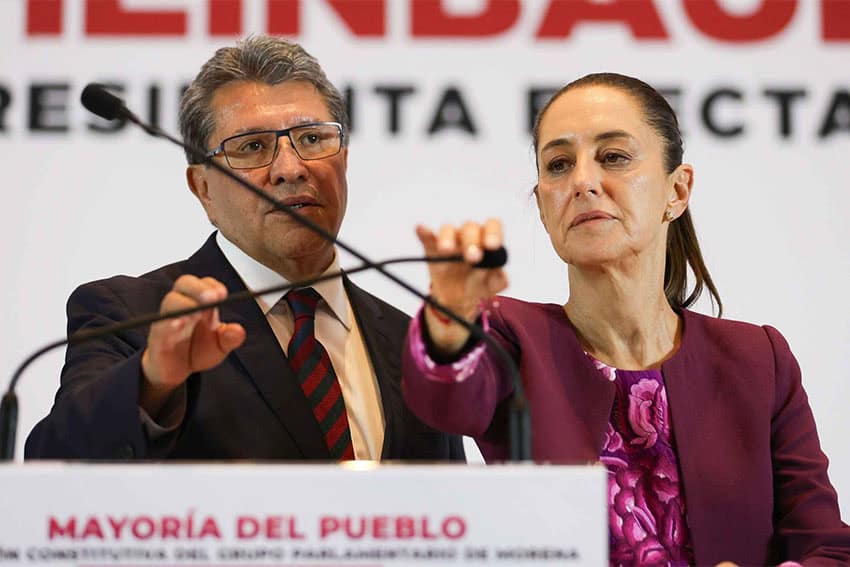
Claudia Sheinbaum at a podium with a grim expression
President-elect Claudia Sheinbaum, right, seen here at a private meeting on Tuesday with the newly elected Deputies in the lower house of Congress, has expressed her approval of the judicial reform and sought to assure the public that the choosing of judges would be “transparent.” (Mario Jasso/Cuartoscuro)

The Morena Party and AMLO say such programs are bringing about Mexico’s “fourth transformation” — one that is lifting up Mexico’s most economically disadvantaged.

Sheinbaum — who is committed to continuing AMLO’s policies and building “the second story” of the so-called fourth transformation that he initiated — said last week that the process to select judicial candidates would be “very transparent” and that prospective judges would have the required experience to do the job.

“The president will no longer have a hand in appointing justices,” she said.

“… It’s a very complete process,” Sheinbaum said, referring to both candidate selection and judicial elections.

“It’s new, but it has nothing to do with this idea … that [judges] are now going to be more aligned to the president. … It’s a complete proposal that guarantees autonomy [for the judiciary],” she said.

With reports from Reforma and El Financiero
The American Chamber of Commerce of Mexico weighs in on AMLO’s judicial reform

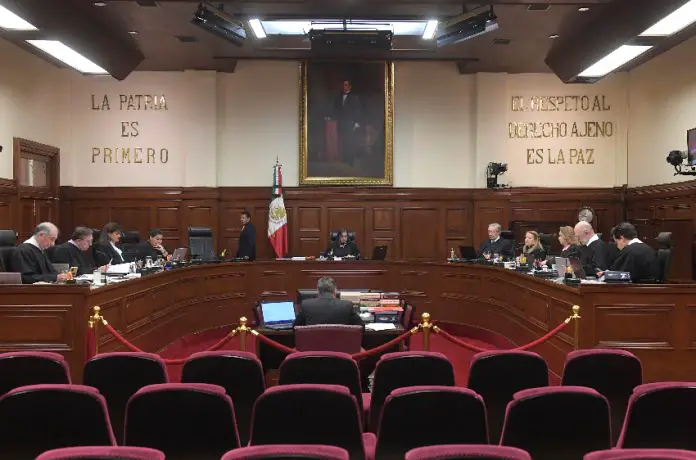
The Supreme Court in session
. (Cuartoscuro)

The following statement on President López Obrador’s proposed judicial reform in Mexico was published by the American Chamber of Commerce of Mexico (AmCham) on Monday.

The American Chamber of Commerce of Mexico (AmCham) has been a pillar of trust in Mexico for more than a century. Since our founding in 1917, we have been a proactive and committed community dedicated to generating shared well-being in Mexico.

Examples of this are our pioneering actions such as the historic job board, the reconstruction of Mexico City after the 1985 earthquake, the management to bring COVID-19 vaccines, or more recently, the coordination of support to rebuild Acapulco accompanied by the working mechanism with the governors of the south-southeast.

Our joint history with 19 administrations in the United States and 22 in Mexico has taught us that in dialogue, analysis, and finding common ground amidst differences lies the key to overcoming any challenge. In recent years, this lesson has been no different, and today, AmCham continues to trust in Mexico.

In the most recent quarter of 2024, more than 97% of foreign direct investment (FDI) was reinvestment of profits, and more than 44% came from American companies. Our companies — American, Mexican, and international; large, medium, and small — are invested in Mexico and provide formal employment to more than 10 million Mexicans.

In every democracy, the path to strengthening the rule of law must be evaluated, debated, and enriched. When multiple voices rise in a chorus of warnings, it is wise to pay attention. The convergence of diverse opinions on a risk is not mere coincidence but an echo of shared experiences and knowledge. Our Chamber has thoroughly analyzed the judicial reform and shared recommendations with the current government, the transition government, and representatives of Congress.

We agree with Ambassador Ken Salazar on the vision of Mexico-U.S. integration that transforms the region into an example of economic prosperity. This vision requires legal certainty, judicial transparency, and clarity in the application of laws.

As companies invested in Mexico and generating millions of jobs for past and future decades, we see risks in the independence of the judiciary in the judicial reform, and a potential delay in the professionalization of specialized justice, an increase in costs, a reduction in the effectiveness of the judicial system, and the generation of uncertainty for investment.

Mexico is a country that favors investment and the growth of companies. In light of this concern expressed by the private sector, we call for continued dialogue to carefully evaluate the potential consequences of this and other reforms, and we reaffirm our commitment to collaborating in the creation of public policies that strengthen legal security and Mexico’s competitiveness.

**It is important to remember Annex 23-A of the USMCA, where Mexico committed to having independent labor courts, and Chapter 31 on the use of alternative dispute resolution mechanisms. These mechanisms are essential for efficiently resolving business conflicts and reducing the workload of the judicial system. The proposed changes could compromise the fulfillment of the USMCA.

Disclaimer: The views expressed in this article are solely those of the author and do not necessarily reflect the views of Mexico News Daily, its owner or its employees.

AMLO says Mexico’s relationship with US and Canadian embassies ‘on pause’

21
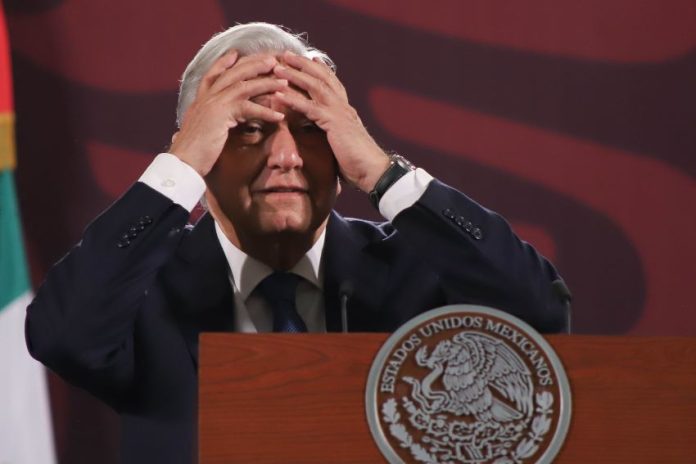
President Lopez Obrador of Mexico standing at a podium at a press conference with his hands on his forehead in a distressed gesture
President López Obrador responds to reporters Tuesday morning after questions regarding a nationwide work stoppage by judges and other workers in the judicial system in protest of his reform bill. (Daniel Augusto/Cuartoscuro)

The Mexican government’s relationship with the United States Embassy in Mexico is “on pause,” President Andrés Manuel López Obrador said Tuesday, five days after U.S. Ambassador Ken Salazar voiced concerns about his proposed judicial reform.

López Obrador also told reporters at his morning press conference that the government was pausing ties with the Canadian Embassy in light of the Canadian ambassador’s remarks about the same proposal.

U.S. Ambassador to Mexico Ken Salazar speaks at a podium
Ken Salazar said Thursday that the direct election of judges would put Mexico’s democracy at risk. (Mario Jasso/Cuartoscuro)

“How are we going to allow [Salazar] to opine that what we’re doing is wrong,” he said.

“We’re not going to tell him to leave the country, we’re not doing that, but we do have to read the constitution, which is like reading him the riot act,” López Obrador said.

He said that the government’s relationship with Salazar is “good, but on pause,” explaining that the suspension began immediately after the ambassador spoke out against his judicial reform proposal, which could be passed by Congress as soon as next month.

López Obrador — who would like to see the proposal passed before he leaves office on Oct. 1 — also said that Mexico’s relationship with the U.S. Embassy in Mexico is on pause, but the broader bilateral relation “continues.”

Nevertheless, he made it clear that he believes that Salazar was speaking on behalf of the U.S. government, not just himself, when he released his statement on the judicial reform last Thursday. López Obrador also asserted that the United States and Canada acted in concert.

In his statement last Thursday, Salazar said he believed that the “popular direct election of judges is a major risk to the functioning of Mexico’s democracy.”

“… I also think the debate over the direct election of judges … as well as the fierce politics if the elections for judges in 2025 and 2027 were to be approved, will threaten the historic trade relationship we have built, which relies on investors’ confidence in Mexico’s legal framework,” the ambassador added.

“Direct elections would also make it easier for cartels and other bad actors to take advantage of politically motivated and inexperienced judges,” Salazar said.

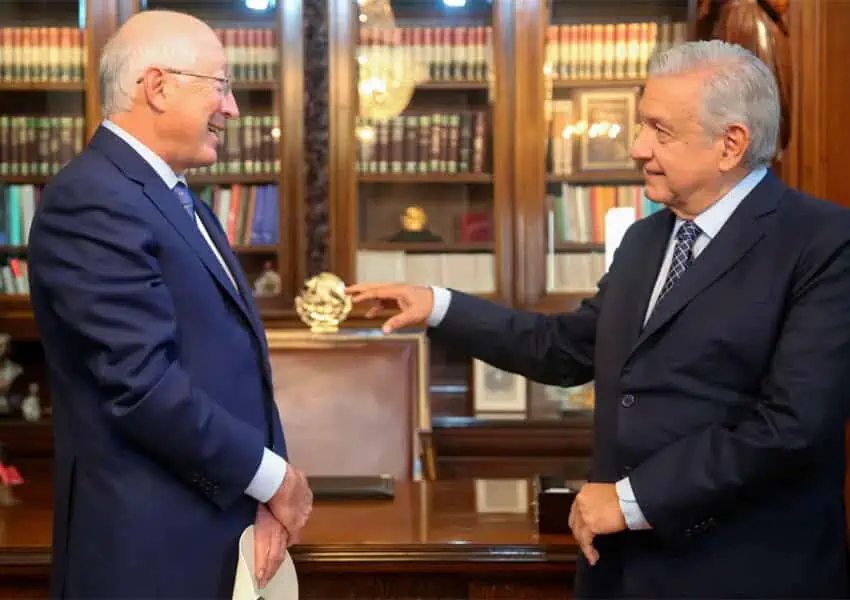
U.S. Ambassador Ken Salazar with AMLO
Ambassador Salazar and AMLO have had a mostly friendly relationship. (Lopezobrador.org.mx)

For his part Canadian Ambassador Graeme Clarke said in an interview published late last week that Canadian investors were concerned about the judicial reform proposal.

López Obrador announced last Friday that the government was sending diplomatic notes to both the United States and Canada in light of the ambassadors’ remarks.

Salazar subsequently said that “the concerns” he expressed about the direct election of judges were made in the “spirit of collaboration.”

He also said he was willing to engage in dialogue with Mexico’s leaders.

On Monday, López Obrador said that he and the U.S. ambassador — a semi-regular visitor to the National Palace — were going to give each other some “time” before reconvening.

The president claimed that the government of Canada acted in an “embarrassing” way by joining the United States’ protest against the judicial reform proposal.

Juan Ramón de la Fuente, Claudia Sheinbaum, Mélanie Joly and Graeme Clark
President-elect Claudia Sheinbaum and Canadian Foreign Affairs Minister Mélanie Joly met in late June, accompanied by Sheinbaum’s future foreign affairs minister, Juan Ramón de la Fuente (left) and Canadian Ambassador Graeme C. Clark (right). (Mélanie Joly/X)

“It looks like an associate state, [they acted] together,” he said.

“They wanted to interfere in matters that only correspond to Mexicans,” López Obrador added.

He said that the pause in the relationships with both the United States and Canadian embassies would continue until representatives of the two countries learned to respect the sovereignty of Mexico — which Salazar has stressed he does, including in an X post early Tuesday afternoon.

“We’re not going to give them advice nor say that this is good or this is bad,” López Obrador said, even though he has been critical of the U.S. government and Congress for not approving greater funding for regional development programs that could help reduce migration, and of the U.S. embargo against Cuba.

“We want them to be respectful — for there to be a reciprocal relationship with regard for respect for sovereignty,” the president said.

Opponents of the judicial reform proposal say that the direct election of judges from candidates nominated by the sitting president, the Congress and the judiciary itself threatens the independence of Mexico’s justice system. Judicial elections, in some cases, would coincide with political elections, a situation that critics believe could lead to politicization of the judiciary.

Members of the Supreme Court at an event on judicial independence
Members of Mexico’s Supreme Court at an international forum on judicial independence earlier this month. (Cuartoscuro)

If the proposal is approved, all 11 justices of the Supreme Court — which has handed down rulings against the current government’s policies and projects — could be replaced next year.

If a majority of justices sympathetic to the agenda of incoming president Claudia Sheinbaum are elected to the Supreme Court, Sheinbaum’s capacity to enact — and maintain — policies that face legal challenges could be enhanced.

Approval of the judicial reform proposal is likely given that the ruling Morena party and its allies will have a supermajority in the lower house of Congress and a strong majority in the Senate.

The last straw?

Beyond Salazar’s statement about the proposed judicial reform, López Obrador has been irked by the United States’ funding of organizations he regards as opponents of his government.

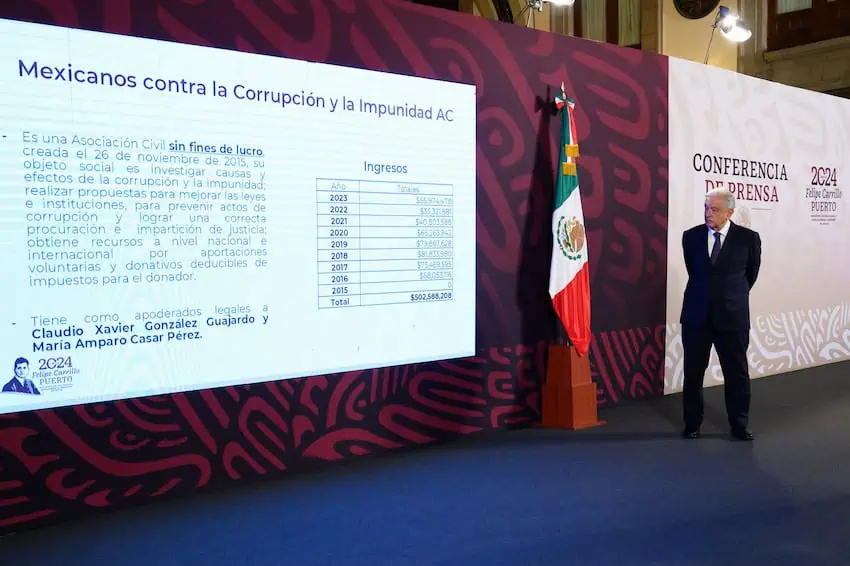
Earlier this month, he once again railed against the United States government’s funding — via the U.S. Embassy in Mexico — of Mexicans Against Corruption and Impunity, an anti-graft group that has exposed alleged corruption in his administration.

“It’s outrageous … that a government that is a friend, a neighbor, is financing a group that opposes a legal, legitimate government. What’s that called? Interventionism,” López Obrador said Aug. 14 after announcing that he would send a letter to U.S. President Joe Biden to complain about the issue.

López Obrador looking at financials of MCCI
López Obrador has also criticized the U.S. Embassy for providing funding to various organizations that are critical of his government. (lopezobrador.org.mx)

In light of Salazar’s remarks, the president reiterated that the federal government doesn’t accept “interference” in Mexico’s internal affairs.

“We don’t accept any representative of foreign governments intervening in matters that are solely up to us to resolve,” he said.

The Mexican government has also been less than satisfied with the information the U.S. government has provided about the arrests of alleged Sinaloa Cartel leaders Ismael “El Mayo” Zambada and Joaquín Guzmán López in New Mexico last month.

The Federal Attorney General’s Office said earlier this month that the United States Department of Justice had not provided a range of information it requested about the case.

Mexico News Daily 

Mexico likely to become world’s No. 1 EV exporter to US in 2024

8
Red cars in the air on a robotic assembly line in Mexico
Mexico shipped EVs worth US $3.127 billion to its northern neighbor in the first six months of the year. (IM Imagery/Shutterstock)

Mexico could become the top electric vehicle (EV) exporter to the United States in 2024 after EV shipments surged in the first half of the year, along with revenues.

U.S. Department of Commerce data shows that Mexico shipped EVs worth US $3.127 billion to its northern neighbor in the first six months of the year, an impressive 172% increase in EV export revenue compared to $1.15 billion in the same period of 2023.

BYD executives in suits holding a thick red ribbon they just cut as part of a showroom-opening ceremony
Chinese electric automaker BYD opened its first showrooms in Mexico just over a year ago, but it already has its eye on building plants here as well, a factor that could solidify Mexico’s position as a top revenue generator in the EV market in years to come. (BYD)

Mexico ranked as the second biggest EV exporter to the world’s largest economy between January and June, behind only Germany.

German EV exports to the U.S. increased by a comparatively meager 7.8% in annual terms to reach $3.213 billion, or just $86 million more than Mexico’s revenue.

South Korea was the third biggest EV exporter to the U.S. in the first six months of the year, followed by Japan and Belgium.

The United States imported EVs worth a total of $11.95 billion in the period, a 36.1% year-over-year increase.

If Mexico maintains its strong EV export growth in the second half of 2024 it could finish the year as the top external supplier of electric vehicles to the United States. That would be an additional feather in the cap for Mexico, which dethroned China to become the largest overall exporter to the U.S. in 2023.

Among the automakers that make EVs in Mexico are Audi, BMW and General Motors.


Foreign automakers with plants in Mexico benefit from the United States-Mexico-Canada Agreement, the free trade pact that superseded NAFTA in 2020.

Tesla and BYD — the world’s two top electric vehicle manufacturers — have announced plans to open plants here, but it is unclear when they might open.

Mexico’s EV exports increased more than 18,000% (yes, really!) in just 4 years  

United States data shows that the value of EVs exported to the U.S. from Mexico in 2019 was just $21 million.

Revenue increased slightly to $25 million in 2020 — when the COVID pandemic disrupted auto production — before skyrocketing to $1.732 billion in 2021, a jump of 6,828% in just one year.

The value of Mexico’s EV exports rose to $2.346 billion in 2022, a 35% year-over-year increase, before surging to $3.811 billion in 2023, an annual gain of 62%.

The increase in Mexico’s EV revenue between 2019 and 2023 was a whopping 18,047%.

If the value of Mexico’s EV exports to the U.S. in the second half of 2024 matches that of the first half, revenue will be $6.254 billion.

That figure would represent an increase of almost 30,000% compared to 2019.

The numbers could be even more impressive – and mind-boggling – in the years ahead.

With reports from El Economista 

What does the town of Tepeji del Río have in common with Hollywood?

1
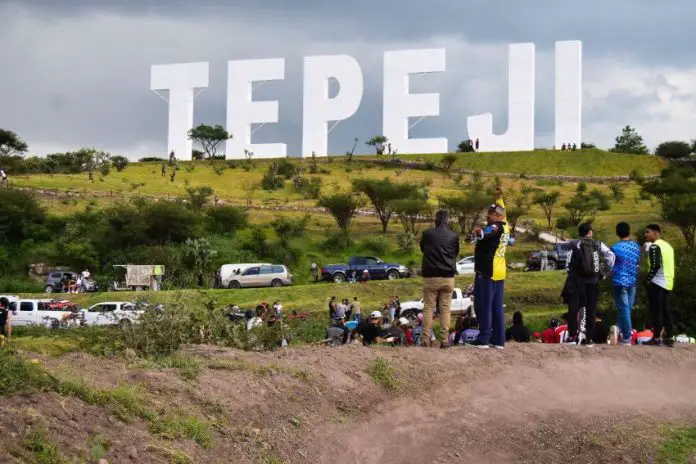
Giant Hollywood-like landmark sign bearing the name Tepeji stands in the hills.
Tepeji's new landmark sign is the Hidalgo municipality's US $278,000 bet on attracting tourists to its historic and recreational offerings. (Francisco Villeda/Cuartoscuro)

Mexico’s little-known Tepeji municipality in central Mexico is far away from the glitz of Los Angeles, but with its newly built landmark sign, it is close to rivaling (in stature anyway) the iconic symbol of Hollywood.

Atop a hill in the town of Palo Grande, located in the municipality of Tepeji del Río, Hidalgo, officials have built the largest landmark sign in Mexico, according to Mayor Salvador Jiménez Calzadilla. 

Hollywood sign in Los Angeles
While iconic, the Hollywood letters aren’t actually the world’s tallest and are now shorter than the Tepeji sign. (Wikimedia Commons)

At 15 meters tall, the sign’s giant white letters — which read “Tepeji” — are taller than the world-famous “Hollywood” letters by 1.3 meters, say Palo Grande officials.

The letters on the Los Angeles Hollywood sign are each 13.7 meters tall (45 feet), according to a report published in 2021 by the Los Angeles Mayor’s Office.

The Tepeji sign is intended to be the “jewel in the crown” of Jiménez’s tourism strategy. The municipality’s mayor expects the 5.5-million-peso (US $278,000) sign to attract visitors.

The México-Querétaro highway, which connects Mexico City to multiple Mexican states, is one of the most traveled highways in central Mexico. However, Jiménez explained, most of the road’s travelers overlook Tepeji as a tourist attraction. 

Landmark sign for the Liwa municipality in the United Arab Emirates standing on flat desert land.
While Tepeji’s landmark sign’s letters are taller than that of the more famous Hollywood sign, the Guinness World Record for tallest landmark sign goes to a municipality in the United Arab Emirates. (Guinness World Records)

Tepeji’s other tourism offerings

Tepeji’s efforts to attract visitors have gone beyond erecting a flashy sign. Officials are also working with Mexico’s National Institute of Anthropology and History (INAH) to renovate and highlight the colonial town’s part of the Camino Real Tierra Adentro (the Royal Inland Road), a UNESCO World Heritage Site.

The trade route — which stretched from Mexico City to Santa Fe, New Mexico, between the mid-16th and 19th centuries — was part of the larger Spanish Intercontinental Royal Route, Spain’s global network of roads and maritime routes. 

Other tourist sites located within the municipality of Tepeji include the Parish of Saint Francis of Assisi, its municipal zócalo (the town square), its craft market and municipal markets, the La Josefina textile museum, the Tepeji Cultural Center’s onsite museum and the 18th-century Santiago Apóstol Church. 

In the future, Jiménez says he envisions building an ecotourism walkway in the area displaying the municipality’s giant letters. 

Despite their massive size, neither Tepeji nor Los Angeles managed the Guinness World Record for the tallest landmark sign. That title currently goes to the oasis of Liwa in the United Arab Emirates (UAE), 150 kilometers south of Abu Dhabi city, according to the Guinness World Records online site. Liwa’s landmark sign’s letters are each 23.59 meters tall. 

The previous record holder was also located in the UAE: the village of Hatta, located near the Oman border, has a landmark sign with letters measuring 19.28 meters tall.

With reports from La Jornada, Milenio and The National News

Mexico in Numbers: Education

1
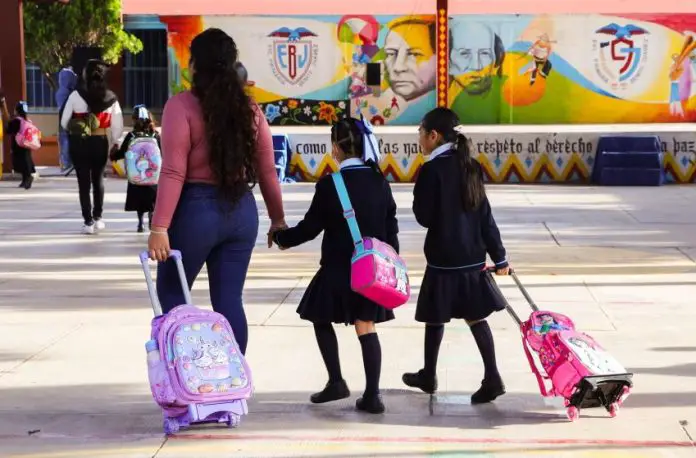
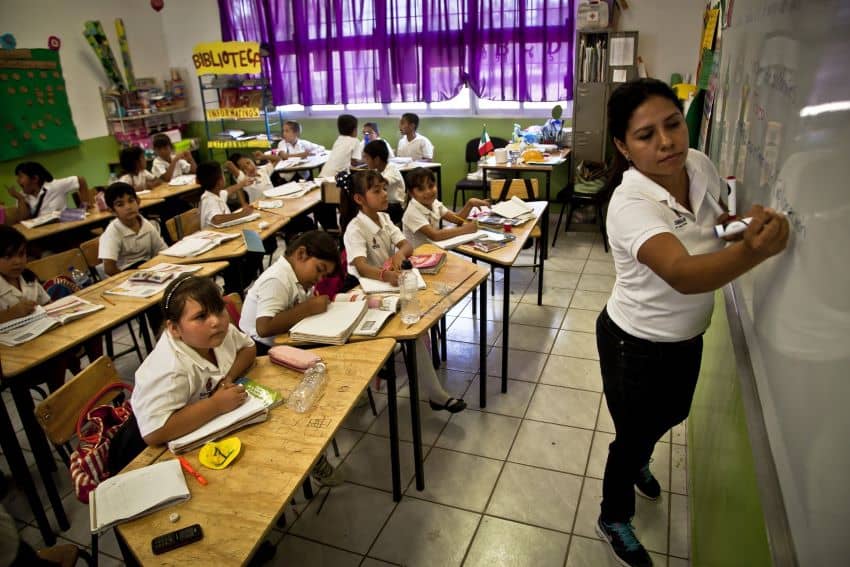
The school year in Mexico runs from Aug. 26, 2024 to July 16, 2025.
The school year in Mexico runs from Aug. 26, 2024 to July 16, 2025. (Carolina Jiménez/Cuartoscuro)

Nearly 24 million students at the basic level — including preschool, primary and secondary school — went back to school in Mexico on Monday in 231,000 schools across the country.

During President Andrés Manuel López Obrador’s morning press conference, Education Minister Leticia Ramírez Amaya wished the students “a great school year,” and encouraged pupils “to socialize, to be with their friends, to learn in an atmosphere of joy and happiness.”

In Mexico, the majority of students attend public schools, with around 21 million enrolled in public primary and secondary schools. (Note Thanun/Unsplash)

According to the school calendar, the new school cycle runs from Aug. 26, 2024 to July 16, 2025. 

How many students attend public versus private schools?

In Mexico, the majority of students attend public schools, with just over 21 million enrolled in public primary and secondary schools in 2024 according to the newspaper El Economista.

In contrast, just over 2 million students attend private schools. 

How have school costs increased this year?

Parents of students must pay for school supplies and uniforms as well as tuition and re-enrollment fees, all of which have risen in cost due to inflation. According to a report by the newspaper El Economista, the education sector saw an annual inflation rate of 5.24% in the first half of August 2024. 

The newspaper’s survey found that in Mexico City, the average cost of primary school supplies could range between 1,500 and 2,500 pesos (US $76 and $127). Meanwhile, the price of school supplies for secondary school ranges between 2,000 and 3,000 pesos (US $101 and $152).   

These estimates do not consider tuition fees for private schools, uniforms or textbooks (in private schools, additional books are used in addition to those universally provided by the SEP).  

Considering all expenses associated with the new school year, the National Alliance of Small Business Owners (ANPEC) reported that the return to school for each student will cost an average of 9,689 pesos (US $492).

A teacher stands in front of a classroom of students in a Mexican school.
19.2% of Mexico’s population, which represents 24.4 million people, have an educational deficit, meaning their educational outcome is lower than what the curriculum intends. (Rashide Frias/Cuartoscuro)

How many public schools lack basic infrastructure?

According to Aprender Parejo, a study conducted by Tecnológico de Monterrey (TEC), four out of 10 public schools (offering basic education) lack one of the following essential services: drinking water, electricity, sinks or private toilets. 

Sixty-five out of 100 schools (offering basic education) lack an internet connection or computers.  

The report reveals that between 2013 and 2024, Mexico spent 451.2 million pesos (US $22.9 billion) on educational infrastructure. Of this figure, 70.2% was allocated to basic education facilities, 7.7% to upper secondary education and 22.1% to higher education. However, it is not clear where and what types of investments were made in public schools. 

“It’s not about making the school pretty, it’s about making it a decent space for learning,” the lead researcher Marco Fernández stressed.

In contrast, only 8% of private schools lack essential services.

Is there an educational deficit in Mexico?

According to data from the National Council for the Evaluation of Social Development Policy (Coneval), 19.2% of Mexico’s population, which represents 24.4 million people, have an educational deficit, meaning their educational outcome is lower than what the curriculum intends.

According to the latest data, the educational gap increased from 19.0% to 19.2% between 2018 and 2020. 

The Coneval said that the entities with the lowest rates of educational deficit are Mexico City (9.5%), México state (14.1%) and Coahuila (14.3%). Meanwhile, the states with the greatest rates of educational deficit include Chiapas (32.5%), Oaxaca (29.6%) and Michoacán (29.4%). 

Moreover, according to an academic study by the Organization for Economic Cooperation and Development (OECD), Mexico ranks 51st overall for its combined scores in math, reading and science, meaning that Mexican students are falling behind their global counterparts in those subjects.

With reports from Animal Político, El Economista, Expansión and Líder Empresarial

Will the Maya Train be completed next month? Local business leaders are dubious

2
A Maya Train station
With only days until the train's supposed inauguration, questions mount about whether the train is “on track.” (Cuartoscuro)

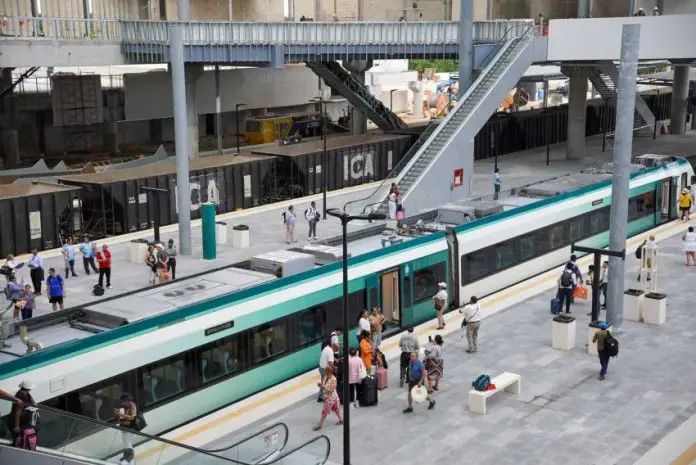
President Andrés Manuel López Obrador is expected to inaugurate the remaining sections of the 1,554-kilometer Maya Train railroad in the state of Quintana Roo in early September, but one local business leader doesn’t anticipate the project being completed until the middle of next year.

With only days until the president’s scheduled visit, questions mount about whether the train is “on track.”

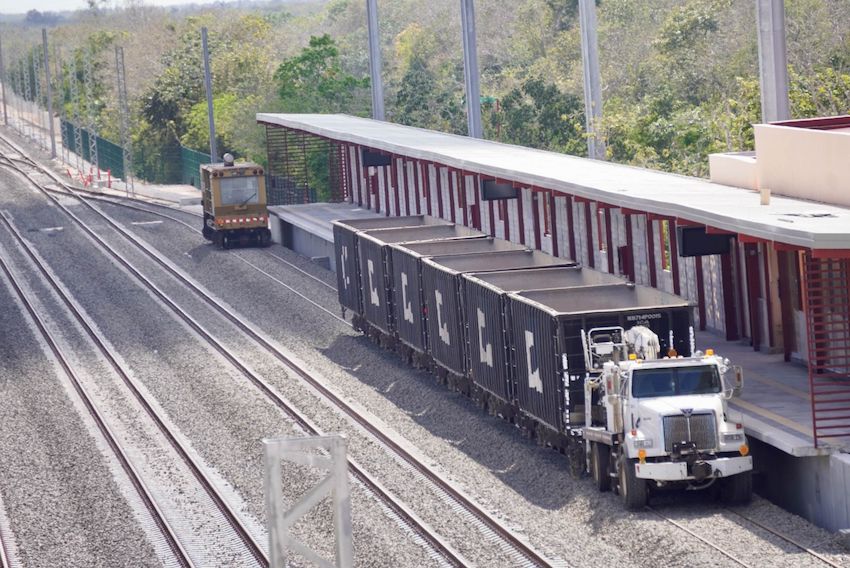
Ten stations of the Maya Train route have yet to open ahead of the train's September completion date.
Ten stations of the Maya Train route have yet to open ahead of the train’s September completion date. (Elizabeth Ruiz/Cuartoscuro)

On Aug. 19, Quintana Roo Governor Mara Lezama confirmed that President López Obrador will be inaugurating the finished project in early September.

“The president will inaugurate all 500 kilometers of the Maya Train in Quintana Roo as well as our two remaining train stations,” Lezama said, adding that her annual governance report would be rescheduled after Sept. 5.

López Obrador recently targeted Sept. 15 as the date the railroad would be completed, hoping the ambitious project would be fully operational before he leaves office on Oct. 1.

That’s unlikely to happen, says businessman Josué Osmani Palomo in an interview with the newspaper El Economista. He predicts the train won’t be fully ready until mid-2025.

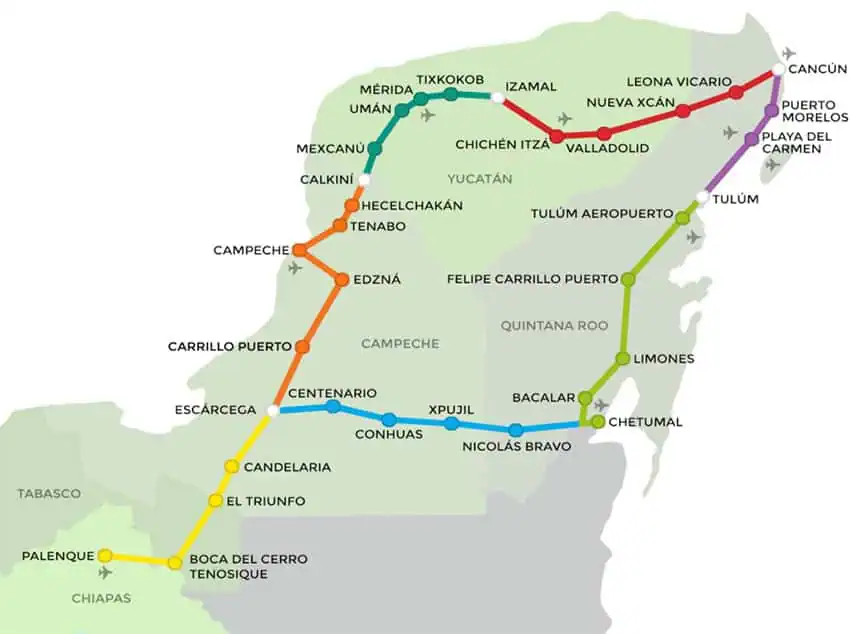
A map showing the planned route of the Maya Train, which forms a circuit around the Yucatán Peninsula.
Three sections of the Maya Train have yet to open: the southern part of section 5 (shown in purple), section 6 (light green) and section 7 (blue). (Tren Maya)

The northern part of section 5 was finished earlier this year, but the southern part of section 5 and sections 6 and 7 of the Maya Train are only about 65-70% complete, Palomo said, and added that the train stations are just 50% ready.

The three sections connect Quintana Roo coastal resort cities Playa del Carmen and Tulum, and link Tulum with Chetumal farther south before continuing west across the Yucatán Peninsula to Escárcega.

Palomo — a member of Mexico’s Construction Industry Chamber (CMIC) and the treasurer of the Mexican Employers Federation’s Chetumal office — blames the federal government for failing to consult with local members of the CMIC who have intimate knowledge of the region.

As an example, Palomo pointed to the severe flooding that recently plagued the town of Bacalar. Palomo told El Economista that the area is prone to flooding but the decision to place the tracks on a berm essentially created a dike, which exacerbated the flooding.

In July, Bacalar was flooded for more than 10 days and local residents told the news agency Infobae that they had warned engineers that this was likely to happen. About 800 houses were damaged and 2,500 hectares of crops were lost in the flood.

Palomo added that the train’s construction also caused flooding at the Chetumal airport. He suggested that a 2 billion-peso investment would be necessary to address the flooding problems caused by work on the Maya Train. Another 400 million pesos is required to repair the damage caused by the recent flooding in Bacalar, Palomo said.

Construction on the railroad began in June 2020 with López Obrador pledging to complete it by October 2022. Court rulings and dragged-out negotiations to purchase the land needed for the project caused lengthy delays.

Last year, the president promised the project would be completed in April 2024, but on April 22, López Obrador said the Maya Train railroad would be fully operational in September.

López Obrador has said the Maya Train will generate economic prosperity in the five states through which it runs, but critics question how much long-term demand there will be for tourist services. 

Last week, Maya Train officials reported that the average daily number of passengers during the railroad’s first 239 days of partial operation (Dec. 16, 2023 – Aug. 14, 2024) was 1,425.

The government hopes to attract a daily ridership of between 22,000 and 37,000 passengers once the full route is operational.

With reports from Por Esto, La Jornada Maya, El Economista and Infobae

Mexico’s exports on track to break US $600B in 2024

0
A tanker filled with containers of export goods in Mexico
As tariffs took effect, Mexican exports fell. (Shutterstock)

Mexico remains on track to set a new record for exports in 2024 after the value of goods shipped abroad in July increased almost 15% in annual terms.

The national statistics agency INEGI reported Tuesday that Mexico’s exports were worth US $54.78 billion in July, a 14.7% increase compared to the same month of last year.

A welder works in a warehouse
Mexico’s manufacturing sector accounted for just under 90% of export income in the first seven months of 2024. (Shutterstock)

The value of exports in the first seven months of the year rose to $354.17 billion, a 4.3% increase compared to the same period of 2023.

Mexico’s exports were worth a record high of just over $593 billion last year.

Based on the export revenue earned in the first seven months of the year, the country is on track to break the $600-billion barrier for the first time ever in 2024.

More than 80% of Mexico’s export earnings comes from products sent to the United States.

Mexico became the top exporter to the U.S. in 2023, dethroning China.

Manufacturing: Mexico’s export powerhouse  

More than 90% of Mexico’s export revenue in July came from the shipment abroad of manufactured goods.

The manufacturing sector accounted for just under 90% of export income in the first seven months of the year.

INEGI data shows that the value of Mexico’s manufacturing sector exports surged 15.9% in July compared to the same year of 2023 to reach $49.74 billion.

Manufactured goods brought in revenue of $316.14 billion between January and July, a 4.8% increase compared to the first seven months of last year.

A wide range of products are made in Mexico, but the country’s top-earning manufacturing sub-sector is the automotive industry.

Mexico’s auto industry — which includes U.S., Asian and European automakers — generated $17.1 billion in revenue in July and $112.32 billion in the first seven months of the year.

The latter figure — an increase of 6.6% compared to the January-July period of 2023 — accounts for almost one-third of Mexico’s total export revenue so far this year.

Mexico’s other manufacturing sub-sectors, among which are electronics, aerospace, medical devices and textiles, brought in export revenue of $203.82 billion in the first seven months of the year, a 3.8% annual increase.

In total, Mexican-made goods generated export revenue of $316.14 billion between January and June, a 4.8% year-over-year increase.

Mexico is aiming to further bolster its manufacturing sector by attracting foreign companies to nearshore here.

Automakers Tesla and BYD are among the many foreign companies that have recently announced plans to establish plants in Mexico, while steelmaker Ternium is among those that intend to expand their existing operations in the country.

Ag and mining exports also grow, but oil earnings fall 

The value of agricultural exports increased 16.9% annually in July to reach $1.75 billion.

Beef exports brought in almost twice as much revenue as the same month last year, while earnings from the shipment abroad of both citrus fruits and avocados increased by more than 30%.

Agricultural products including fruit, vegetables and meat brought in $14.75 billion in export revenue in the first seven months of 2024, a 7.7% annual increase.

Agriculture was Mexico’s third largest export industry between January and July, after manufacturing and oil.

Mexico’s mining sector earned $790.1 million in export revenue in July, a 33.7% annual increase, and $5.93 billion in the first seven months of 2024, a gain of 6.3% compared to the same period of 2023.

Meanwhile, revenue from oil exports — crude and fuel products — declined 10.2% annually in July to $2.49 billion. Oil revenue fell 6.4% in the first seven months of the year to $17.34 billion.

Mexico is aiming to become self-sufficient in fuel and as a result, is sending less crude abroad.

Fuel imports fall, but Mexico still has a trade deficit

Mexico spent $5.88 billion on imports of oil-based “consumer goods” — gasoline, diesel and the like — in the first seven months of the year, a decline of 47.4% compared to the same period of last year.

Imports of oil-based intermediate goods fell 20.5% to $16.65 billion in the same period.

Pemex oil platform off Tabasco coast
Mexico spent 47.4% less on oil-based “consumer goods” — gasoline, diesel and the like — in the first seven months of the year. (Pemex/X)

All told, Mexico spent $22.54 billion on imported oil products between January and July, a 29.9% annual decrease.

In contrast, Mexico’s total outlay on imports increased 3.8% annually in the first seven months of the year to reach $359.74 billion.

Mexico thus recorded a trade deficit of $5.56 billion between January and July. That figure is 22.1% lower than Mexico’s deficit in the same period of last year. Mexico’s trade deficit in July was just $72 million, with the value of imports only narrowly above the value of exports.

Three-quarters of Mexico’s total outlay on imports in the first seven months of the year was spent on intermediate goods: products such as steel, glass and sugar that are used in the production of final or consumer goods.

Intermediate goods imports were worth $271.56 billion between January and July, a 2.3% annual increase.

Spending on consumer goods imports (excluding fuel) increased 23% annually to $46.33 billion in the first seven months of the year, while Mexico’s outlay on capital goods such as machinery and other equipment rose 10.5% to $35.95 billion.

With reports from El Economista and El Universal 

What’s a güey, güey? The story behind Mexico’s favorite term of endearment

18
what does güey mean
It is almost certainly Mexico's favorite word - but when should güey (and when should you not)? (Dall-E)

“Sí güey, sí güey, sí güey, sí güey.” The phrase runs laps around in my head as I respond in the affirmative to a friend’s text, asking me to join her this evening for our favorite pilates class. At this point, I simply can’t help myself. It’s José Ramones’ fault.

If you’re lucky enough to be exposed to notable Mexican Instagram comedians like Esteban Said and the aforementioned José, you’ve likely heard the word “güey.” Actually, if you’ve walked down a street, any street, in Mexico, you’ve heard the term repeated to a shocking degree. In fact, one sentence can easily be laden with not one, but up to six güeys. It flies from the mouths of children, businessmen and girlfriends brunching on huevos rancheros at a fancy restaurant in Polanco with such ease, one might concur that the speaker isn’t even aware that he or she is saying it.

“Y pues, le dije “güey, que haces güey, no seas así güey.” – every young Mexican guy you’ll ever meet. (Dall-E)

Know what I mean, güey?

Which raises the obvious question: what exactly does the word güey mean? Where does it come from? And why can’t Mexicans seem to stop saying it?

What does güey mean?

In short, güey can be not-too-loosely translated to any of the following, and their respective cultural variants:

  • Dude
  • Mate
  • Bro
  • Homie
  • Pal

While some of these words might seem gender-specific, they’re actually not: go to Miami and you’ll find that the daintiest of viejas is subject to the moniker “bro.” “Güey” is the same: it applies to any gender and any age.

When can I use the word güey?

Whenever, wherever and with anyone with whom you have a friendly relationship. Feel free to stuff as many as you can into a conversation, like one might overkill cookie dough with heaps of chocolate chips. Though realistically, it would be respectful to wait until you’ve established a casual friendship with a boss or an in-law before using it.

“Dude, stop it.” Love Quinn, in the series “You,” demonstrates her annoyance by using the word. (Pinterest)

Where did the word güey come from?

Here’s where things get interesting. Similar to the word chilango, güey started out as an insult. The noun from which it’s derived “buey” means ox, and like the English expression “dumb as an ox,” calling someone “buey” conveyed a similar sentiment. If you were a slow, foolish or dull person, you’d likely get quite familiar with the term. And since oxen have long been considered submissive and lacking in masculinity, it worked like a charm if, say, your male lover did something unforgivable and you really wanted to shatter his confidence and cut to the depths of his soul.

That was all pre-20th century, though. Studies by Jean Meyer and Luis H. Pérez show that language shifted significantly during the Mexican Revolution. In the struggle for workers’ rights, migration from rural to urban areas — Mexico City in particular — increased dramatically. New and established city dwellers now intermingled in ways they hadn’t before — peasants, workers, military leaders and intellectuals alike found themselves face to face and blending their regional dialects. Indigenous groups were active participants in the movement and introduced their own words and expressions from Nahuatl, Yucatec Maya and Zapotec into the language.

This infusion sparked a shift in speech patterns from which “güey” could not escape. The “b” softened into a “g.” With the change of letter also came a change in meaning, and the expression lost its sharp edge in favor of a more colloquial and friendly one. 

Phrases such as “¡Oye, güey!” saddled their way into Mexican vernacular, and güey’s utility as a descriptor for a person whose name was unknown became apparent. “¿De quién hablas? ¿Ese güey de la gorra roja?”: “Who are you talking about? That guy in the red cap?”

Do the roar. (Facebook)

The Revolution is credited to giving rise to other informal Mexicanisms like chido (cool) and órale (expressing approval).

How do I use it?

The versatility of güey is akin to that of the vulgar verb chingar: it fits anywhere. To get started, read and memorize the following phrases:

¿Qué onda, güey?: What’s up, dude?

Eres bien chido, güey: You’re awesome, man.

No manches, güey: No way, dude.

Cálmate, güey: Calm down, dude.

¡Güey, tienes que verlo!: Dude, you have to see it!

¿Neta, güey?: Really, dude?

¡Güey, qué padre!: Dude, how cool!

Vamos, güey: Let’s go, man.

Eres un pendejo, güey: You’re an idiot, dude. This can be insulting if you don’t know the person and you’re not laughing as you say it. When using “pendejo,” proceed with caution.

¡Güey, no te creo!: Dude, I don’t believe you!

¿Estás bien, güey?: You good, man? Be careful with how you say this one: if you say it as an affirmation and stress “güey,” you’ll be calling the other person an idiot.

Where can I hear it in pop culture?

Sofia Reyes - 1, 2, 3 (Lyrics) ft. Jason Derulo, De La Ghetto

Everywhere. Singers incorporate it into song lyrics, like like Sofía Reyes does in her hit single “1, 2, 3,”  where she sings sings:

“Güey, no sé qué hacer, tú me tienes loca, loca, loca”: Dude, I don’t know what to do, you’re driving me crazy, crazy, crazy.

Gael García Bernal is also known for sprinkling the term into his TV interviews and film characters — you’ll hear it with fervor in “Y Tu Mamá También” and “Amores Perros.”

What other words can you use instead of güey?

“Carnal,” “compa,” “hermano/a” and “vato” are but a handful of amicable alternatives to our new favorite word.

Bethany Platanella is a travel planner and lifestyle writer based in Mexico City. She lives for the dopamine hit that comes directly after booking a plane ticket, exploring local markets, practicing yoga and munching on fresh tortillas. Sign up to receive her Sunday Love Letters to your inbox, peruse her blog or follow her on Instagram.

Tippy-toeing through Tip-land

19
Tipping in Mexico
10%? 20%? None? How are you meant to know how much to tip after your tacos? (Blake Wisz/Unsplash)

I have a local (Mexican) friend with whom I simply cannot go to restaurants anymore.

Why?

Because I get all worked up about how she treats waiters.

I can’t help it. First, I don’t think she behaves nicely and appreciateively enough toward them. She might mutter a disinterested “gracias” when they bring her order, but she’s quick with an eye roll if she thinks they’ve made a mistake or taken too long.

Even the dog has no idea how much they’re meant to be tipping. (Rogelio Morales Ponce/Cuartoscuro)

She also thinks that tips are optional (I’ve noticed that the higher up the economic ladder one goes here, the more prevalent this belief is). I completely disagree, even when the service is sub-par. Working as a waiter is hard, even if you’re not great at it.

This probably has more to do with our different upbringings than much else. She grew up in a family that pretty much always had enough money for their needs and many of their wants. I grew up in a family whose income was much closer to those who depend on tips.

That said, my friend is not unique. My ears perked up terrier-style, for example, when I read Louisa Roger’s article on her experience leading customer service training. On common behavior: “I was pleasantly surprised when they said Americans and Canadians were pretty forgiving when their expectations weren’t met. In their experience, it was Mexicans and Italians who were more likely to get irritated.”

Well, color me not surprised. Or could it be that I just don’t know very many rich and entitled paisanos? Whatever it is, I’ve noticed it over the years: more Mexicans with plenty of money to spend than not seem to feel entitled to free service. If the service is phenomenal, they might leave 10%.

“I won’t tip anymore, let Morena help them.” The tip they left.

That doesn’t mean, of course, that we foreigners should overcompensate as a result. And it’s hard not to sometimes, I know.

We’re gushing with politeness and a broad willingness to help because we’re in love (with Mexico, possibly a Mexican, or both). Calm down.

Yes, it’s a fine line that we good-willed foreigners walk. On the one hand, there’s a sizable portion of Mexicans who believe that overexuberant generosity toward practical strangers makes you not a saint but an idiot. Things around here are corrupt enough, after all, that a certain cynicism can easily seep in.

This means that it can be easy for some to see us as Polyanna suckers who are practically begging to be taken advantage of. And I don’t know about you all, but that’s definitely not my own intention.

Tipping
The 16% tax on your bill does not go to restaurant staff, so be aware when leaving a tip for your server. (Shutterstock)

What should we do, then? I’ll admit that I’m guilty of sometimes overtipping. That said, I follow my partner’s lead on that, who’s spent much of his working life in restaurants. “I always try to leave at least enough for a taxi.” (In our city, mind you, 40-50 pesos is enough for a taxi; if you live in Los Cabos, I wouldn’t advise that as no one that earns a waiter’s salaries is taking taxis). Tips in restaurants, by the way, are nearly always split among the entire restaurant staff at the end of the night.

For further reading, check out Janet Blaser’s extensive article on how to tip in Mexico for a specific reference, too. I also have a history of fretting about our collective economic footprint. And of course, be sure to take notes on Bethany Platanella’s “Guilt payments and over-tipping” section of her “10 things gringos do that upset Mexicans” list!

Conclusion? Be cool. Be nice. But try to temper your savior complex. People aren’t as impressed as you think they are.

Sarah DeVries is a writer and translator based in Xalapa, Veracruz. She can be reached through her website, sarahedevries.substack.com.