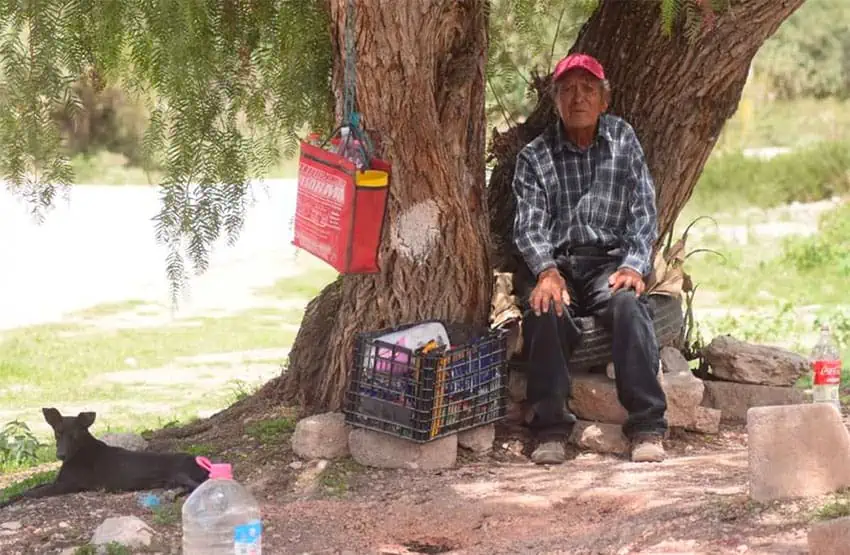
For years 88-year-old Bernabé Rodríguez Tovar has been making and selling pulque in Atotonilco de Tula, Hidalgo, the newspaper Milenio reported on Tuesday. After his story was published, the community rallied around the elderly man who survives at times on just pennies a day.
Pulque is a moderately alcoholic, viscous beverage and an ancestor to tequila, dating back to 1,500 years before the arrival of the Spaniards in Mexico. It is made from fermenting maguey sap, and is called by some “the drink of the gods.”
Rodríguez has long been something of a fixture among locals, who often stop to visit him and chat while they sip the milky, slightly foamy spirit.
Now a widower, Rodríguez once lived in Mexico City with his three children, but four years ago he returned to the Ocampo area of Atotonilco de Tula where he grew up and began making pulque. He sells the elixir for 30 pesos a liter (US $1.32) from underneath a tree near a gas station several days a week.
“I have a maguey that gives two liters of sap in the morning, and a liter and a half in the afternoon, so I work hard at processing the pulque.” He sells three or four liters a day.
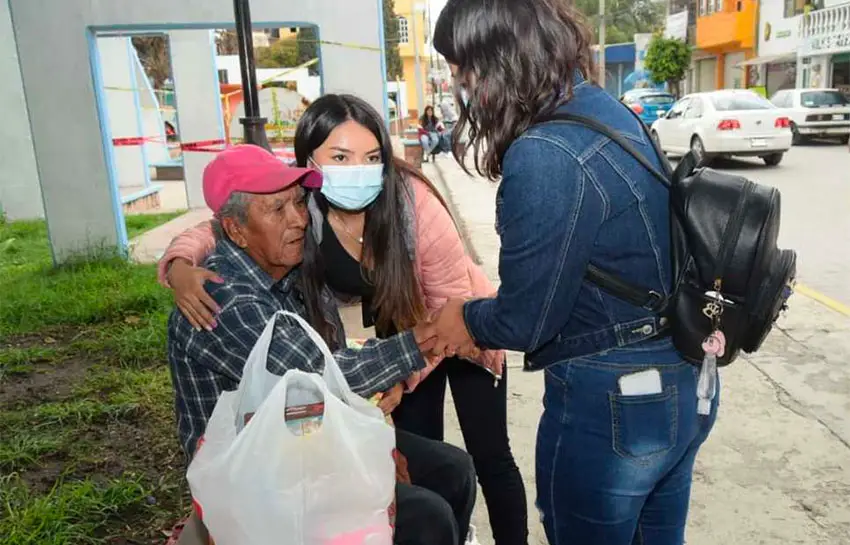
Rodríguez was attacked by unknown assailants several years back while out buying food for his chickens. His left arm is partially paralyzed as a result, his fingers gnarled and immobile, but he continues working in order to keep the tradition alive. Some days he barely makes enough money to feed himself.
After the newspaper released the story profiling Rodríguez, he saw an outpouring of support from community members, who dropped off groceries and cash for him, in addition to buying his product.

The owner of a local café gave him 50% of one day’s sales and a youth group organized a food drive in his benefit.
Touched by the community’s support, Rodríguez emphasized the importance of maintaining Mexican culture and heritage in an ever-changing world. “Young people must plant magueys and rescue the production of pulque so that this tradition and the identity it gives Mexicans is not lost,” he said.