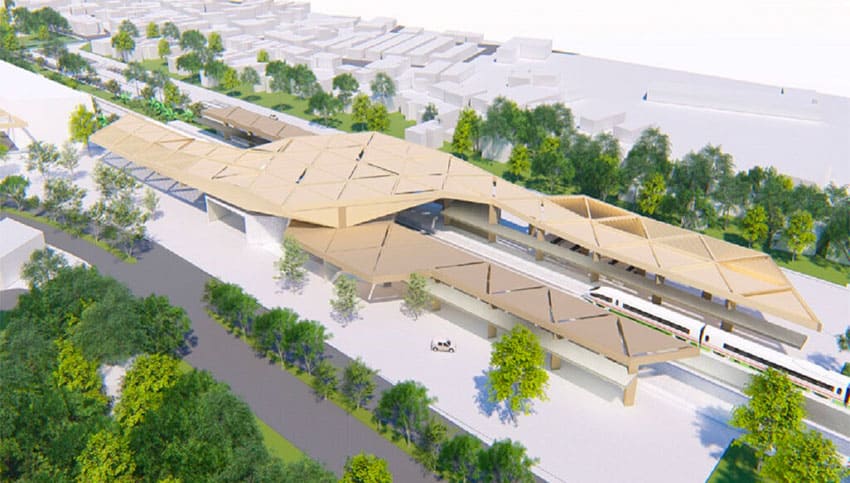
The Maya Train will run on electricity on approximately half of the 1,500-kilometer railroad to be built in Mexico’s southeast.
It was announced in June that the tourist train would be powered by diesel rather than electricity in order to keep operating costs down but the head of the National Promotion Tourism Fund, which is managing the rail project, said Wednesday it had been decided that the Mérida-Cancún and Cancún-Chetumal sections would be electrified.
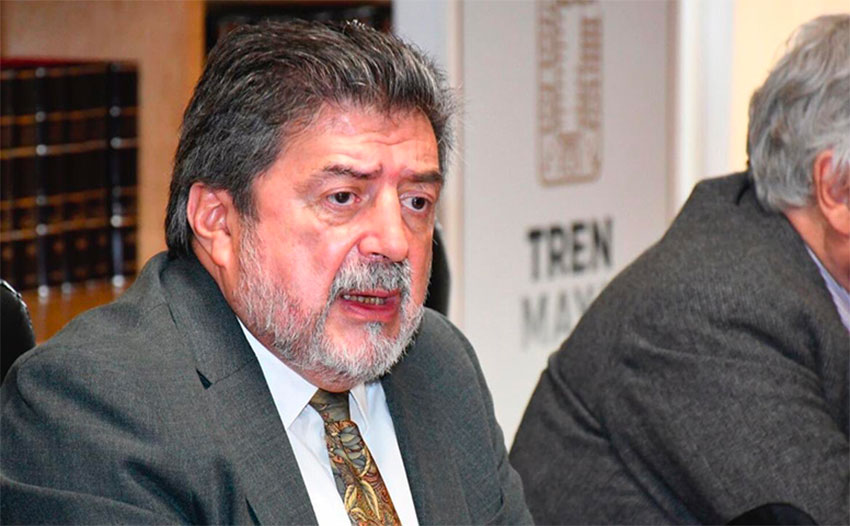
Rogelio Jiménez Pons said a tendering process to find a company to install electrical infrastructure is being prepared and will be launched in early 2021.
He said the electrification of the two sections, which are expected to be the busiest in terms of services and passenger numbers, will be the second most expensive process in the entire Maya Train project.
“After several analyses, we opted for … electrification where there will be greater activity,” Jiménez said.
He added that electrification of the two sections – expected to cost about 25 billion pesos (US $1.1 billion) – will raise the overall price of the project but save money in the long term because maintenance will be easier.
Jiménez said the cost of the project, including construction of tracks in Tabasco, Campeche, Yucatán, Quintana Roo and Chiapas, was estimated at the end of the second quarter to be 156,000 billion pesos (US $7 billion).

That amount, which doesn’t include the 25 billion pesos for electrification, is 12% higher than an estimate in April because the cost of widening the highways between Mérida and Cancún and Cancún and Chetumal was added.
But Jiménez said he was in discussions with Finance Ministry officials to have the highway work costs excluded from the Maya Train project.
If the Finance Ministry agrees to that, the total cost including electrification will be about 165 billion pesos, (US $7.4 billion), he said.
President López Obrador officially inaugurated construction of the railroad on June 1. The project is divided in seven different sections, each of which will be built by different companies.
López Obrador has pledged that the project will be finished by October 22 and create 80,000 jobs this year and 150,000 in 2021.
The Mexican company ICA will build a section of track between Izamal and Cancún, while a consortium led by billionaire businessman Carlos Slim won the contract for the construction of a stretch between Escárcega and Calkiní in Campeche.
A consortium led by Portugal’s Mota-Engil and the China Communications Construction Company won the contract to build a section between Palenque, Chiapas, and Escárcega, Campeche.
Jiménez said Wednesday that seven separate tender processes will also be held to find companies to supply and install the actual tracks. The first tender process, that for the Palenque-Escárcega section, will be launched on September 24, he said.
“We decided to call for bids for the tracks by section so that there’s no cannibalism among the companies. The experience that we had in the previous tenders is that the competition is resulting in good discounts for the government …[while] always meeting quality and experience standards.”
The rail project has been opposed by many indigenous groups on environmental and cultural grounds – and some communities have taken legal action against it – but federal authorities deny that it will have an adverse impact.
According to López Obrador, the Maya Train, which was endorsed by a controversial consultation last December, will spur economic and social development in Mexico’s long-neglected southeast.
Source: El Economista (sp)