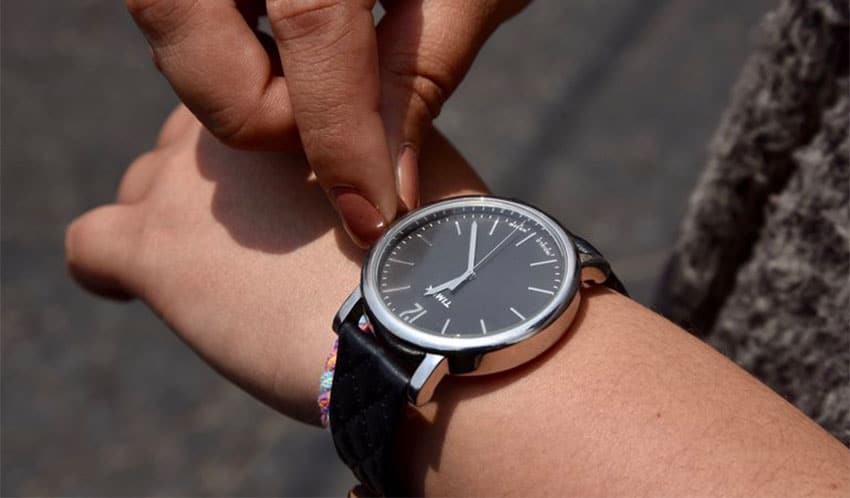
Daylight saving time is ending once again and on Sunday most of Mexico will move the clocks back one hour, a tradition that is not without controversy.
Last April when daylight saving time began, some legislators asked President López Obrador to eliminate the time change, arguing that the coronavirus pandemic and resulting economic crisis, together with the confinement measures and the time change, could generate anxiety and stress.
Studies from the National Autonomous University’s Faculty of Medicine show that turning the clock back or forward can affect people physically, emotionally and intellectually. In addition, it can alter children’s sleep cycles and appetites, and cause insomnia and anxiety in older adults.
Baja California Sur, Sinaloa and Mexico City have all requested to be allowed not to observe daylight saving time, but their arguments have gone unheeded.
The practice was first implemented in Mexico in 1996 during the administration of President Ernesto Zedillo Ponce de León to make better use of daylight hours and conserve electricity.
The official time change occurs at 2 a.m. on Sunday, although most people set their clocks back one hour on Saturday night before going to bed.
But citizens of Sonora, Quintana Roo and 33 municipalities along the northern border with the United States will not be changing their clocks.

Sonora will remain on the same time as Arizona, which does not observe daylight saving time, the result of an agreement reached in 2016 to create a cross-border commercial region. Border cities in Tamaulipas, Nuevo León, Coahuila, Chihuahua and Baja California will set their clocks back on November 1, observing the same schedule as the rest of the United States.
Quintana Roo elected to adopt the same time zone as the east coast of the United States in 2015 in order to offer tourists one more hour of sun and its clocks will remain unchanged.
President López Obrador has a long history of challenging daylight saving time, dating back to when he was mayor of Mexico City. Some have speculated that his administration might put the matter to a referendum, but no such move has been made.
Source: Infobae (sp)