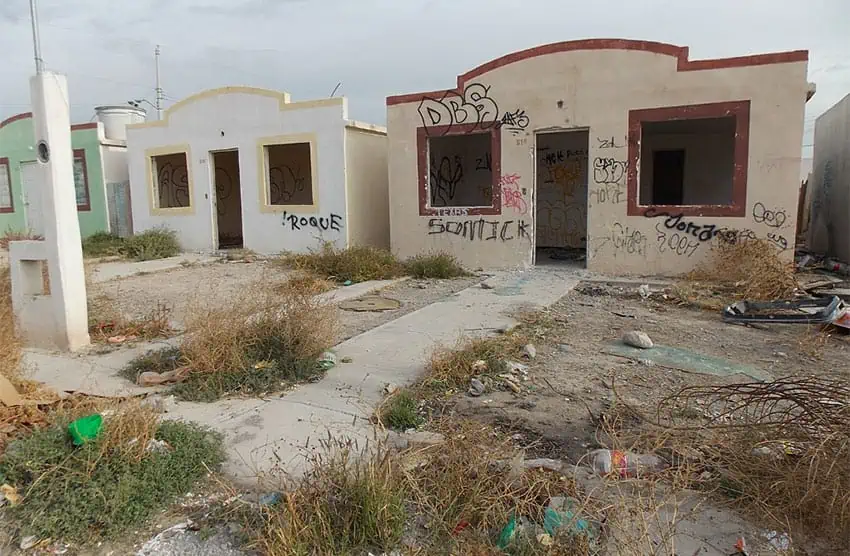
Renovating just one home can be challenging. How about 175,000?
That’s the number of abandoned social housing dwellings the federal government aims to restore before it leaves office in late 2024.
According to the newspaper Milenio, an average of 119 homes will have to be renovated every day during the next four years for the government to achieve its goal.
There are an estimated 650,000 abandoned public housing dwellings in Mexico including large numbers of empty, dilapidated houses and apartments in northern border cities that are home to numerous maquiladoras, or factories.
There are about 31,000 abandoned dwellings in Ciudad Juárez, 25,000 in Reynosa, 18,000 in Mexicali and 16,000 in Tijuana. There are also significant numbers of empty, neglected public housing units in outlying areas of the greater Mexico City area including the México state municipalities of Zumpango and Tecámac.
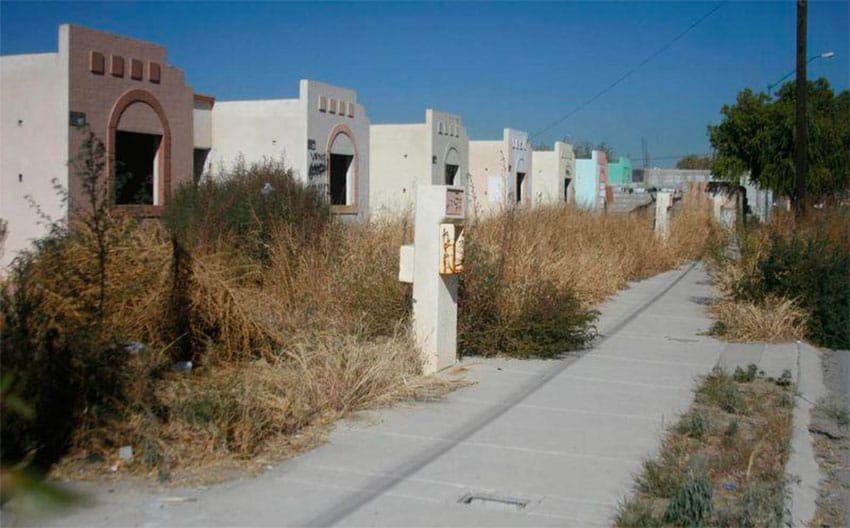
Now, the National Workers Housing Fund (Infonavit) and the Ministry of Agrarian Development and Urban Planning intend to renovate 175,000 homes located in those six municipalities and more than 80 others using funds allocated to the Abandoned Housing Regeneration Scheme.
Urban Planning Minister Román Meyer Falcón told Milenio that during its first two years in office, the government has been evaluating the abandoned home problem and preparing to do something about it. The actual renovation work will start in 2021, he said.

Louise David, director of the Alliance for Urban Regeneration, a think tank, said that to achieve its ambitious goal, the government will need to collaborate with state and municipal authorities, the private sector, social organizations and residents of the areas where the abandoned homes are located.
Infonavit has already signed cooperation agreements with authorities in several municipalities including Ciudad Juárez, Mexicali and Tijuana.
Meyer said the plan is not just to renovate the abandoned public housing dwellings but also ensure that the areas in which they are located have access to essential services such as water, electricity and education.
Meyer, David and Infonavit chief Carlos Martínez Velázquez said there are a range of reasons why more than half a million public housing dwellings have been abandoned.
Among them: they’re too small for growing families, they’re far from work centers, they lack access to basic services and they’re located in areas with high levels of violence.
“There is a lot of insecurity,” said a man who lives in an area of Tecámac where there are a large number of abandoned homes. He explained that muggings are common and that many former social housing residents left to live with their parents or other family members, or rented homes that are closer to their workplaces.
Many of the abandoned homes in Tecámac and other municipalities have been broken into by thieves who steal anything they can: doors, any furniture that has been left behind and boilers, among other fittings.
If the government achieves its goal of renovating 175,000 homes and finding owners or tenants for them there will still be 475,000 abandoned dwellings scattered across the country.
The majority of those will likely be demolished, Martínez, the Infonavit director, said last year.
Source: Milenio (sp)