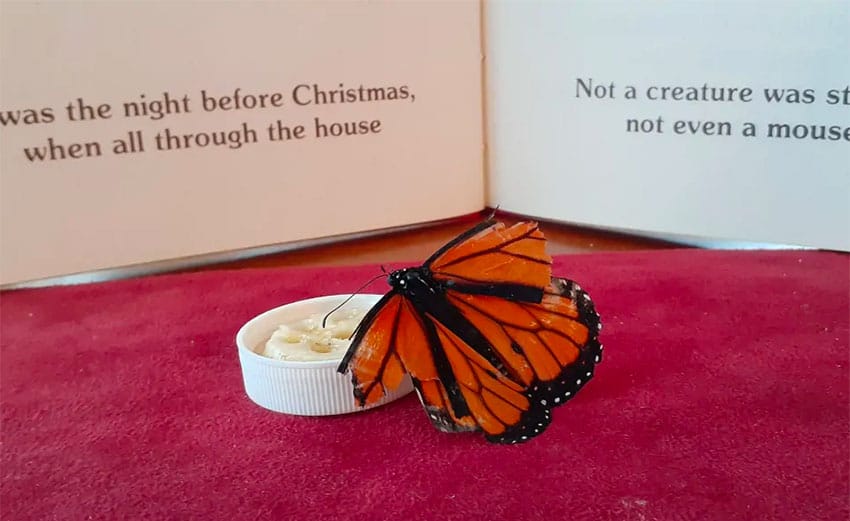
Whether it was a decision to buck lepidopteran instinct or simply bad luck, somehow Freddy the monarch butterfly didn’t heed the call to winter in Mexico this year like the rest of his Canadian snowbird brethren.
Lucky for him, Canadians Debbie and Tom Tonner took him in.
“We’ll sit there at the dining room table and he’s beside us on the window. It’s kind of comforting. He’s very much a part of our family now,” Debbie recently told the Canadian broadcaster CBC.
The Manitoba couple adopted Freddy after a friend found him on her driveway in 10-degree Celsius weather and couldn’t take him in due to having pets.
When the weather warmed up, the Tonners’ daughter Samantha tried putting him in a tree in her town farther south to give him a head start on his migratory journey. But when he didn’t leave the tree after 20 hours, the Tonners decided Freddy was there to stay.
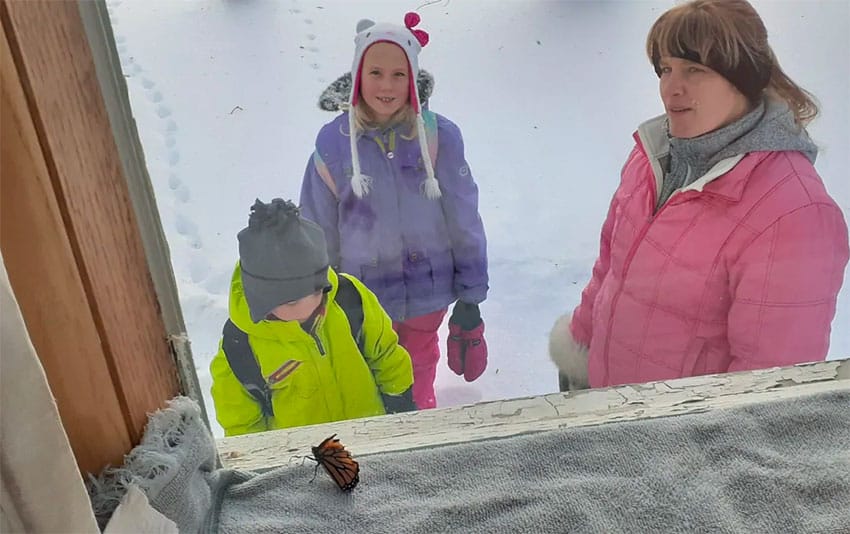
“When I go to get him in the morning, he always flutters his wings and reminds me of a puppy wagging its tail. He’s always excited to get out of the enclosure and go to the window,” Debbie says.
Named for Canadian entomologist Frederick Urquhart, who documented much about the migration routes of monarch butterflies, Freddy spends much of his day on a blanket on a south-facing windowsill, taking sun and receiving his audience — curious neighbors who have heard about his arrival in town.

Between being empty nesters and the socializing restrictions of the coronavirus pandemic, the Tonners don’t see many people these days, so they say they’re glad to have him around for however much longer he survives.
“It’s 13 weeks now that we’ve had him, and that’s quite long for a butterfly in captivity,” said Debbie, who is a member of a Facebook group that shares information about attracting and caring for monarchs. “The only other ones that I know of who were raised in this area only live to be about 10 weeks. He seems to have a real will to live.”
While Freddy has had a big impact on their daily lives, he actually wasn’t the first monarch the Tonners fostered this year: a week before he arrived, Tonner took in a chrysalis given to her by a friend who discovered it on her lawn chair.
When that butterfly emerged in warmer weather, Tonner drove as close as she could to the Canada-U.S. border and released him.
“He hopefully made it to Mexico,” she said.
Source: CBC (en)