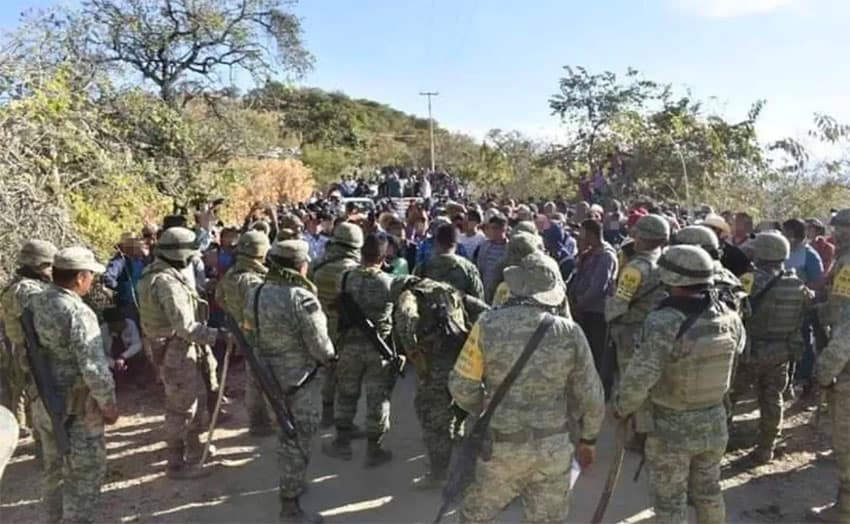
Opium poppy farmers in the Tierra Caliente region of Guerrero are accusing the military of violence, theft and destruction of property in retaliation for citizens banding together to prevent the soldiers from eradicating their illicit crops.
Residents of Los Hoyos, located in the municipality of Heliodoro Castillo, say that after an initial confrontation on Monday forced the military to leave, the soldiers returned on Tuesday afternoon, beating residents, shooting up their cars and breaking into homes to rob them.
“Yesterday [Monday], the residents blocked [the military] and didn’t let them destroy the crops,” he said, “and today [Tuesday, the soldiers] arrived, took away families, beat them and I believe shot up cars; all this is very difficult,” one farmer told the newspaper Reforma.
The initial confrontation on Monday was caught on a video now circulating on social media, in which a group of men armed with sticks, machetes and stones can be seen shouting at the soldiers and throwing stones at them while women and children look on.
When the soldiers returned Tuesday afternoon, residents said, they unleashed a wave of violence and destruction, only leaving after the church bells rang, a warning signal to others in the community, said one resident.
A farmer told Reforma that one person was severely beaten during the incident.
The farmers said they would not back down from protecting their crops, which are their only means of viable income.

“We’re not going to let them destroy the poppy plants because the government doesn’t support us at all,” one farmer said. “They’re trying to placate us with despensas [provisions] and doing a poor job of repairing the highways.”
The military has been eradicating opium poppy crops for years in states such as Guerrero, Chihuahua, Sinaloa and Durango. Less than a month ago, a similar confrontation between farmers and the military occurred in San Miguel Totolapan.
Farmers from several communities confronted the military after the soldiers destroyed more than 50 hectares of crops. They demanded that the soldiers leave their communities for good and that the state and federal governments compensate them for their loss of income.
According to a farmer in San Miguel Totolapan interviewed by Reforma in January, a kilogram of opium paste currently sells for 8,000 pesos.
Guerrero farmers have appealed to President López Obrador to legalize the cultivation of opium poppies for use in manufacturing pharmaceuticals. While the government appeared to be open to the idea, nothing on that front has moved forward.
Source: Reforma (sp)