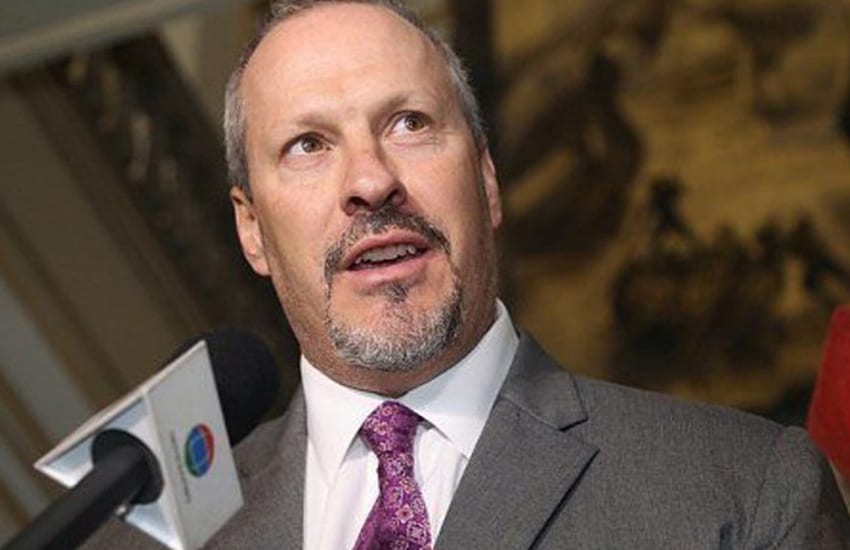
Joint efforts by United States and Mexican authorities to combat drug cartels in Mexico have broken down due to a collapse in trust and cooperation between law enforcement forces and the militaries in the two countries, according to a high ranking Drug Enforcement Administration (DEA) official.
Matthew Donahue, head of operations for the DEA, told National Public Radio that the organization is willing to share with its counterparts in Mexico but its desire to do so is not reciprocated.
“They themselves are too afraid to even engage with us because of repercussions from their own government if they get caught working with the DEA,” he said.
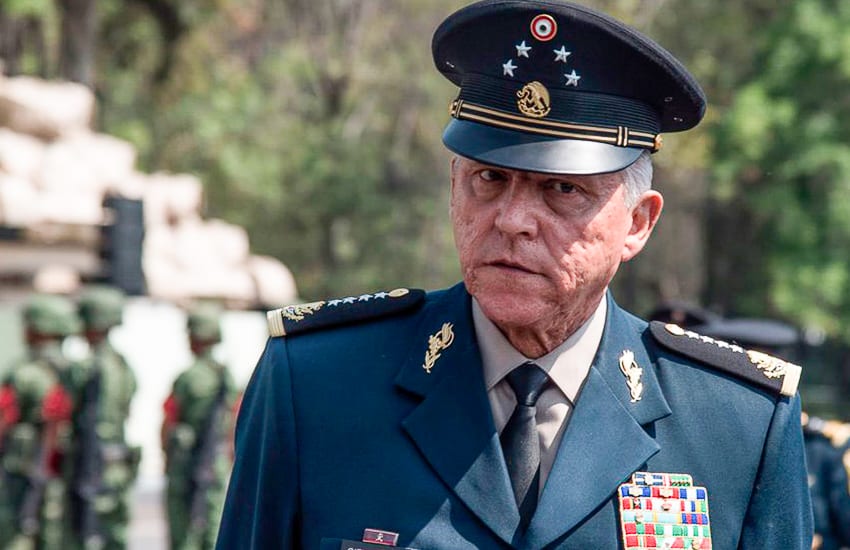
The breakdown in bilateral relations can be traced back to the United States’ arrest of former defense minister Salvador Cienfuegos last October on drug trafficking and money laundering charges. The arrest of the ex-army chief — whom the United States subsequently returned to Mexico under pressure from Mexican authorities — occurred without the U.S. first notifying Mexico, a slight that led the federal government to express “profound discontent” to its counterpart north of the border.
In response to the arrest of Cienfuegos, defense minister during the 2012–2018 presidency of Enrique Peña Nieto, Mexican lawmakers passed legislation that restricts and regulates the activities of foreign agents in Mexico. The law also requires Mexican officials to share intelligence the United States provides about cartels with other government agencies, including ones “the U.S. doesn’t trust,” NPR reported.
As a result, information sharing and joint investigations ground to a halt.
“… Matthew Donahue says the winners in all this are the drug cartels,” NPR said.

“They do not fear any kind of law enforcement … or military inside Mexico right now,” said Donahue, who also noted that cartel-run labs in Mexico are the main source of fentanyl and methamphetamine that is fueling a drug-use epidemic in the United States, which he described as a “national health threat.”
United States sources told NPR that the breakdown in bilateral security relations makes it harder to track shipments of fentanyl — a highly potent synthetic opioid that kills tens of thousands of Americans annually — and other drugs as they cross Mexico’s northern border. NPR said it was told by a White House official that drug interdiction will be the subject of bilateral U.S.-Mexico talks soon.
But a University of California at San Diego expert on security cooperation between the two countries told NPR that restoring trust and cooperation between Mexico and the United States won’t come easily, especially considering that the Mexican government is currently focused on the June 6 elections.
“With the elections coming up, my expectation is that there’s not going to be a lot of attention to what the U.S. would like to do and how to enhance that cooperation,” Cecilia Farfán-Méndez said.
Falko Ernst, senior Mexico analyst for the International Crisis Group, acknowledged that, as things stand, Mexican military and police officials are not providing information to U.S. authorities to allow them to target cartels in Mexico, as a small group did prior to Cienfuegos’ arrest.
U.S. operations in Mexico “have pretty much been paralyzed,” Ernst told NPR. “… What the U.S. has built up in terms of good relationships with … parts of the Mexican state have pretty much gone.”
Source: NPR (en)