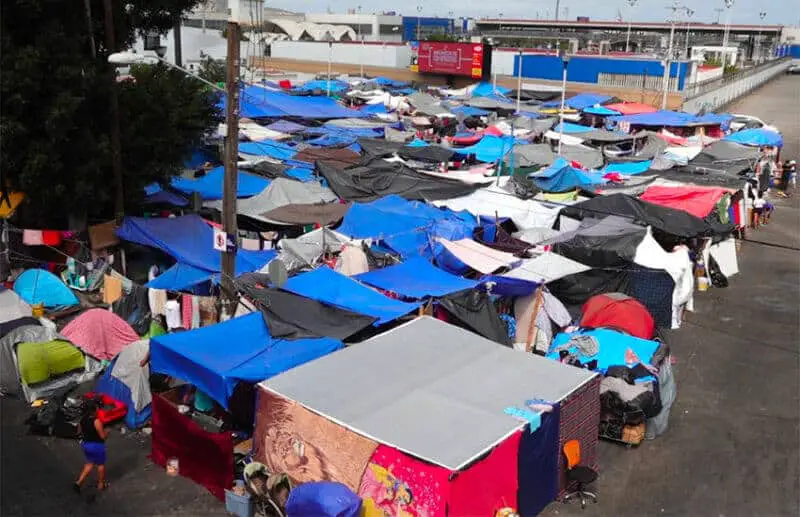
The United States has urged Mexico to clear makeshift migrant camps in northern border cities, according to Reuters, while a study by a human rights organization found that the U.S government is placing asylum seekers in “grave danger” by expelling them from the country.
Citing United States officials familiar with the matter, Reuters reported that the U.S. government has urged Mexico to clear ad hoc camps due to concerns they pose a security risk and attract criminal gangs that prey on vulnerable migrants.
Two of the largest migrant camps in Mexico are those in Reynosa, Tamaulipas, and Tijuana, Baja California. Each is home to approximately 2,500 migrants, many of whom have fled Central American countries such as Honduras, Guatemala and El Salvador.
Two officials told Reuters that the U.S. has been asking Mexico to clear the camps for weeks. Security could be jeopardized if a large number of camp-dwellers make a sudden, simultaneous rush for the border, they said.
The United States also has concerns about sanitation and drug cartels seeking to recruit desperate migrants from within the camps. The Reuters sources stressed the importance of eradicating conditions that encourage cartel members to attempt to extort migrants in camps or pressure them to join their organizations.
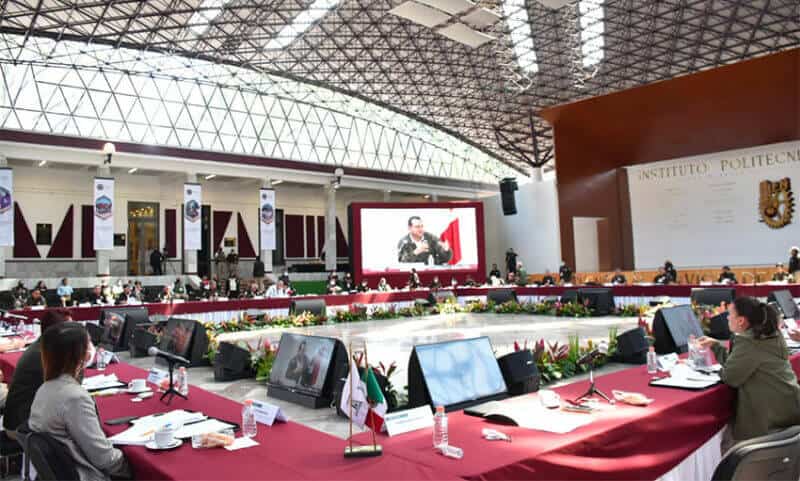
The head of Mexico’s National Immigration Institute (INM) said Thursday that undocumented migrants represent a “gold mine” for organized crime groups. Speaking at a national migration conference, Francisco Garduño said that people smuggling is a lucrative business for criminals.
“It’s so profitable that if 100,000 migrants cross [the border into the United States] and they charge them US $5,000 each, that would give us $500 million, that would be 10 billion Mexican pesos. In July alone, 212,000 migrants crossed,” he said.

The INM chief made a commitment to work with security authorities to stamp out the crimes of people smuggling and human trafficking and protect migrants’ rights.
One migrant who was a victim of extortion in northern Mexico is 23-year-old Venezuelan Yorje Pérez Moreno. He and a friend had to pay US $600 before a taxi driver – who threatened to hand them over to a drug cartel – would allow them out of his vehicle in Nuevo Laredo, Tamaulipas.
“We live with fear because it’s a very corrupt area. Everyone says that the cartels set the rules, the narcos are the law,” he told the news outlet Noticias Telemundo.
Meanwhile, Human Rights First (HRF), a United States-based human rights organization, published a new report this week that is highly critical of the Biden administration’s use of former U.S. president Donald Trump’s asylum seeker expulsion policies.
“Asylum seekers face horrific danger at the U.S. southern border as the Biden administration embraces and escalates the Trump administration’s misuse of Title 42 public health authority,” HRF said in a statement.
Title 42 allows U.S. authorities to expel undocumented migrants to prevent the spread of COVID-19 in migrant holding facilities.
“In August 2021, the Centers for Disease Control and Prevention (CDC) issued a new Title 42 order that the Department of Homeland Security uses to illegally deny asylum seekers protection …” HRF said.
The report says the expulsion policy is inflicting “immense harm – stranding asylum seekers in grave danger where they are targets of brutal kidnappings and attacks, turning away Black and LGBTQ asylum seekers to suffer bias-motivated violence, separating families, and endangering public health.”
Since President Joe Biden took office in January, HRF has identified at least 6,356 public and media reports of violent attacks – including rape, kidnapping and assault – against people blocked from requesting asylum protection at the Mexico-U.S. border and/or expelled to Mexico.
“That new number is more than four times the 1,500 attacks Human Rights First tracked over nearly two years due to the Trump administration’s devastating Remain in Mexico policy,” the organization said.
“Mexican authorities continue to carry out and turn a blind eye to violent attacks against asylum seekers and migrants. The extensive control exerted by cartels across vast swaths of territory and entrenched complicity by Mexican authorities make clear that U.S. policies … inevitably endanger asylum seekers, attorneys, and humanitarian groups and subject asylum seekers to exploitation and extortion,” it said.
“This administration is expelling asylum-seeking families and adults to the very same dangers that asylum seekers were forced to endure under the Trump administration’s illegal expulsion and Remain in Mexico. Seven months into this administration, President Biden cannot continue to ignore the exploding human rights travesty his expulsion policy is causing,” said Kennji Kizuka of Human Rights First.
“Policies that force asylum seekers to wait in danger in Mexico are unlawful and unfixable, cause enormous suffering and harm, and create disorder and chaos.”
HRF called on the Biden administration to end the use of the Title 42 policy and stop expelling refugee families and adults to countries of feared persecution or places where they are at risk of life-threatening harm.
It also urged the United States government to process asylum requests at the southern border, including U.S. ports of entry, while employing humane policies that uphold U.S. laws and treaties to provide access to asylum for people seeking protection.
Since the organization made that recommendation the United States Supreme Court ruled against overturning the federal court decision that ordered the U.S. government to restore the controversial Migrant Protection Protocols (MPP), as the remain in Mexico policy is officially known.
The Mexican government noted that it has no obligation to cooperate with any re-implementation of the policy but said Wednesday that it would initiate talks with the United States government on the issue. It has previously showed a willingness to cooperate with U.S. migration policies, including after Trump threatened to impose blanket tariffs on Mexican exports in 2019.
At a meeting in Mexico City earlier this month, Mexican and United States officials agreed to expand bilateral cooperation on migration, border security and the economy, while in a video call in May, President López Obrador told U.S. Vice President Kamala Harris, “We agree with the migration policies you are developing and we are going to help, you can count on us.”