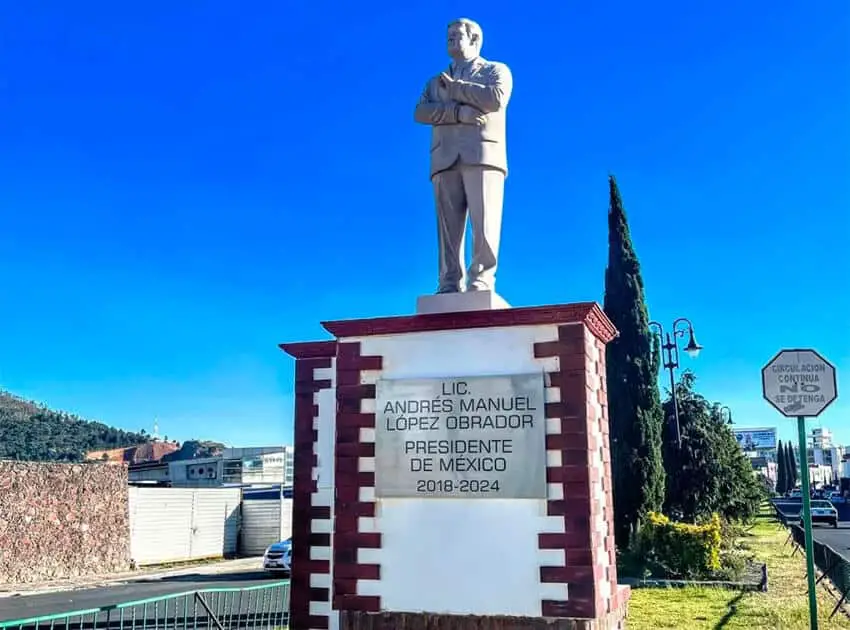
A statue of President López Obrador was destroyed just three days after it was erected in a town in México state.
The 1.8 meter effigy in Atlacomulco, 66 kilometers north of Toluca, was unveiled near the local bus station by outgoing Morena party mayor Roberto Téllez Monroy on December 29.
However, by the early morning of January 1, the statue was on the ground in pieces without its head or legs. It had been fixed on a concrete base with a plaque reading “Lic. Andrés Manuel López Obrador. President of Mexico 2018-2024.”
Téllez said it was placed “to break the stigmas and paradigms and make people recognize what had been done” by the president.
The New Year saw a coalition of the Institutional Revolutionary Party (PRI), the National Action Party (PAN) and the Democratic Revolutionary Party (PAN) come to power in the town.
Atlacomulco is a traditional stronghold for the PRI: the outgoing mayor Téllez was the first mayor not from that party, and the new mayor, Marisol Arias, is a PRI party member, the newspaper Reforma reported.
Arias said in a statement that she strongly condemned the removal of the statue.

About 20 people protested its removal on January 2, shouting their support for the president and placing a photo of him on the plaque where the statue had stood.
The effigy cost 58,000 pesos (about US $2,400) to produce and was created by artisans from the neighboring municipality of Tlalpujahua, Michoacán, with pink granite from the region.
The president has said that he is against statues or other tributes to leaders. “About the statues … it is no longer the time to worship personalities … in my case, I have written in my will that I don’t want my name to be used to name any street, I don’t want statues, I don’t want them to use my name to name a school, a hospital, absolutely nothing,” he said at a morning news conference in September.
With reports from Milenio, El Universal and Reforma