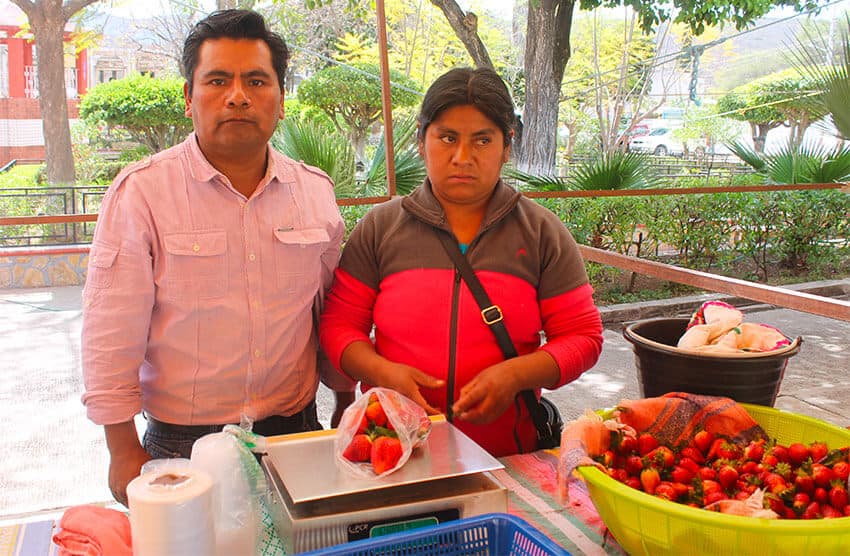
Picking strawberries in the United States gave one former Mexican migrant the wherewithal to start his own strawberry-producing business in the Mixtec region of Oaxaca, and he’s happy to be home with his wife and kids.
Gustavo Ortiz Salvador is one of several farmers in San Martín Peras who picked strawberries and other produce in California and other parts of the U.S. for years, work that allowed them to send money home to their families and also learn about the strawberry-growing process.
But many have used that knowledge so they can stay home and cultivate strawberries and raspberries on their own land.
Twelve years ago, Ortiz decided to return to Oaxaca and put his agricultural knowledge to good use by using remittances his family had saved to establish his own strawberry fields in Peras, a municipality that borders Guerrero.
Now, Ortiz not only earns enough to support his family but also employs locals. He told the El Universal newspaper that he makes less than he did in the United States, but on the plus side, he’s working for himself and is not separated from his wife and three children. Ortiz’s family is one of the few in Peras that doesn’t depend on remittances to survive, El Universal said.
The strawberry grower said he brought his plants to Oaxaca from Zamora, Michoacán, a strawberry-growing hub. He and other local strawberry growers sell their produce to buyers from Mixtec-region cities such as Tlaxiaco and Huajuapan and to vendors at Oaxaca’s Santiago Juxtlahuaca market.
“They come here for the strawberries,” Ortiz said, referring to his main buyers. “They take the opportunity to buy other fruit such as blackberries from neighbors.”

In addition to strawberries, Ortiz can now offer chiles and flowers to buyers after he planted those crops for the first time this year. He stressed that he doesn’t receive any government support, explaining that some farmers benefit from programs such as the federal tree-planting scheme Sowing Life, “but we don’t receive anything.”
While Ortiz has been back in his native Peras for over a decade, many other people from the Mixtec municipality remain in the United States. According to a 2021 BBVA bank report on migration and remittances, there were more migrants from Peras in the United States between 2015 and 2020 than from any other municipality in Oaxaca.
With reports from El Universal