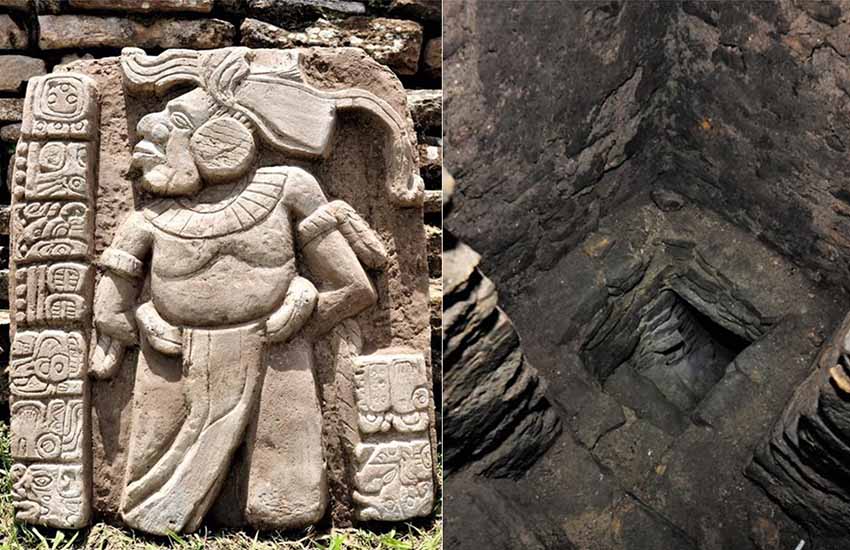
A discovery at an archaeological site in Chiapas has led a researcher to conclude that the ashes of ancient Mayan rulers aided the production of rubber balls that were used in the Mayan ballgame.
In 2020, over 400 vessels containing ashes, charcoal, rubber and roots were found in a pre-Hispanic crypt within the Temple of the Sun at the Toniná archaeological site near the town of Ocosingo.
In a statement published Monday, the National Institute of Anthropology and History (INAH) set out a hypothesis based on that discovery that was developed by INAH researcher Juan Yadeun Angulo, who has led research and conservation projects at Toniná for over four decades.
According to Yadeun’s hypothesis, it’s probable that the cadavers of at least three eighth-century Mayan rulers – two men and one woman – were reduced to ashes in order to use them during the production of rubber balls.
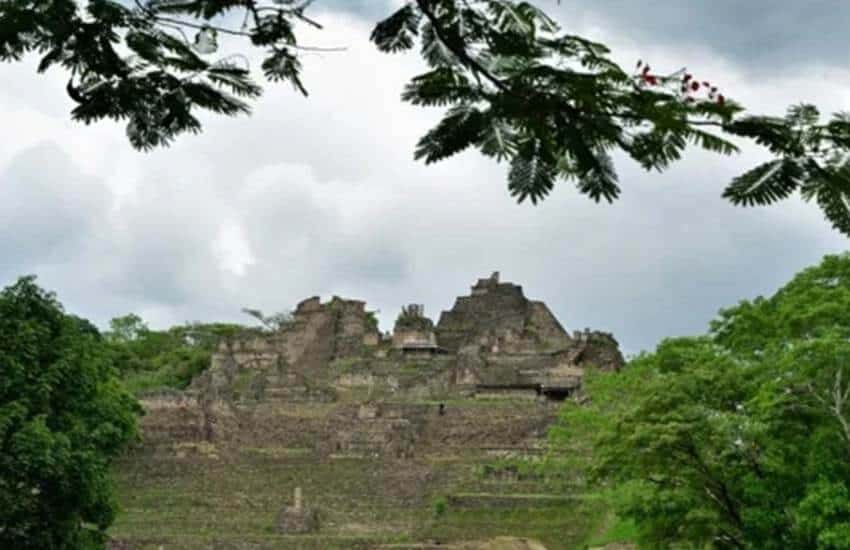
A “microscopic analysis” of the organic material contained in the vessels indicated that “specialized persons, possibly priests” cremated bodies of high-ranking members of society, INAH said. Yadeun has concluded that the sulfur of the ashes was used to vulcanize, or harden, the rubber used to make the ballgame balls.
Inscriptions on sculptures that delimit a Toniná ball court led the researcher to believe that sulfur in the ashes of the rulers Wak Chan Káhk´, Aj Kololte’ and Káwiil Kaan were used to vulcanize rubber. The first two male rulers died in the second half of the 8th century while the latter female passed away in the first half of the same century.
“It’s enlightening to know that the Mayans sought to turn the bodies of their rulers into a living force,” Yadeun said, referring to the rubber balls that ballgame players moved around a ball court with their hips and thighs.

“… Just as Egyptians tried to preserve bodies, we know here they were transformed in another way,” he said.
“… We have evidence they were incorporated into balls, which were gigantic during the classic period. … The three central discs of the [ballgame] court say that these … [rulers] came back to life 260 days later. They came out of the death cave,” Yadeun said.
Mexico News Daily