
A United States federal judge has ordered an end to restricting migrants under Title 42, a pandemic-era immigration policy that allowed asylum seekers crossing the Mexico-U.S. border to be immediately expelled to Mexico, ostensibly to prevent the spread of the coronavirus.
Washington D.C.-based District Judge Emmet Sullivan ordered an instant halt to Title 42 expulsions, calling the policy “arbitrary and capricious.” His 49-page ruling found that the policy’s impact on migrants is unjustifiable, given that the coronavirus has long been widespread in the U.S. and many alternative measures exist to control it.
“With regard to whether defendants could have ‘ramped up vaccinations, outdoor processing and all other available public health measures’… the court finds the CDC [Center for Disease Control] failed to articulate a satisfactory explanation for why such measures were not feasible,” Sullivan wrote.
The Justice Department swiftly requested a five-week stay to the order’s enforcement, until December 21.
“This transition period is critical to ensuring that (the Department of Homeland Security) can continue to carry out its mission to secure the nation’s borders and to conduct its border operations in an orderly fashion,” government attorneys argued.
In a revised ruling, Sullivan conceded the request “with great reluctance.”
The delay could allow time for a legal challenge to Sullivan’s order, which contradicts a Louisiana ruling in May that maintained the asylum restrictions.

If the order stands, it will remove one of the key tools both the Trump and Biden administrations have used to control unauthorized migration, with huge implications for border enforcement.
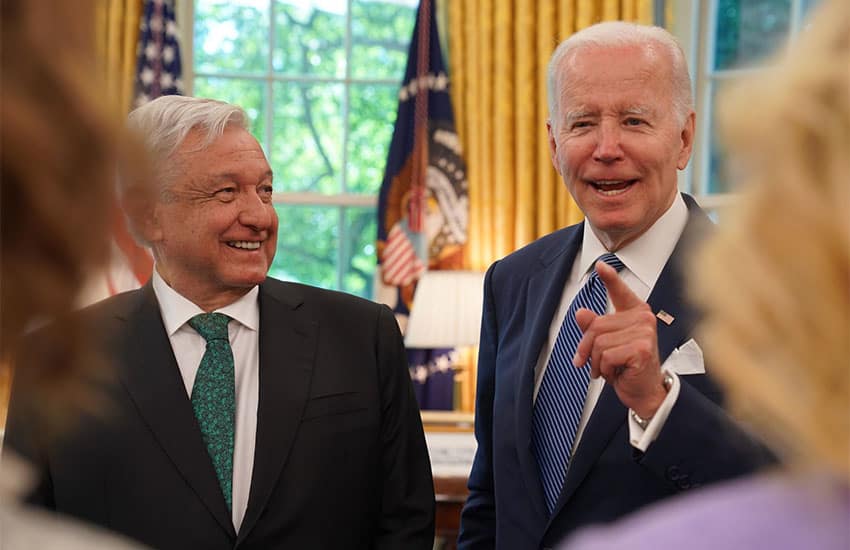
However, the policy has been unevenly enforced by nationality, with those accepted in Mexico — principally Guatemalans, Hondurans and Salvadorans — more likely to be expelled. Nationals who had to be transported to their countries of origin, such as Cubans, Venezuelans and Nicaraguans, have made up a growing proportion of U.S. asylum claims and are a growing presence on the Mexico-U.S. border.
Judge Sullivan’s order comes one month after the Biden administration reached an agreement with Mexico to expand Title 42, allowing Venezuelan migrants to also be expelled to Mexico. The deal caused Venezuelan asylum claims in the U.S. to drop sharply but was criticized by humanitarian groups and NGOs in Mexico and worldwide.
“As a result of this cruel and poorly planned policy, thousands of Venezuelans are now stranded across the region, needlessly exacerbating existing humanitarian crises in Mexico and Panama and creating new humanitarian emergencies in Costa Rica, Honduras and other countries,” the Washington Office on Latin America (WOLA) said in an open letter published one day before Sullivan’s order.
Human rights groups and activists have celebrated the overturning of Title 42, calling on the U.S. government to fulfill its commitments to provide legal migration pathways and protection for refugees.
“Title 42 was never about public health, and this ruling finally ends the charade of using Title 42 to bar desperate asylum seekers from even getting a hearing,” said American Civil Liberties Union attorney and deputy director of its Lee Gelernt, who argued the case.
However, some Republicans have expressed alarm that the development could lead to a further increase in migrants entering the country. Detentions of migrants on the Mexico-U.S. border have surged in recent years and were projected to reach a record 2.3 million in the fiscal year ending in September 2022.
The rising numbers are partly a distortion, caused by the practice of expelling migrants to the Mexican border region rather than repatriating them, leading many migrants to make repeated attempts to cross. Thousands are currently waiting along the border in shelters, where they are vulnerable to exploitation or recruitment by criminal actors.
“It is well-documented that migrants and asylum seekers who are expelled from the United States under Title 42 and other programs face extreme threats such as kidnapping, sexual assault, extortion and risk to life in Mexico,” read WOLA’s open letter.
With reports from Associated Press, CNN and the Washington Office on Latin America (WOLA)