Amazon Web Services (AWS), the cloud computing services arm of e-commerce giant Amazon, announced the opening of their new “local zone” in the state of Querétaro on Wednesday. It is their first in Mexico.
“We are very excited to launch the new local zone in Querétaro, México. This goes in line with our long-term commitment to Mexico and Latin America,” said Andrés Tahta, general director for the public sector of AWS Latin America to EFE news agency in an interview.
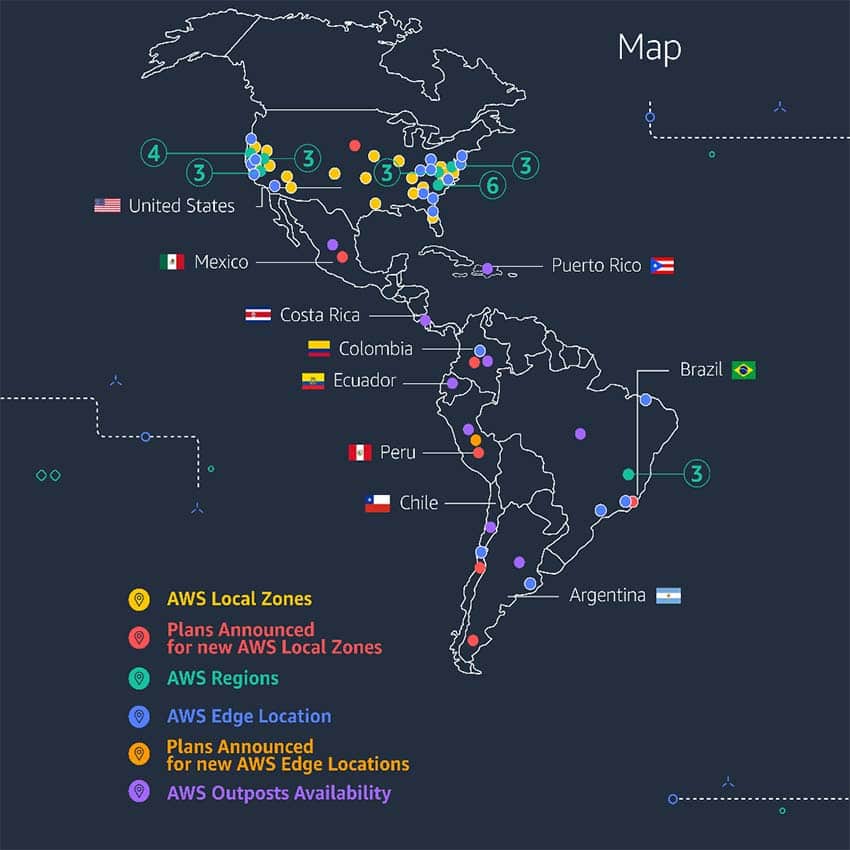
The new Local Zone, which AWS said in September of last year would open in the first quarter of 2023, will mainly offer database services that will reduce latency for AWS customers in the region. Tahta stressed that the local zone will seek new ventures and will open the door to applications in the public and private sectors to offer more services to the general population.
For instance, AWS has been an ally for platforms such as Netflix and Mercado Libre. In the banking and financial industry, it has helped institutions like Banco Itaú and the Brazilian fintech company Nubank. It has also aided cell phone operators such as Verizon.
In Mexico’s public sector, AWS has collaborated with the National Electoral Institute (INE) and provided support in the 2018 electoral process. Its applications have also improved vehicle procedures in Michoacán after cloud services were integrated to expedite the renewal of license plates for more than three million cars in 113 municipal centers. With AWS, the time to process a license plate went down from four hours to twenty minutes, according to a report in Forbes México.
According to Tahta, only 10% of the applications that could do so take advantage of cloud services globally. In Latin America, that percentage is merely 5%.“What we want to do is accelerate cloud adoption and migration for the benefit of our customers,” he said.
To reach its goals worldwide, AWS says it seeks to train 29 million people with digital skills by 2025. So far, they’ve trained 1.2 million, including 300,000 Mexicans.

The AWS cloud currently covers thirty-two local areas – including Mexico — of which seventeen are in the United States. Amazon plans to incorporate twenty-one additional local zones in eighteen countries that include Australia, Germany, Greece, Norway, and Portugal.
In Latin America, AWS has local zones in the cities of Buenos Aires, Argentina Santiago, Chile Lima, Peru Bogotá, Colombia and Río de Janeiro, Brazil.
With reports from Forbes México and Wired