The German energy company Wintershall Dea has announced an “important discovery of oil” at its “Kan” exploration well, 25 kilometers (15 miles) off the coast of Tabasco.
The discovery is in the shallow waters of the Salina Basin, in an exploration area known as Block 30, which Wintershall Dea operates alongside its partners Harbour Energy and Sapura OMV. It is estimated to contain 200 to 300 million barrels of oil equivalent (BOE).
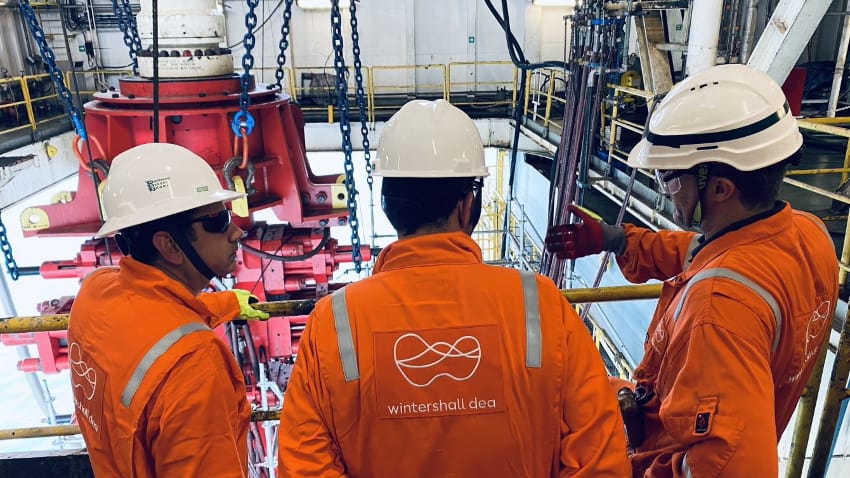
“This important discovery at Wintershall Dea’s first own-operated exploration well offshore Mexico is a great success,” said Hugo Dijkgraaf, Wintershall Dea’s Chief Technology Officer.
He recalled that Block 30 was one of the most contested blocks of Mexico’s bid round 3.1, in 2018, when the government of President Enrique Peña Nieto auctioned various contracts for shallow water oil exploration to foreign and private companies.
“The successful Kan discovery confirms the attractiveness of Block 30, complementing Wintershall Dea’s outstanding Mexican license portfolio,” Dijkgraaf said. “It is a significant step to extending our footprint in Mexico, contributing to the development of a potential new hub in the shallow waters of the Sureste Basin.”
Wintershall Dea holds a 40% stake in Block 30, with Harbour Energy and Sapura OMV each holding 30%.
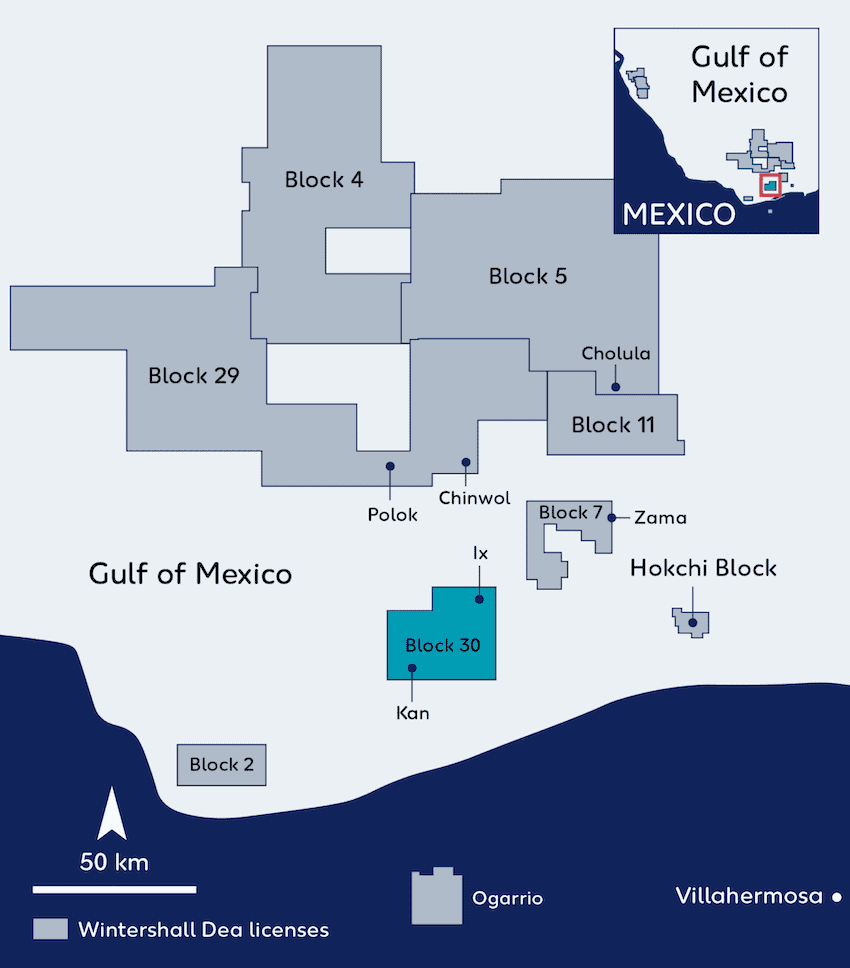
The Kan well is at around 50 meters of water depth and located near several other significant oil discoveries in which Wintershall Dea has working interests, including Zama – one of the world’s largest shallow-water oil discoveries of the last 20 years – Polok and Chinwol.

The company is now evaluating data to submit a discovery appraisal plan to Mexico’s Hydrocarbon Agency (CNH) by the end of July 2023. Meanwhile, the rig that drilled the Kan well will be moved to another prospect within Block 30, about 20 kilometers northeast of Kan.
Wintershall Dea’s find is possibly even bigger than a similar oil discovery announced last month by Italian energy company Eni, in the mid-deep waters of the Salina Basin, which was estimated to contain up to 200 million BOE.
Wintershall Dea arrived in Mexico in 2017 and has been producing hydrocarbons in the country since 2018. Its Mexican projects include the onshore oil field Ogarrio, in Tabasco, in which it holds a 50% stake alongside state oil company Pemex.
However, no more oil and gas concessions have been auctioned to private companies since President López Obrador took office in late 2018. The president is is fiercely critical of his predecessor’s privatization of Mexico’s historically state-run energy sector.
AMLO claims that private and foreign oil companies have failed to meet production expectations, and has instead implemented policies that favor Pemex over private energy firms.
With reports from Proceso and El Financiero