Mexico’s annual headline inflation rate rose for a second consecutive month in December to end the year at 4.66%, the national statistics agency INEGI reported Tuesday.
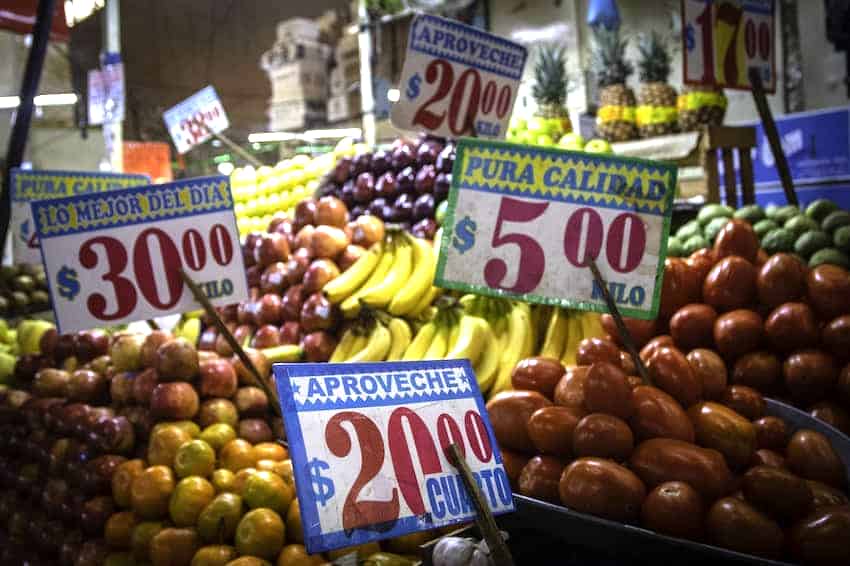
An annual increase of over 10% in the cost of fruit and vegetables was the biggest driver of the increase.
The annual headline rate increased 0.34 percentage points from a 4.32% reading in November. Month-over-month inflation was 0.71%, the highest level in 17 months.
Inflation was expected to tick up in the final month of 2023, but the annual headline rate was slightly higher than anticipated. The consensus forecast of economists polled by both Reuters and Citibanamex was 4.55%.
The Bank of Mexico — which raised its benchmark interest rate to a record high of 11.25% last March and left it unchanged since then — forecast in mid December that the headline rate would average 4.4% in the final quarter of 2023.
After its governing board decided once again to maintain the 11.25% rate, the bank said Dec. 14 that its reference rate “must be maintained at its current level for some time” in order to “achieve an orderly and sustained convergence of headline inflation to the 3% target.”

Despite increases to headline inflation in November and December, the rate at the end of the year was significantly lower than the 7.82% reading at the close of 2022.

The headline rate declined for nine consecutive months between February and October before that streak was broken in November.
Mexico’s core inflation rate, which excludes some volatile food and energy prices, fell for an 11th consecutive month in December to end the year at 5.09%, the lowest level since September 2021. Core inflation was 5.3% in November and 8.35% in December 2022.
Annual inflation data in detail
INEGI data showed that fruit and vegetable prices rose 11.68% compared to December 2022, driving a 5.66% rise in the cost of agricultural products. Prices for meat rose by a much more modest 0.68% in annual terms.
Jason Tuvey, deputy chief emerging markets economist at Capital Economics, attributed the increase in headline inflation to the “spike in agricultural prices,” noting that the inflation rate for fruit and vegetables hit a two-year high in December.
Andres Abadia, chief Latin America economist at Pantheon Macroeconomics, said that the “main driver” of the increase in headline inflation “was higher prices for non-processed food.”
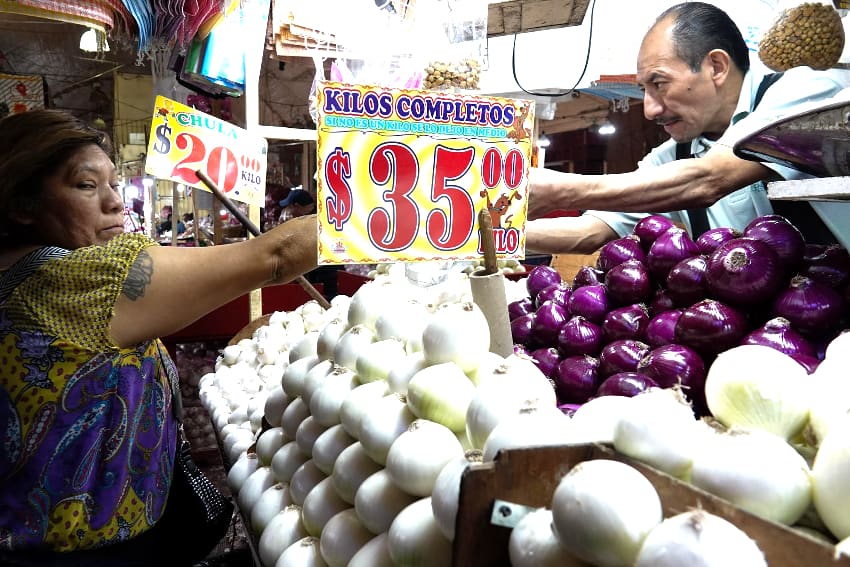
Onion prices surged over 55% in annual terms in December, while nopales and tomatoes were almost 34% and just under 30% more expensive, respectively.
Processed food, beverages and tobacco were 6.25% more expensive in December than a year earlier, while prices for services rose 5.33%. The cost of air travel rose almost 16%, while tourism packages were over 6% more expensive.
The cost of goods in general, which includes processed food, beverages and tobacco, increased 4.89%. The other component of that category – non-food goods – recorded a 3.28% annual increase.
School fees rose 6.6%, while housing was 3.64% more expensive. Energy prices, including those for gasoline and electricity, increased 1.46% in annual terms in the final month of 2023.
The outlook for 2024
The increase in headline in inflation in December represented “a poor end to the year,” according to Abadia.
However, he noted that the general inflation outlook continues to improve “at the margin” and predicted that both headline and core inflation will decline consistently during the coming months.
The Bank of Mexico is forecasting that inflation will decline steadily this year. In its December monetary policy statement, the bank predicted an average headline rate of 4.3% in the first quarter, 4.1% in Q2, 3.8% in Q3 and 3.5% in Q4.
Analysts consider it likely that the bank’s board will make an initial cut to the 11.25% interest rate in the first half of 2024, if not the first quarter.
Bank of Mexico Governor Victoria Rodríguez – “central banker of the year” in the Americas in 2023, according to the British publication The Banker – said late last year that any rate cuts would be “gradual” and that the central bank “would not necessarily be looking at a cycle of continuous reductions.”
With reports from El Financiero, El Economista and Reuters