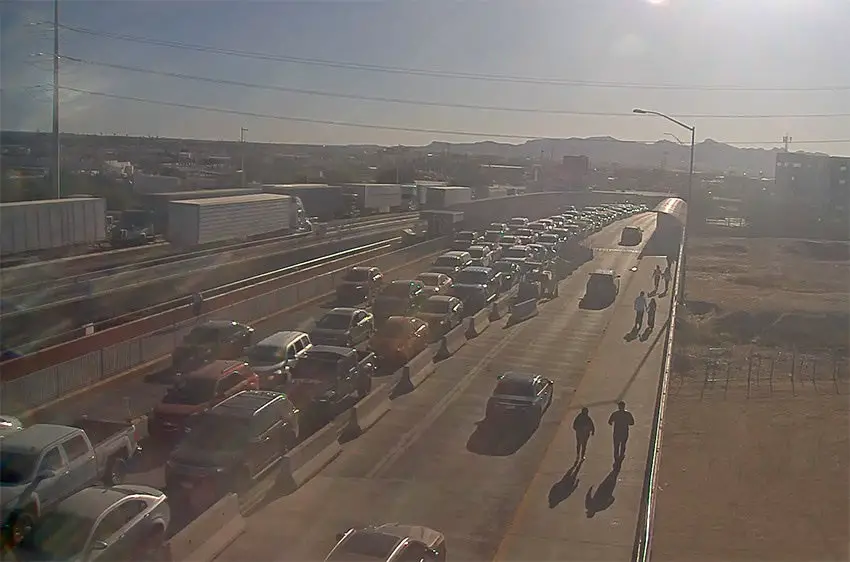
Trucks are facing long delays at the northern border with Texas after authorities in the Lone Star state once again ramped up inspections of commercial vehicles.
Since Saturday, the Texas Department of Public Safety (DPS) has been stopping and inspecting all cargo trucks entering the state via the Ysleta–Zaragoza International Bridge between Ciudad Juárez, Chihuahua, and El Paso, Texas, according to the news website Freight Waves.
The news outlet Border Report said Monday that trucks are waiting eight hours or more to enter the United States at the Ysleta port of entry due to “enhanced inspections of commercial vehicles.” The usual wait time is about one hour, according to the U.S. Customs and Border Protection (CBP) website.
Both Freight Waves and Border Report cited a message sent by CBP to the trade community advising stakeholders of the DPS inspections. The Texas government has conducted stringent inspections of northbound trucks at certain times in recent years, ostensibly to combat the entry of undocumented migrants and narcotics.
The inspections — which are in addition to checks carried out by United States federal agencies — are seen as a way to pressure U.S. and Mexican authorities to increase enforcement against migrants. Texas Governor Greg Abbott is an outspoken critic of United States President Joe Biden and what he characterizes as weak and ineffective U.S. government policies at the border.
As of late Monday afternoon, the DPS had not made a public announcement about the inspections that began on Saturday.
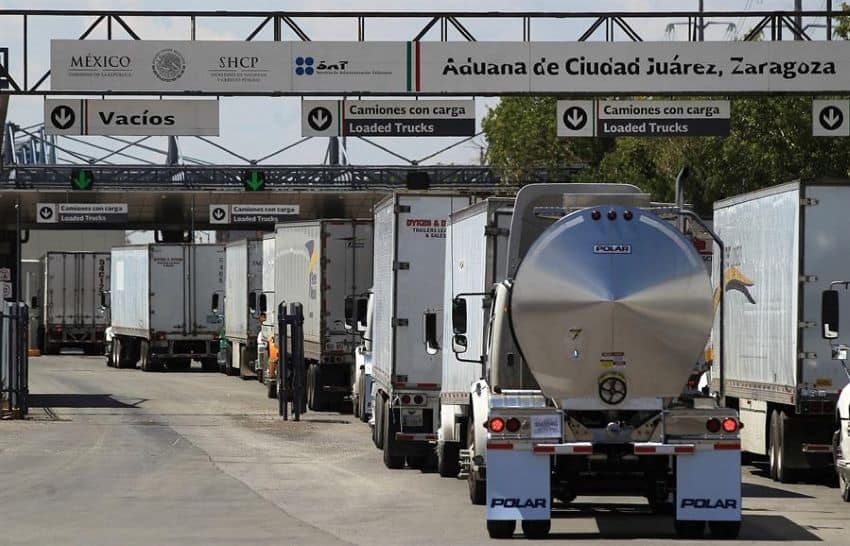
The current operation “may expand to other El Paso [port of entry] cargo facilities and will affect wait times and the flow of commercial vehicles making entry into the U.S.,” Fernando Thome, a CBP official in El Paso, said in an e-mail to the trade community. “The duration of these enhanced inspections by DPS is unknown.”

The current DPS operation commenced after large numbers of migrants began arriving in Ciudad Juárez, according to Border Report.
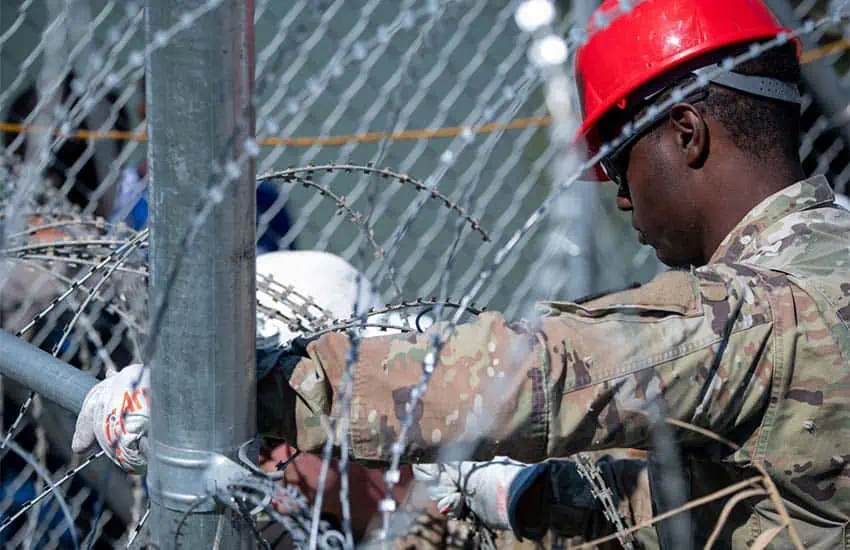
“Some of those migrants have been coming across the Rio Grande into El Paso, walking several miles along the levee to skirt the Texas Army National Guard and razor wire in place there,” the website reported.
Previous DPS inspection operations have caused significant economic losses as truckers were left stranded at the border for lengthy periods, unable to get the goods they were transporting to their intended destination in the U.S.
“You can imagine what it is to be a supply chain manager when something like this happens. It just creates major havoc in the entire supply chain,” Jerry Pacheco, president and CEO of the New Mexico-based Border Industrial Association, told Border Report.
“The worst thing is it’s uncertain when it’s going to end. You can’t even plan for this. It completely disrupts our cross-border trade,” said Pacheco, whose organization is based just west of El Paso in Santa Teresa.
“Whenever Texas DPS has done this, they never found anything substantial on trucks coming across the border,” he added.
In light of the inspections at the Ysleta port of entry, CBP has expanded inspection hours at two other crossings — the Santa Teresa port of entry and the Marcelino Serna port of entry between the municipality of Guadalupe in Chihuahua and Tornillo, Texas.
With reports from Border Report, Freight Waves and El Universal