The manager of Ahorremas, my local food shop in Guanajuato, is a lovely, friendly guy named Oscar. I chatted with him the other day and discovered that he lives an hour away, which makes for a long day, but that he wouldn’t want to move closer because of his family. He also told me that one of his cashiers was a law student at the University of Guanajuato who worked at the shop to help pay her expenses because she came from a poor family. After our conversation, I told the young woman about Brillantes Caminantes, a local nonprofit that provides scholarships to economically marginal students, and she applied for one. Such is the power of making connections in Mexico.
Oscar is what sociologists call a “weak tie,” a term which refers to a friendly connection with someone who is not a close friend–as opposed to a “strong tie,” a family member or friend you know deeply. My husband Barry and I have an abundance of weak ties in Guanajuato, including our seamstress, Perla; my watch repairer, Rodolfo; the guy who fixes appliances at the nearby market, Rogelio; and another guy who created windows for our patio, Armando. When I broke the lid of my crock pot by accidentally dropping it on the kitchen floor, Armando crafted me a new one made of silicon.

We find it particularly easy to make weak ties in Mexico, even with the language and cultural barriers. Whether they’re repair people, small business owners, tailors, baristas or taxi drivers, here are some reasons why we find it easy.
First, Mexicans tend to be friendly and warm. They appreciate efforts at speaking Spanish and are forgiving of errors, so you don’t have to be fluent, although it helps to have at least a few basic phrases, which also shows respect for the culture. I’m fluent, which makes it easier, but Barry is not. Even so, every fall, returning to Guanajuato after spending part of the year in California, he goes to his favorite cafe for the first time in months, and the barista greets him, calling out, “¡Hola, Barry! ¿Cómo estás?” ― as if he’d never been away.
Another reason why it’s easy is that Mexico is filled with solo or family-run small businesses and repair shops. Unlike Americans, Mexicans still repair items rather than replace them, so we frequent repair shops often and interact with the owners. As anywhere, small business owners are likely to be friendlier than cashiers in huge, institutional chain department stores.
Also, Mexicans are often outside and on foot. Studies show it’s easier to form connections outside than in, and it’s obvious why it’s easier to meet another pedestrian in person than in a car. Jessica Finley, a former researcher in the field of Health Geography at the University of Minnesota, found that people feel more comfortable approaching strangers in parks than on city streets. They’re more likely to pet a stranger’s dog, chat with someone sitting on the grass, or exclaim to another person about the beautiful view. In Mexico, all you have to do is take a seat on a bench at your local jardín or zócalo and you’ll find someone to chat with.
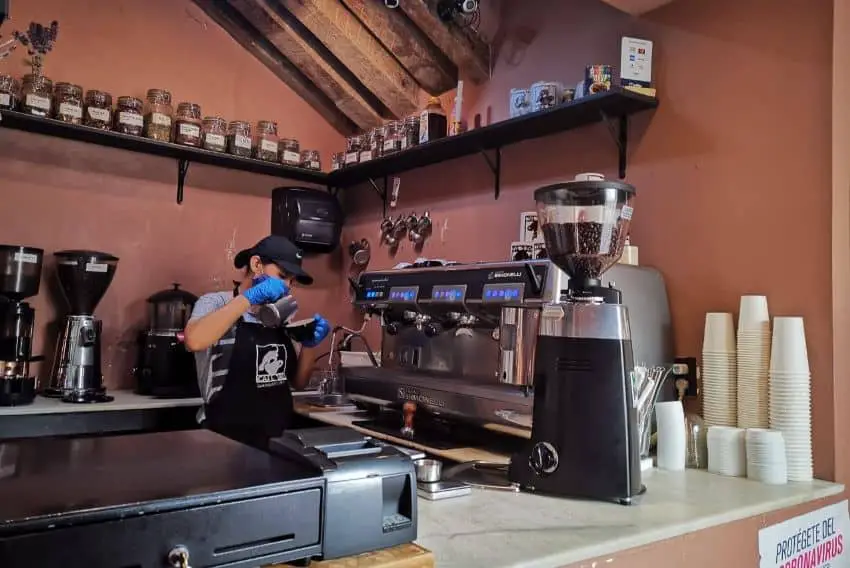
When we do get in a car, like a taxi or Uber, we always enjoy talking to the driver. I usually sit in the front, both because my Spanish is better and because, even with hearing aids, I miss things sitting in the back. We’ve chatted with drivers about their marriages, divorces, kids, if they have a trabajo fijo (day job), and, in one case, even the driver’s vasectomy. “La fábrica está cerrada,” he told us (The factory is closed).

Even weak ties can have a lasting and profound effect on a person. Fifteen years ago, my sister died in New York City. Although I was by her side during her death, I was in Mexico before and after, and one street musician was particularly kind to me. A man with a leathery, time-worn face, Javier was a well-known character around town who would sit on the sidewalk of the pedestrian street below our house, strumming his guitar and singing John Lennon ballads in English. He once told me he lived in a cinder-block structure somewhere on the edge of town, reading Kant in bed until it was too dark to see. When I returned from New York and told him tearfully that my sister had died, he took my hand and gave me a long gentle look with his soulful eyes. I felt cradled by his kindness.
About a year later, Javier disappeared. I kept expecting him to show up again on the street, singing and playing his guitar, but he never did. I still miss him.
Another acquaintance I think a lot about ― a local shopkeeper and owner of a quesadilla joint near our home ― died during COVID-19. His wife, Aracelli, told me when we ran into each other at Ahorremas. Because condolence cards aren’t easily available in Mexico, I wrote her a letter sharing all my memories of her lovely husband, Juan.
While both strong and weak ties are valuable, I never realized how important light, easygoing connections can be until we moved to Guanajuato. Where once I dismissed them as superficial, now I cultivate them with enthusiasm, appreciating how much joy and pleasure they bring to my life.
Louisa Rogers and her husband Barry Evans divide their lives between Guanajuato and Eureka, on California’s North Coast. Louisa writes articles and essays about expat life, Mexico, travel, physical and psychological health, retirement and spirituality. Her recent articles are on her website, https://authory.com/LouisaRogers