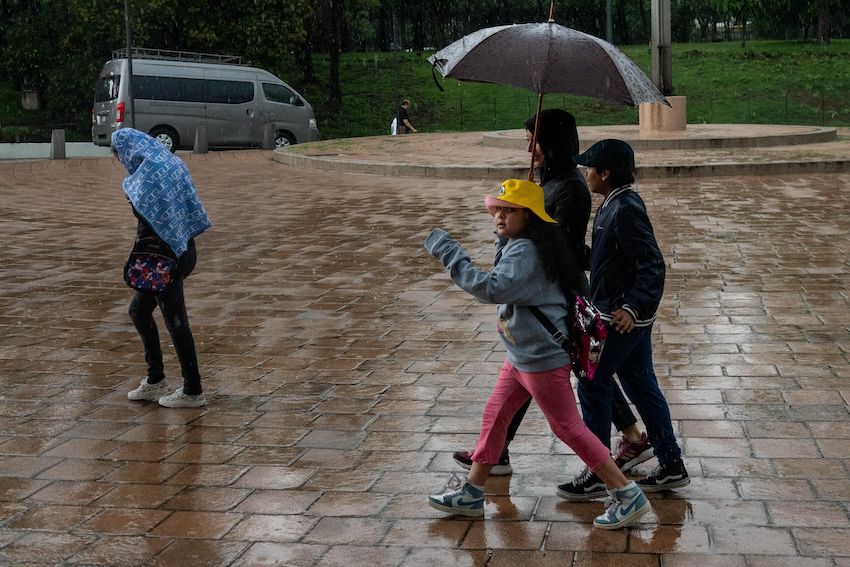
As Mexicans say, the rain god Tlaloc has heard our plea: according to the latest forecasts, June is expected to bring abundant rain across Mexico.
Rainfall is expected due to tropical systems entering from the southeast and spreading across the center of Mexico. The first week of June was the last week in which the warm anticyclone — responsible for a lack of rain — dominated the country.
Se pronostican #Lluvias torrenciales en #Chiapas y #Tabasco, e intensas en #Campeche, #Oaxaca y #Yucatán.
Toda la información aquí ⬇️https://t.co/GkEHbOkyNx pic.twitter.com/eFATpM3TP3
— CONAGUA Clima (@conagua_clima) June 7, 2024
Mexico’s National Meteorological Service (SMN) forecast temperatures ranging between 40 and 45 degrees Celsius in 18 states for Friday. However, temperatures are expected to decrease as the rainy season approaches, with cooler weather coming as early as the third week of June.

The Friday forecast also predicts torrential or intense rain in Chiapas and Tabasco, Campeche, Oaxaca, Yucatán and Quintana Roo; heavy rains in some northern states including Nuevo León and Chihuahua; and isolated rains in the central region, including Querétaro, Guanajuato and Mexico City.
The scorching temperatures Mexico has been experiencing due to heat waves have exacerbated drought conditions in nearly 76% of its territory, according to the latest drought monitor data. The northeast and center of the country are currently reporting exceptional drought, with parts of Oaxaca, Veracruz and Tabasco experiencing extreme drought.
Extraordinary rainfall forecast for June
Weather forecasts show rainfall will gradually intensify as June progresses, with torrential rain expected from mid-June through the last days of the month.
Rainfall will be abundant in Veracruz, Oaxaca, Puebla, Tlaxcala, Morelos, Guerrero, Hidalgo, México state, Mexico City, Michoacán, Nuevo León and Tamaulipas. Mexico’s northwest, west, north and Bajío region will see isolated rains.
The monthly outlook shows above-average rainfall (50-100 mm) in Mexico’s southeastern, southern and east-central states, contrasting with a significant rain deficit in much of the northern, western and Bajío states.
These swift changes in climate behavior — from extreme heat to heavy rainfall — are due to a climate phenomenon called the El Niño-Southern Oscillation (ENSO), combining El Niño, or warm oceanic conditions, and La Niña, cold conditions. According to the United States’ National Oceanic and Atmospheric Administration (NOAA), we’re still experiencing remnants of El Niño, with La Niña expected to begin between June and August. Due to La Niña, the tropical cyclone season in the Atlantic is expected to increase by up to 50%, with 14 storm systems potentially forming from June through November.
El Niño tends to appear before La Niña; both affect climate all over the world and can cause intense storms and other extreme weather events.
With reports from Meteored