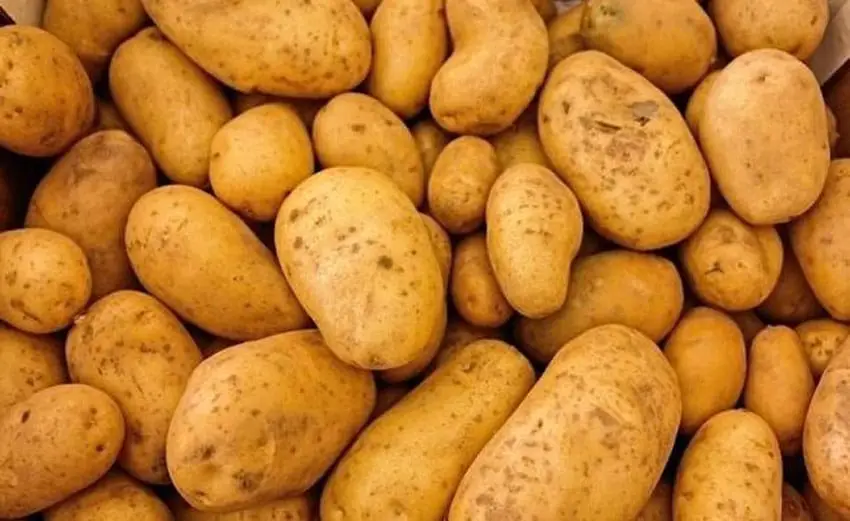
A federal judge barred the import of fresh potatoes from the United States today on national security and biosecurity grounds.
The decision, made by José Francisco Pérez Mier of the Seventh District Court in Los Mochis, Sinaloa — a potato-producing state, overturned a 2016 decision adopted by the Secretariat of Agriculture (Sagarpa) to allow potato imports from Mexico’s northern neighbor.
The judge said that Sagarpa’s reform to the Federal Law on Plant Health was unconstitutional because it didn’t include measures to protect against the introduction of plant diseases and therefore posed a threat to national sovereignty and security and crops such as chiles, tomatoes, eggplants and tobacco.
The domestic potato industry could disappear if fresh potato imports from the United States continue, Pérez said.
The amparo or injunction he handed down said the lack of protective measures “implies an imminent risk of plagues spreading on national soil.”
Pérez also accused the federal government of favoring government-subsidized United States potato farmers instead of supporting local production of the vegetable.
The judge said that would cause Mexico to become food dependent on a “foreign power,” namely the United States.

Pérez described the U.S. as “a power that in recent times has institutionalized hostile policies towards Mexico and on the supposition that it comes to dominate the national market, it will be the only supplier of the tuber.”
He added that “the entry of fresh potatoes from the United States violates the human right to food, is contrary to national sovereignty established by article 39 of the constitution and threatens national security by causing food dependence.”
It is the second time that an injunction banning potato imports from the United States has been handed down.
Following today’s ruling, a Supreme Court judge called on his colleagues to intervene in the case and make a definitive decision to avoid further legal back-and-forth actions that would result from the government appealing the ban.
Alfredo Gutiérrez Ortiz Mena took up the cause of agricultural producers from the northeast of the country by suggesting that the government’s previous appeals be reviewed by Mexico’s highest court.
At least three of the five justices of the First Chamber of the Supreme Court must support his proposal in order for a hearing of the case to proceed.
If the Supreme Court doesn’t assume jurisdiction, it will be up to an administrative court in Culiacán, Sinaloa, to make a definitive ruling.
Source: El Universal (sp), Reforma (sp)