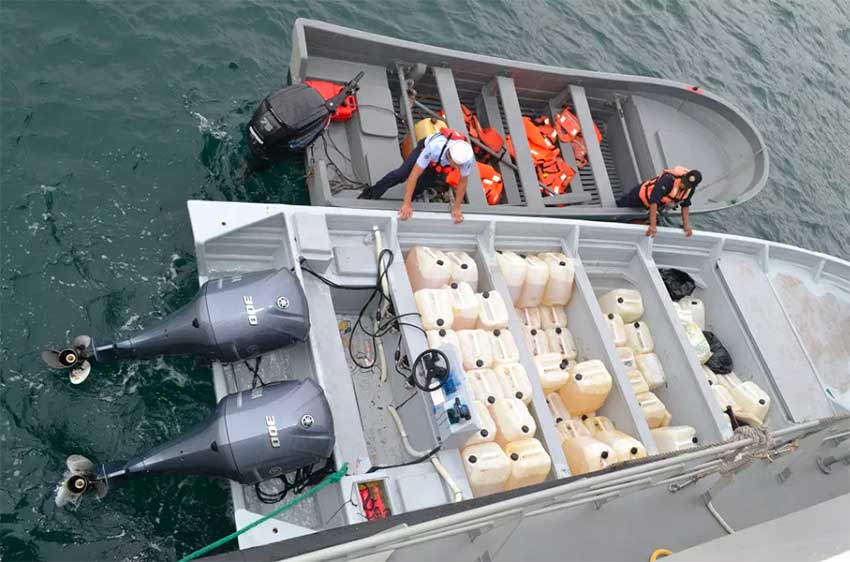
Navy personnel seized 250 kilograms of cocaine and apprehended two men aboard a small boat traveling off the coast of Guerrero yesterday.
Routine aerial surveillance spotted the vessel some 370 kilometers south of Acapulco.
A joint aerial and maritime operation resulted in the arrest of the two men found on board a “go-fast” boat, popular for smuggling drugs.
The boat was carrying 71 plastic canisters, 10 of which contained small packets of cocaine amounting to a total of 250 kilograms. The other 61 containers held 3,000 liters of fuel.
Another report today said the navy had detected fuel storage facilities in three states that are used to supply small boats running drugs up the coast. Mexican cartels ferry the fuel out to the smugglers, enabling them to remain outside the 200-kilometer limit. The fuel is delivered mixed with oil and ready to use in the vessels’ two-stroke engines.
It is either purchased legally or obtain from petroleum thieves.
Last week the navy detained three people aboard a small boat carrying 3,000 liters of fuel off the port of Lázaro Cárdenas, Michoacán.

Between January and May the navy seized 6.7 tonnes of cocaine off the Pacific coast, the largest amount in any five-month period.
Source: Digital Guerrero (sp), El Universal (sp)