Although others claim the title, Valladolid, Yucatán, is celebrating nine years as the honey capital of the world and six years as a magical town by holding an artisanal market and exhibition.
It was during a beekeeper’s congress held in the capital city of Mérida in 2009 that Valladolid, located in the eastern part of the state, was first called the world’s honey capital and it has stuck, despite claims from Texas, Florida, Slovenia and Ukraine.
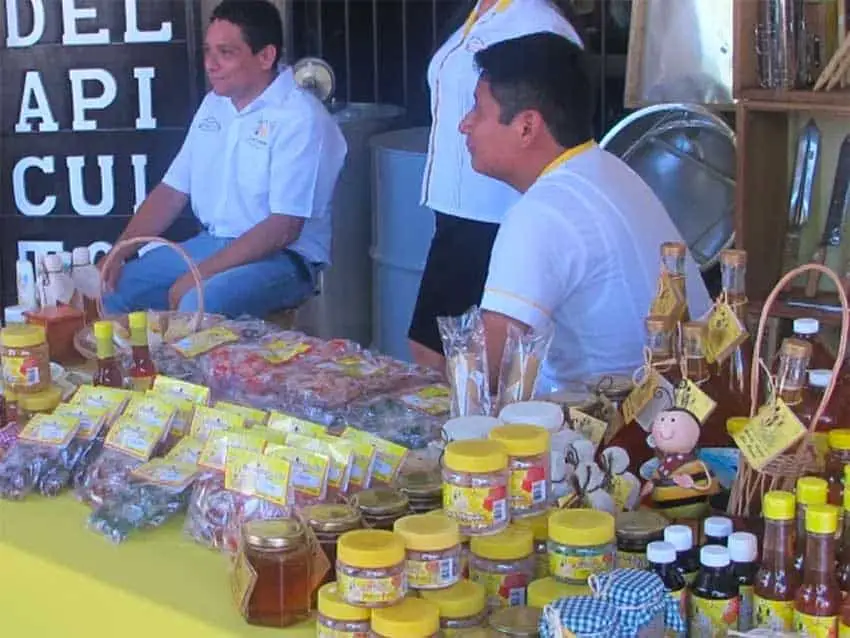
The celebration is under way this weekend at the municipal hall and the town’s main square, where products made from honey will be on display and for sale. Visitors can purchase candy, propolis (or bee glue), beeswax and honey by the jarful, among other sweets.
The artisanal market, or tianguis, brings together artisans from the area who will exhibit their production processes and products, such as guayabera and filipina shirts and blouses, and palm brooms woven on the spot.
Handcrafted shoes and leather, wood, liana, stone and bone items can also be obtained.
After the inauguration ceremony, municipal authorities symbolically planted a dzidziclhé tree in an effort to promote the cultivation of plants sought by bees.
Source: El Diario de Yucatán (sp)