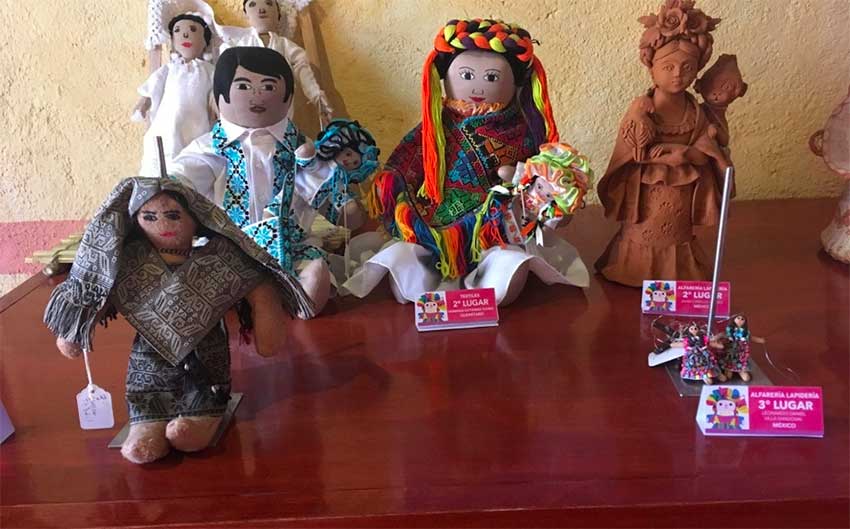
The Liverpool department store chain is going to sell artisanal rag dolls made by the indigenous people of Amealco, Querétaro.
The store has agreed to carry the products following months of negotiations that started in December, when customers complained that Liverpool stores were selling cheap knock-off dolls of Chinese manufacture.
Querétaro Sustainable Development Secretary Marco Prete Tercero announced that the sale of the dolls, known locally as pachas and throughout Mexico as Muñecas Marías, will start in September, without specifying the stores that will carry them.
Residents of Amealco have traditionally created their dolls by hand, spending anywhere from two to seven days to complete each one. They sell for up to 500 pesos (just over US $25).
The state has also decided to further protect the Amealco dolls by declaring them cultural intangible heritage, a declaration that will take place at a ceremony on August 15 in the Constitución Plaza of Amealco.
“It’s good that [government] agencies gave us their support, because we don’t want other states to come and pirate [the dolls] and steal from us,” said one of the artisans.
Secretary Prete added that the state is still negotiating the sale of the rag dolls on Amazon’s Mexico website, observing that the process is complex, because the online retailer’s system requires standardized product measurements and characteristics.

Source: Milenio (sp)