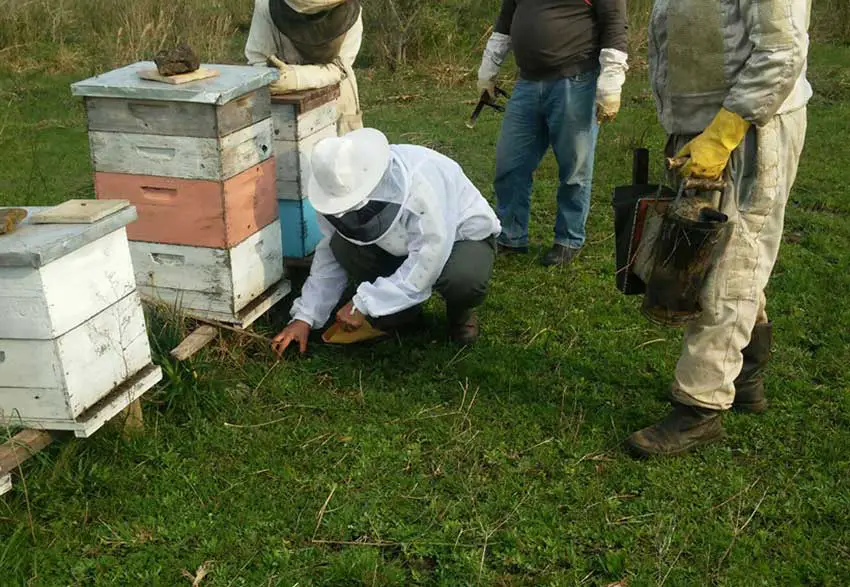
The use of insecticide on habanero chile fields has caused the deaths of thousands of bees in Quintana Roo since August 8, beekeepers say.
They claim that bees from 19 apiaries located on the Candelaria ejido (community land) in the municipality of José María Morelos have been affected by the spraying of fipronil on a nearby farm.
The use of the offending insecticide, sold under the brand name Regent 4 SC, is legal in Mexico but has been banned in European Union countries since 2013.
The Mexican Civil Council for Sustainable Forestry estimated that beekeepers would sustain financial damage of more than 2 million pesos (US $105,000) due to the insecticide’s use and said that areas within a four-kilometer radius of where it was sprayed have been affected.
Wilson Ayala Mex, one of the affected beekeepers, told the newspaper El Universal that the number of bees dying had increased since the first deaths were detected in the middle of last week, adding that they “continue to fall.”
Ayala said that last Saturday he and other angry apiarists went to the local prosecutor’s office to file a criminal complaint but were initially told that the death of the bees didn’t constitute a crime and that in any case the matter was not within its jurisdiction.
However, after arguing their case the beekeepers persuaded authorities to accept the complaint and an investigation is now under way.

Under state law, the destruction of bee hives and bees is considered a crime.
Aurora Xolalpa, a researcher at the Maya Intercultural University of Quintana Roo, said she worked with the beekeepers to collect samples of bees, other pollinators and plants in order to analyze the effects of the insecticide on living organisms including humans.
Results of the tests will be ready Monday.
“It’s very worrying . . . the time in which the product will continue to be released could be up to 18 weeks,” Xolalpa said.
The use of insecticides has previously been blamed for the death of bees in other parts of Mexico, including Ciénega de Chapala, Michoacán and the Comarca Lagunera region of Coahuila and Durango.
Source: El Universal (sp)