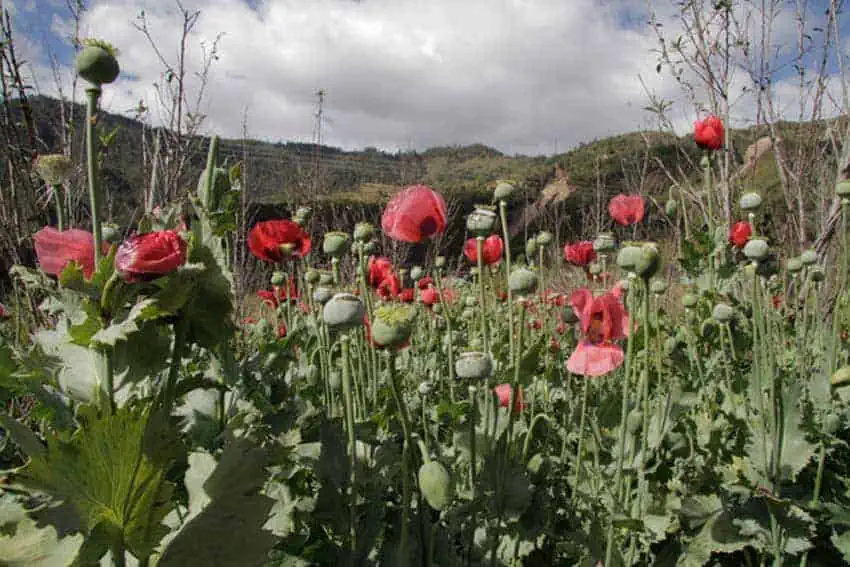
The Guerrero Congress has approved — almost unanimously — a legislative proposal to decriminalize the cultivation of opium poppies for medicinal purposes.
The proposal, which passed by 43 votes to one, will now go to the Senate, which must also approve the bill in order for it to become law.
Guerrero Governor Héctor Astudillo first raised the idea of legalizing opium poppy cultivation for medical use in early 2016, just months after he took office. Later that year a proposal to do so was taken to the state Congress but rejected.
Now, just two weeks before the current legislature finishes its term, lawmakers have reached consensus on the issue.
The bill was presented by Citizens’ Movement party Deputy Magdalena Camacho Díaz, who contended that prohibition of the cultivation of the plant had only served to generate a crisis of severe violence both in Guerrero and other parts of the country.
She said many opium poppy farmers had shown interest in ceasing to grow the illicit crop and transitioning into other lines of work but most were unable to do so out of economic necessity.
Lower demand for opium paste, largely due to the increasing use of the synthetic opioid fentanyl in heroin production, has led to a drastic price slump, which in turn has had a devastating impact on parts of the southern state, especially the Sierra region.

With profits plunging, criminal organizations in Guerrero have become even more determined to control larger swathes of poppy-growing territory, which has led to bloody turf wars.
The plant is grown on 60% of the state’s entire territory, according to a report published today by the newspaper El Financiero, making it the largest poppy-producing state in Mexico.
Only Afghanistan and Myanmar produce more opium poppies than Mexico, according to the United Nations Office on Drugs and Crime.
Last month, a group of community leaders from the state’s Sierra region appealed to president-elect Andrés Manuel López Obrador to legalize poppy production for use in the manufacture of legal pharmaceuticals.
Olga Sánchez Cordero, tapped to be interior secretary in the incoming government, has said that legalizing drugs is a possibility as part of the quest to bring peace to the country.
The new federal Congress, in which the López Obrador-led government will have majorities in both houses, will first sit next month.
Source: El Financiero (sp)