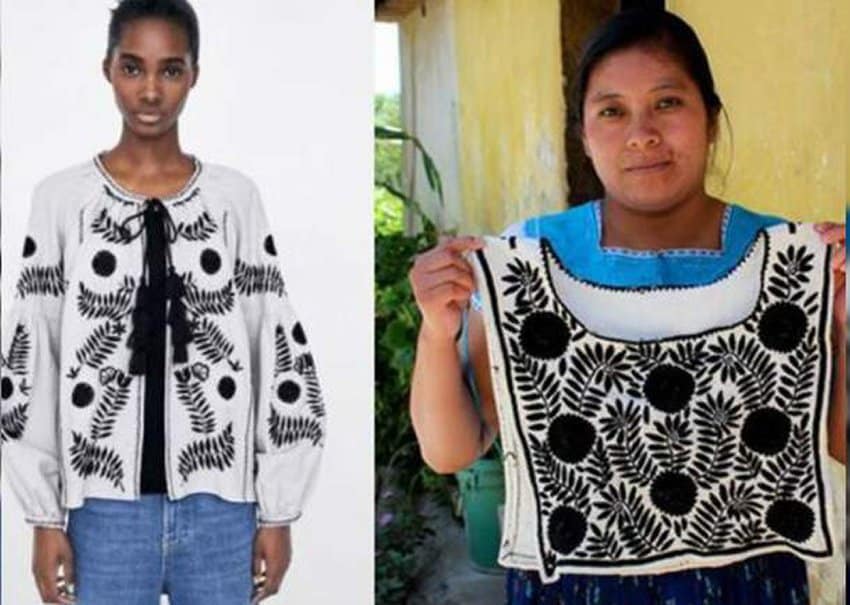
Indigenous artisans in Chiapas have accused a Spanish fashion retailer of stealing their designs, the second time in two years they have done so.
Tzeltal artisans from the town of Aguacatenango in Venustiano Carranza claim that Zara has copied at least one of their embroidery designs.
“It affects us a lot because people don’t buy from us when they can find it in a store . . .” said María, whose embroidery is her livelihood.
She and artisans like her dedicate more than 50 hours to making each embroidered garment, selling them for 200 pesos (US $10). In contrast, Zara manufactures the same garment and sells it at 599 pesos ($32).
The indigenous rights advocacy group Impacto told the newspaper El Dictamen that since 2012 there have been at least eight instances of international brands appropriating original indigenous designs from Oaxaca, Hidalgo and Chiapas.
In none of the cases have the fashion brands acknowledged the creators of the designs or paid compensation.
Intellectual property regulations protect individual creators, said Impacto director Adriana Aguerrebere, but not centuries-old collective heritage.

“Consumers are also to blame,” said Impacto member Andrea Velasco, explaining that buyers demand authenticity but end up paying for copies. “There’s also a contradiction, because they pay high prices at a store but then don’t want to spend in an indigenous community.”
Source: El Dictamen (sp)