Families all over Mexico traditionally visit their dearly departed on the Day of the Dead, often organizing meals and celebrations next to their graves.
But in Pomuch, Campeche, the celebration is rather different: they polish the family bones.
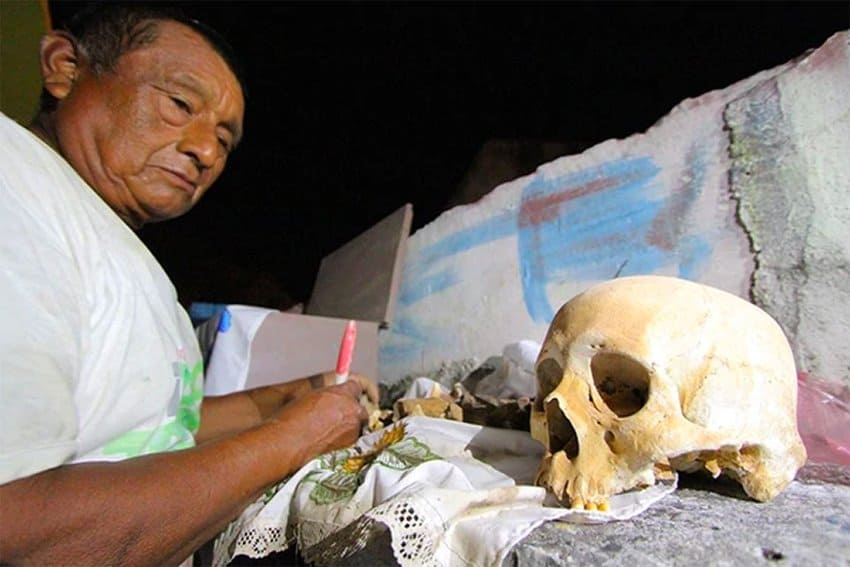
The people of the Mayan town located in the northern reaches of the state celebrate Hanal Pixán — a Mayan term for Day of the Dead — by digging up their dead and cleaning their bones.
Preparations start in the last days of October when a white blanket embroidered with the name of a deceased family member is laid on the ground.
The bones are then unearthed, laid on the blanket and cleaned. It is also a time to update the deceased with the latest family news. As they clean up the skeletons, Pomuch residents talk to them, updating them on their everyday lives and telling them how much they are missed.
As in the rest of the country, traditional altars dedicated to the dead are set up in people’s homes but one unique feature is the inclusion in the altar of clothing that had belonged to the deceased.
Mayans believe that death does not mark the end of one’s existence, but is instead an alternative plane of reality. The same beliefs explain that both the living and the dead can cross back and forth at any given time.

Source: Infobae (sp)