Search for missing persons yields narco-camps in Tamaulipas

Searching for the hidden graves of missing persons in Tamaulipas has turned up more than just bodies over the past six years.

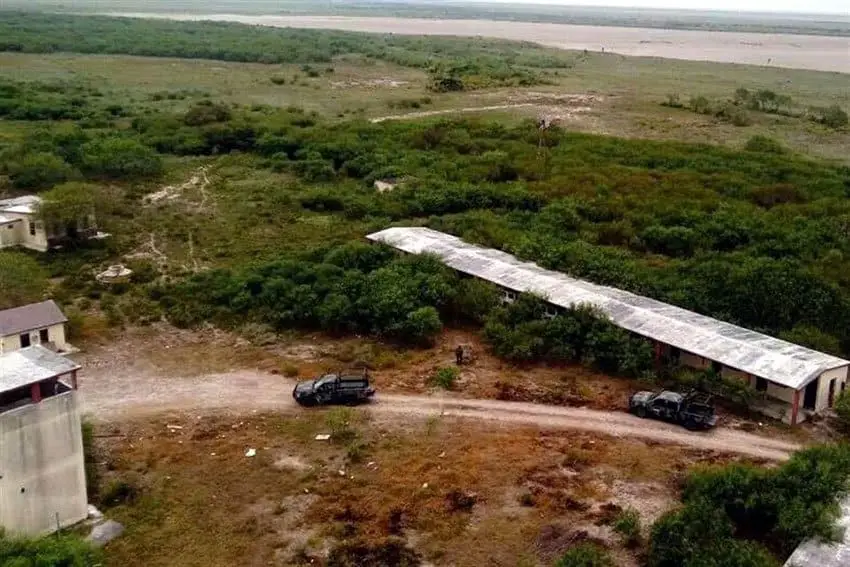
A non-governmental organization dedicated to searching for the missing has found at least 50 narco-camps, used by crime gangs to bury or incinerate the remains of their victims and other purposes.

The president of Milynali, Graciela Pérez Rodríguez, told the newspaper Reforma that human remains have also been found at the camps, located mostly in central and southern Tamaulipas.

Relatives of the missing began searching for their loved ones in 2010 after criminal organizations started fighting for control of the state.

Pérez blames the proliferation of the camps on authorities’ excessive tolerance and fear of reprisals on the part of citizens should they report them.

She offered as an example the town of Xicoténcatl, where a narco-camp was discovered a mere 200 meters from a residential area.

“I’ve always said that if this is happening it cannot be fortuitously or in a hidden way . . . everybody could see the comings and goings of the criminals. These are large camps.”

The state Attorney General’s office (PGJE) identified 280 mass graves between 2006 and 2016, ranking Tamaulipas as second only to Veracruz, where 332 mass graves have been found.

However, Tamaulipas tops the list of missing persons, with nearly 6,000 cases recorded in the last decade.

The PGJE has consolidated a database of missing persons and unidentified bodies that is designed to be shared at the national level and to aid in finding and identifying the people on it.


Source: Reforma (sp)

Have something to say? Paid Subscribers get all access to make & read comments.
Manzanillo, Colima, México, 13 de marzo de 2026. La doctora Claudia Sheinbaum Pardo, presidenta Constitucional de los Estados Unidos Mexicanos en conferencia de prensa matutina, “Conferencia del Pueblo” desde Colima. La acompañan Indira Vizcaíno Silva, gobernadora Constitucional del Estado de Colima; Omar García Harfuch, secretario de Seguridad y Protección Ciudadana (SSPC); Raymundo Pedro Morales Ángeles, secretario de Marina (Semar); Bulmaro Juárez Pérez, divulgador de lenguas originarias, presentador de la sección “Suave Patria”; Ricardo Trevilla Trejo, secretario de la Defensa Nacional (Sedena); Jesús Antonio Esteva Medina, secretario de Infraestructura, Comunicaciones y Transportes; Bryant Alejandro García Ramírez, fiscal general del Estado de Colima; Fabián Ricardo Gómez Calcáneo; Rocío Bárcena Molina, subsecretaria de Desarrollo Democrático, Participación Social y Asuntos Religiosos de la Secretaría de Gobernación; Efraín Morales López, director general de la Comisión Nacional del Agua (Conagua); Marcela Figueroa Franco, secretaria ejecutiva del Sistema Nacional de Seguridad Pública (SESNSP) y Guillermo Briseño Lobera, comandante de la Guardia Nacional (GN). Foto: Saúl López / Presidencia

Mexico’s week in review: Congress deals Sheinbaum her first legislative defeat

0
The week of March 9 in Mexico was marked by standoffs between allies in Congress and adversaries at the airport. Here's what you missed.
A soldier displays seized handguns

The US and Mexico, growing together and growing apart: A perspective from our CEO

0
From a historic drop in homicides to opposite bets on electric vehicles, Mexico News Daily's CEO breaks down where the U.S. and Mexico are converging — and where they're not.
Veracruz Gov.

Veracruz governor blames private vessel for 200-kilometer Gulf Coast oil spill

1
The spill, which has spread to over 200 kilometers of Mexico's Gulf Coast beaches, has been traced to a private oil tanker off the coast of Tabasco.
BETA Version - Powered by Perplexity