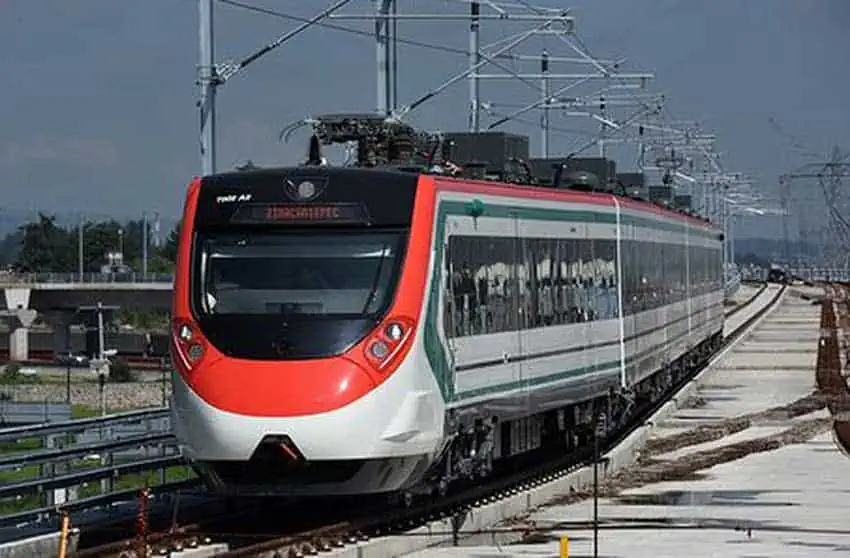
The cost of building the Mexico City-Toluca intercity passenger train has increased by 53%, according to a government report.
A cost-benefit analysis completed by the Secretariat of Finance and Public Credit (SHCP) shows that the projected cost for the 57-kilometer railroad had shot up to just under 71 billion pesos (US $3.6 billion) on December 5 compared to just under 46.3 billion pesos (US $2.4 billion) in 2013.
Protests against the project, legal problems, compensation payments to affected property owners, construction delays and changes to the planned route have all contributed to the cost blowout.
Outlays on a range of new studies, including ones related to topography and the environment, work stoppages, postponements of the expected completion date, legal expenses, inflation and the necessity to complete works that hadn’t been anticipated were also factors in the ballooning cost of the project.
A total of 54 modifications to construction agreements have been made since 2013 in response to problems the project has faced, the SHCP report said.
In its 2019 budget, the federal government allocated an additional 3 billion pesos (US $154.5 million) to completing the intercity train, intended to reduce travel time between Mexico City and Toluca to just 39 minutes.
If that funding is taken into account, the cost of the project has risen by 59%.

The previous federal government said early last year that the project would be finished by the end of 2018 and that trains would start running early this year. In June last year, the starting date for train services was pushed back to summer 2019.
While President López Obrador has committed to completing the project initiated by his predecessor Enrique Peña Nieto, he said last week that it could be another three years before it is ready to start running.
The original completion date was April 2017.
Trains operating on the new railroad will have the capacity to carry 230,000 passengers a day.
Source: Milenio (sp)