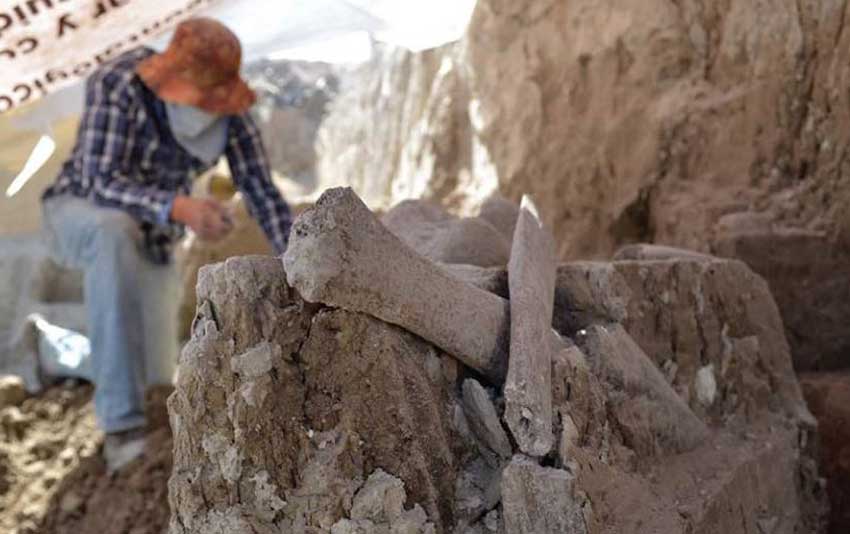
Fossilized mammoth bones have been discovered at the site of a new landfall in Tultepec, México state.
Municipal crews were digging at the site when they found the ancient bones buried six meters deep.
Archaeologists from INAH, the National Institute of Anthropology and History, are now coordinating the excavation work at the site.
A team led by Luis Córdoba Barradas is digging up the bones, recording details of each discovery, taking photographs and making drawings of the original position in which the bones were found. This will later allow experts to determine how many bones are missing and to develop a theory about the massive mammal’s fate.
The archaeologists have made a preliminary estimate that the specimen is at least 14,000 years old.
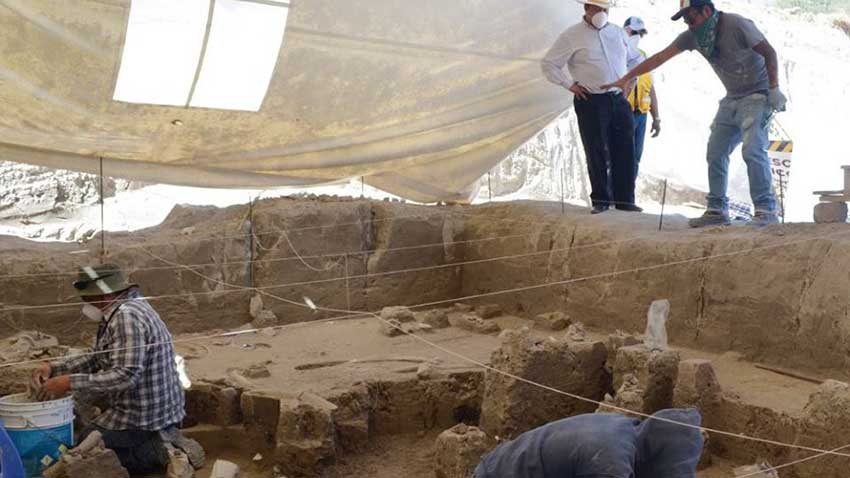
The site is just two kilometers away from another mammoth discovery made in December 2015.
Those bones were found when Tultepec municipal workers were performing drainage work in San Antonio Xahuento.

The area where Tultepec now lies was dominated by a shallow lake system some 12,000 to 14,000 years ago during the late Pleistocene period.
Specialists have theorized that it was common for mammoths to become trapped in the mud of one of those shallow bodies of water due to their huge mass and heavy build. The extinct mammals are believed to have grown as tall as five meters and weighed up to 10 tonnes.
Excavation of the first discovery took over three months, and the bones now reside permanently in the town’s Casa de la Cultura.
Source: El Financiero (sp)