The Maya Train project will trigger real estate investment of at least 150 billion pesos (US $7.9 billion), according to the chief of the National Tourism Promotion Fund (Fonatur).
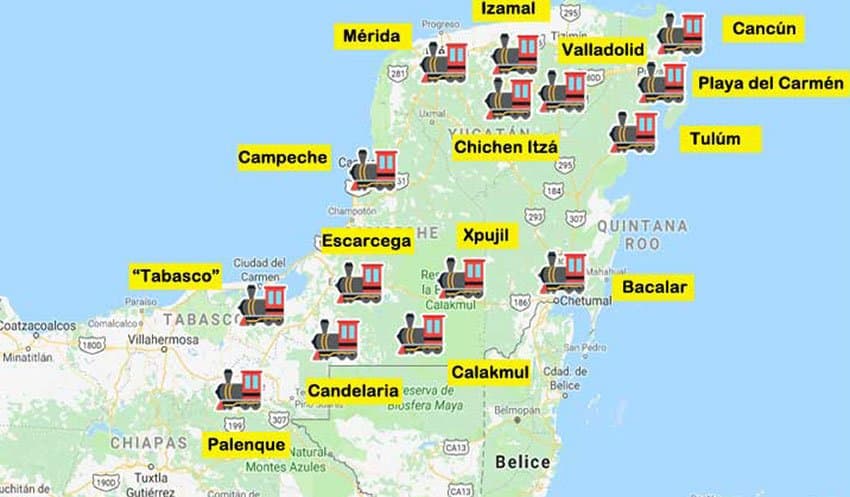
Rogelio Jiménez Pons said that shopping centers and industrial warehouses among other developments will be built in the vicinity of the 15 stations proposed for the new railway, which will link cities and towns on the Yucatán peninsula and in Chiapas.
“There is no predetermined [investment] figure but I estimate that it will be just as significant as [the cost] that has been proposed [to build] the Maya Train, which is between 120 and 150 billion pesos. I believe it will be an equal amount or more,” he said.
Jiménez explained that a government trust will be set up to determine the zones in which real estate development can occur, adding that sufficient land will be set aside to ensure “long-term growth” in the regions through which the Maya Train will run.
Speaking at the conclusion of an investment summit, the Fonatur director said that 90% of the funds required to build the ambitious rail project will come from the private sector and that the government will provide the remaining 10%.
Both Mexican and foreign banks and asset management companies including BlackRock, Goldman Sachs, Santander and Bancomer have expressed interest in investing in the railroad, Jiménez said.
Initially announced as a passenger rail service, the train will also carry freight in the form of fuels, the Fonatur chief said, estimating that supplying the southeast region of the country with petroleum products would represent a market worth up to 13 billion pesos a year.

The government says that the construction and operation of the Maya Train will generate employment and economic prosperity in the southeast of Mexico.
But environmental experts have warned that that building the railway poses risks to the region’s underground water networks and the long-term survival of the jaguar.
The Mexican Institute for Competitiveness (Imco), a think tank, has warned that the project could end up costing more than 10 times the amount estimated by the federal government, while a range of groups representing Mayan communities rejected it on the grounds that they weren’t consulted about it.
Source: El Economista (sp), El Financiero (sp)