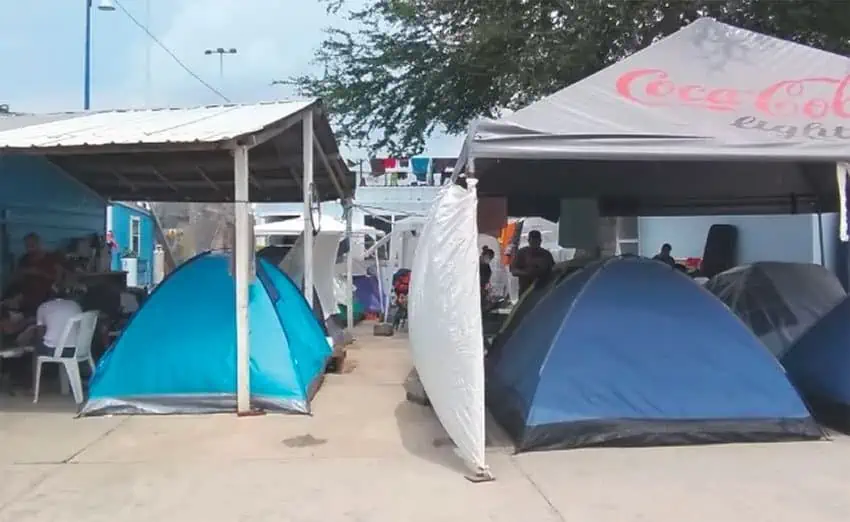
The new migration agreement between Mexico and the United States will further stretch the limited resources of already overwhelmed migrant shelters, says a shelter director in Reynosa, Tamaulipas.
A key part of the deal reached by the two countries last Friday is Mexico’s agreement to accept the return of all migrants seeking asylum in the United States as they await the outcome of their claims.
“Those crossing the U.S. southern border to seek asylum will be rapidly returned to Mexico where they may await the adjudication of their asylum claims,” U.S. Secretary of State Mike Pompeo said yesterday.
“We’ve seen this before, we were able to do this to the tune of a couple of hundred people per day, we now have the capacity to do this full throttle,” he added.
Héctor Silva, director of Casa Senda de Vida (Path of Life House) in Reynosa, said that shelters will be unable to cope with the increased arrival of migrants under the so-called “Remain in Mexico” plan.
“If they send us a greater number of migrants, we’ll have a bigger problem that we won’t be able to solve. That’s what the governments should think about, not making political or tariff agreements . . . They’re dealing with people,” he said.
Silva said that funding provided to the country’s migrant shelters from the federal government is insufficient, explaining that “we’re surviving with donations.”

The Casa Senda de Vida is currently housing 520 migrants, he added, a figure that is more than double its capacity of 250.
“We’ve improvised dormitories in tents. It’s not fair that because of political matters or agreements between countries that we [have to] provide attention that is not dignified for any human being,” Silva said, adding that turning people away is not an option.
“We’ve had temperatures of up to 45 degrees and . . . heavy rain. Governments should consider that we’re dealing with human beings who have come from suffering in their countries of origin and even here, they have to go hungry.”
Another critic of the new migration pact is Tijuana Mayor Juan Manuel Gastélum.
He said the agreement – which allowed Mexico to stave off tariffs threatened by President Donald Trump – doesn’t provide clear protocols for attending to migrants who arrive in northern border cities.
“We’re back to the same thing, we don’t have clear operational rules, how’s it going to work, we don’t have any information . . . and there’s confusion,” Gastélum said.
The mayor added that he hoped his government could sit down with federal authorities to establish protocols that set out the responsibilities of the municipality in attending to migrants and those of the state and federal governments – including the funding they will provide.
“I’m waiting for them to turn around and see Tijuana . . .”
Source: El Universal (sp), Milenio (sp)