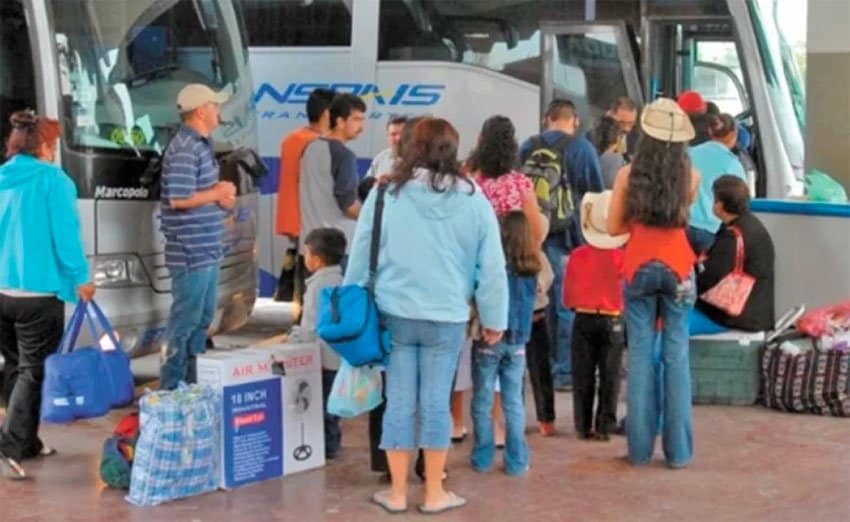
The principal inter-city bus lines in border states will support the federal government in its efforts to control illegal immigration by requiring that passengers present identification for long-distance travel.
In his morning press conference on Tuesday, President López Obrador announced that bus companies will be required to ask passengers for identification.
“We’re asking for cooperation and understanding from drivers, and from passengers, because we’re going to need to ask for identification to buy tickets for long trips on public transportation,” he said. “It’s proven that, on buses, a significant percentage of the riders aren’t from the country, and don’t have any documents.”
The new rule is already being implemented in the state of Tamaulipas, and in the biggest cities in the state of Chiapas. However, bus stations are still not asking for identification in border municipalities in the Sierra Mariscal region of Chiapas, where users of inter-city transit are largely Guatemalan.
Bus stations will accept a variety of documents, including passports, voter identification cards and driver’s licenses. For legal migrants who have other forms of identification, bus companies can decide whether or not to allow them to board.
The new measure has sparked opposition from civil society organizations, charging that it will harm the millions of Mexicans who don’t have identification documents.
An open letter from the Institute for Women in Migration and signed by dozens of other civil society organizations said the measure violates Article 11 of the constitution, which guarantees the right to unrestricted travel in the country without the need for documentation.

“The announcement by [bus companies] Flecha Amarilla and ADO is more evidence that the Mexican state is restricting the rights of the citizens of Mexico, and giving private companies the power to enforce immigration laws,” the letter reads. “In addition, these measures exclude millions of people who live in Mexico who don’t have these documents, and who travel on the highways in different modes of transportation, which includes young people, agricultural day laborers, indigenous people, immigrants who do hold documents, returned or deported Mexicans or people whose voter cards have been stolen, or have expired.”
Source: El Financiero (sp)