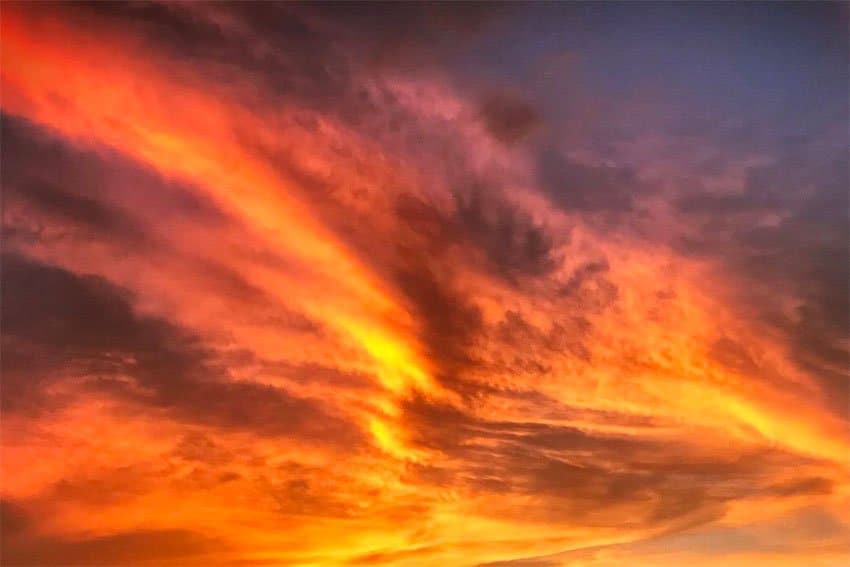
A massive dust cloud from the Sahara Desert in northern Africa is forecast to arrive in areas of the Yucatán peninsula and northern Mexico on Saturday and Sunday.
According to meteorologist Juan Antonio Palma, the distinctive yellow dust is picked up by storms that form in the far west of the world’s largest desert, where it is then carried by eastern trade winds across the desert, countries and the ocean.
Over 100 million tonnes of dust is blown from Africa to North and South America every year, affecting air quality across the continents. Some of the dust reaches as far as the Amazon basin, where it plays a key role in restoring minerals to depleted rainforest soils.
Research suggests that the dust may also play a role in the suppression of hurricanes and be harmful to coral reefs.
However, the meteorologist said the dust’s arrival was no cause for alarm and will likely provide for spectacular orange and red sunrises and sunsets across the Yucatán peninsula.
“It’s normal for the dust to reach the Yucatán peninsula, and in fact it arrives every year in varying intensity.”
He added that the dust does not present any public health risk, but that it might affect regular patterns of precipitation.

However, health professionals warn it can aggravate breathing problems, and trigger asthma.
Source: El Financiero (sp)