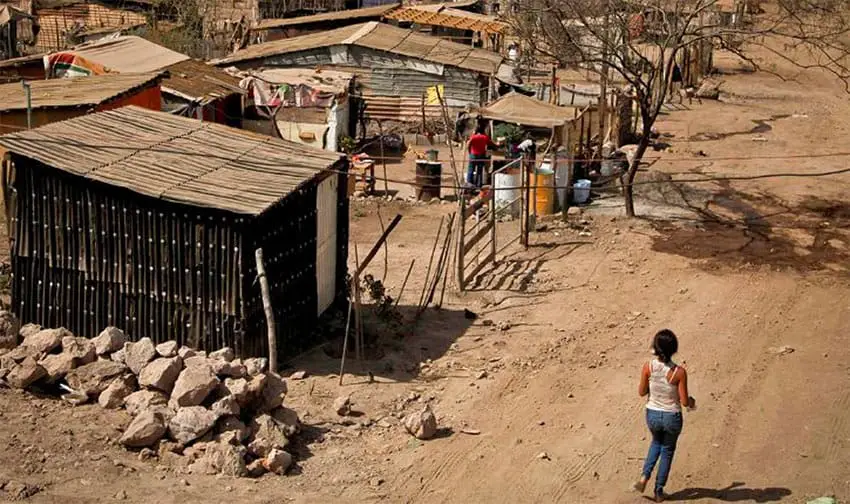
Efforts to combat extreme poverty made few gains between 2008 and 2018, new statistics show.
Data released today by Coneval, the social development agency, shows that 16.8% of the Mexican population last year was considered to be living below the extreme poverty line based on their income, the same figure as 10 years earlier.
That means that the number of people in that situation – one in which their income is insufficient to purchase the food required to have adequate nutrition – increased from 18.7 million to 21 million in the 10-year period.
According to the World Bank, Mexico’s population increased to 126.2 million from 110.8 million in the same period.
The number of people living in absolute extreme poverty declined from 12.3 million in 2008, 11% of the population, to 9.3 million or 7.4% of residents in 2018.
A person is considered to be living in absolute extreme poverty if they suffer from deficiencies in at least three of six areas – education, access to healthcare, access to social security services, access to adequate nutrition, adequate housing and access to basic services in their housing.
Meanwhile, the number of people living in poverty declined in percentage terms but rose in raw figures.

In 2008, 49.5 million people or 44.4% of the population were considered to be impoverished whereas 10 years later 52.4 million Mexicans or 41.9% of residents were in the same situation.
Chiapas, Guerrero and Oaxaca had the highest percentage of residents living in situations of poverty while Nuevo León and Coahuila had the least.
Coneval data also painted a dramatic picture of income inequality in Mexico.
Families in the highest income decile of the population had an average quarterly income of 166,750 pesos (US $8,500 at today’s exchange rate) in 2018 whereas those in the bottom 10% earned 9,113 pesos (US $460) on average in a three-month period.
The latter amount is just 5.5%, or 18 times less, than the income enjoyed by the richest 10% of Mexicans.
Source: El Financiero (sp), El Economista (sp)