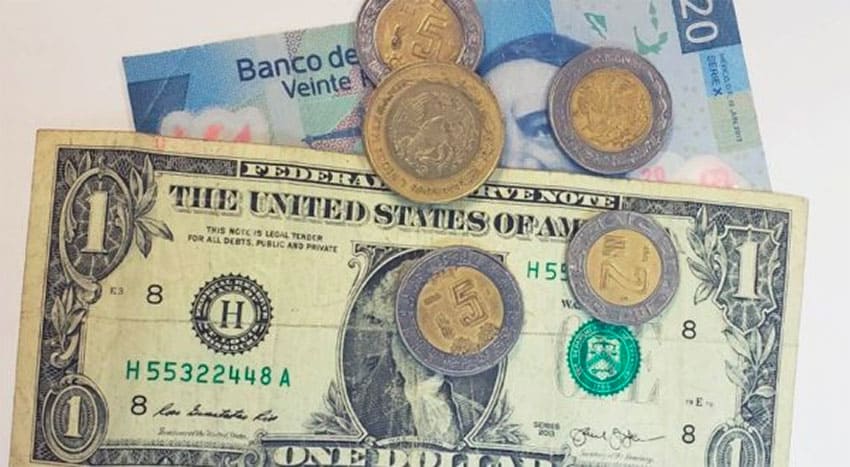
Robust trade with the United States in the second quarter enabled Mexico to record its highest ever current account surplus.
Bank of México data released on Friday shows that Mexico ran up a current account surplus of US $5.143 billion between April and June, the biggest since comparable records were first kept in 1980.
The surplus, equivalent to 1.6% of GDP, is the first second-quarter surplus achieved since 2010. In 2018, Mexico recorded a current account deficit of just under US $22 billion.
Mexico has become the biggest trading partner of the United States this year as a result of U.S. President Donald Trump’s protracted trade war with China.
Around 80% of Mexico’s exports, including cars, televisions and agricultural products, are sent to the country’s northern neighbor.
Goldman Sachs economist Alberto Ramos believes that Mexico is likely to continue to reap rewards from Trump’s feud with Beijing.
“Going forward, Mexico could potentially be one of the main beneficiaries of the trade-conflict between the U.S. and China, and global manufacturers could set base in Mexico given the competitive unit labor costs and logistical proximity [to the United States],” he said.

Central bank data showed that exports of goods were worth almost US $5 billion more than imports in the second quarter, the first such surplus in five years.
The remainder of the current account surplus was made up of services and financial flows, including interest payments and income transfers such as remittances.
Mexicans working abroad, mainly in the United States, sent US $9.403 billion home in the second quarter, a 20% increase over first-quarter figures.
While the surplus is good news, the central bank data still raised some questions about the health of the economy, which recorded 0.0% growth in the second quarter after contracting 0.3% between January and March.
Benito Berber, chief Latin America economist at investment bank Natixis, said the Bank of México figures showed that there was a sharp decline in non-oil imports, which highlights weakening domestic consumption and helps to explain the record current account surplus.
Ramos said that there was concern about slowing foreign direct investment and that Mexico’s portfolio flows, which measure the buying and selling of securities, had turned negative.
Source: Reuters (en)