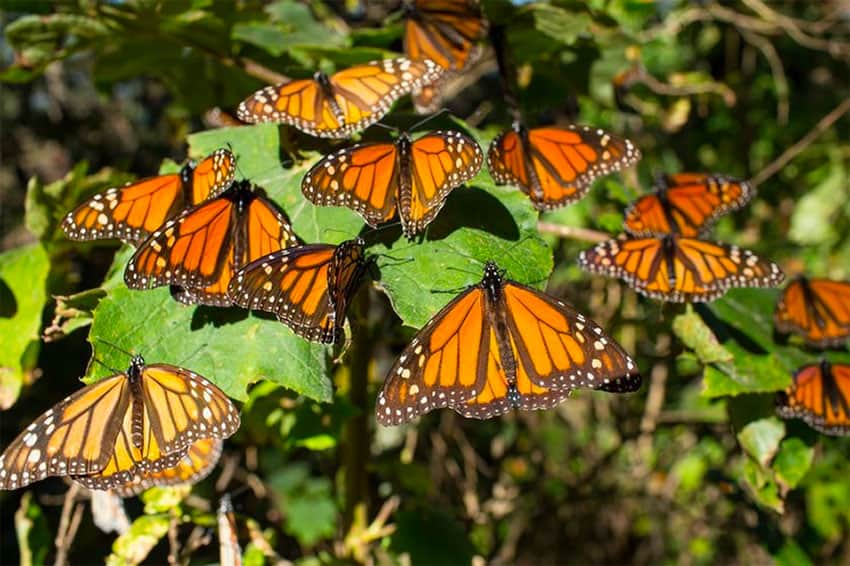
Monarch butterflies have begun arriving in the forests of Michoacán, where they will overwinter before returning to the United States and Canada in early spring.
Butterflies began arriving at five sanctuaries in the east of the state on Thursday afternoon, said Homero Gómez González, former head of the El Rosario ejido, where the Campanario sanctuary is located.
After a journey of more than 4,000 kilometers, more than 180 million monarchs are expected to arrive at Campanario, Michoacán’s largest sanctuary, and the Altamirano, El Chivati-Huacal, Sierra Chincua and Cerro Pelón sanctuaries.
Michoacán sanctuaries won’t officially open to the public until November 16 but Gómez said that people who wish to observe the arrival of the monarchs will be admitted to Campanario starting next week.
State Tourism Secretary Claudia Chávez said that access to the sanctuaries will cost 50 pesos for adults and 40 pesos for children and that visiting hours will be between 9:00am and 5:00pm.
Thousands of Mexican and foreign tourists travel to Michoacán and México state every year to observe the monarchs, which spend about five months clustered in Oyamel fir trees.
Because the first arrivals of monarch butterflies often coincide with Day of the Dead celebrations, the Mazahua and Otomí people of eastern Michoacán have traditionally believed that the orange and black insects are the souls of deceased children.

Pesticides, climate change, habitat loss and disease have all contributed to a decline in monarch butterfly populations but the number of the insects that spent the 2018-19 winter in Mexican forests was the highest in 12 years.
Source: La Jornada (sp), Milenio (sp)