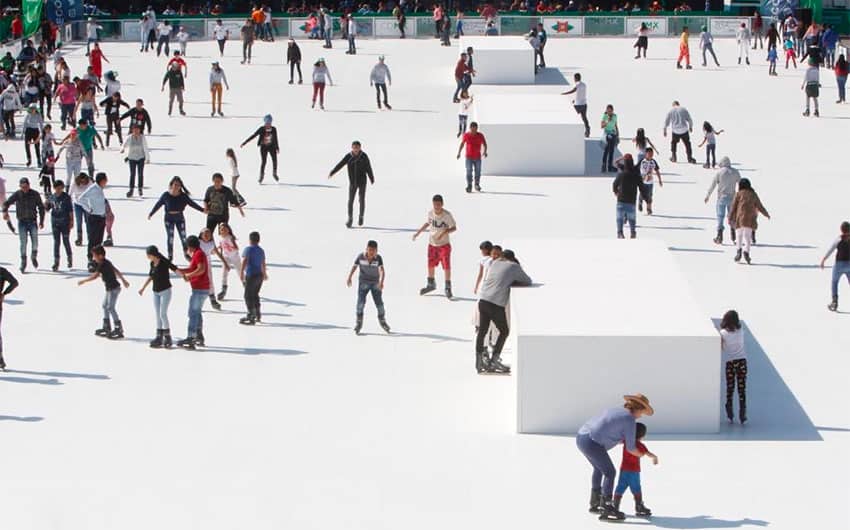
Mexico City’s annual holiday season tradition of ice skating in the zócalo has a new twist this year: the rink has no ice.
The ice-free skating rink was inaugurated on Saturday by Mayor Claudia Sheinbaum, who extolled the ecological benefits of a plastic skating surface.
“We are inaugurating a new skating rink, we call it Ecologísssima [super ecological],” she said. “Its grand quality is that you can skate on it just like ice, but it saves 800 tonnes of carbon dioxide and 307 liters of gasoline.”
Sheinbaum cut the inaugural ribbon with a representative of the Swiss company Glice, which installed the rink, before national figure skating champion Donovan Carrillo Suazo gave the “ice” a try to music by children of the Monumental Choir of Mexico.
The show also included performances by other Mexican figure skaters while the choir sang Mexican standards like Cielito Lindo and Feliz Navidad.
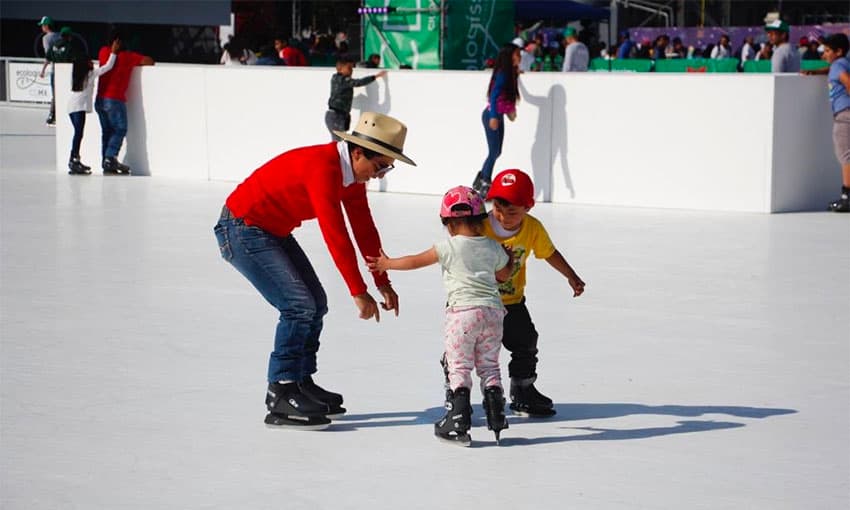
After the performance, young people from the Institute of Youth gave the rink a try. They said it was more difficult to skate on than real ice, but it also helped prevent them from falling.
The ice-free rink will be open daily from 9:00am to 9:00pm until January 6. To reserve ice skates and time on the rink, go to the Ecologísssima website (in Spanish) or stop by one of the registration booths in the zócalo.

Source: El Universal (sp)