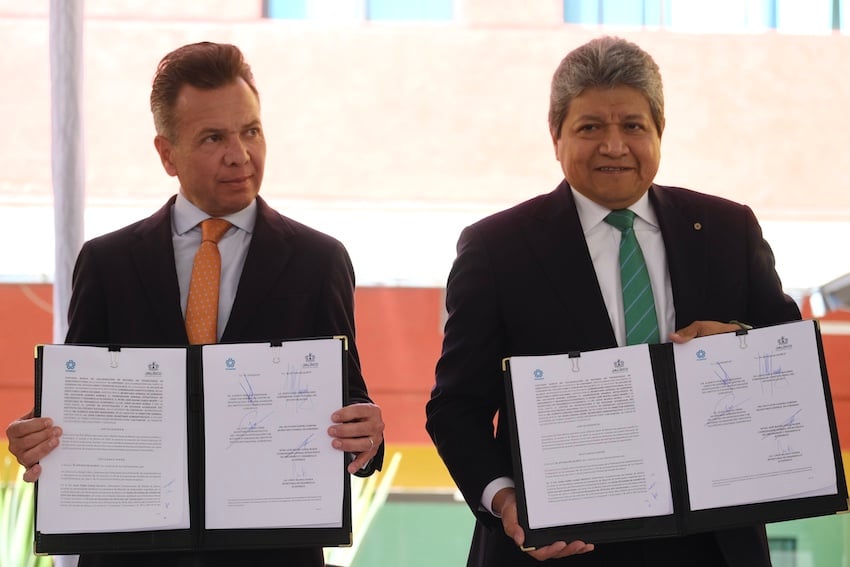
Jalisco plans to develop the first state-owned semiconductor design park in Latin America to expand Mexico’s semiconductor production capacity, Governor Pablo Lemus Navarro announced on Thursday.
The project is in line with the national Kutsari project, a government initiative aiming to coordinate the efforts of the public and private sector, along with academia, to strengthen Mexican semiconductor design and production.
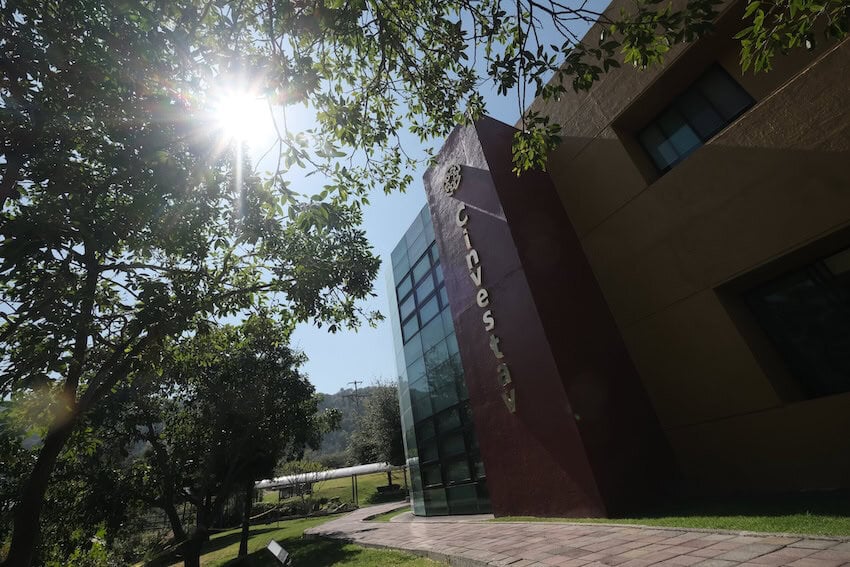
“Jalisco is home to 70% of the national semiconductor industry, which is why today we celebrate partnering with Cinvestav [the Center for Research and Advanced Studies of the National Polytechnic Institute], one of the country’s most renowned scientific institutions, to establish the Jalisco State Semiconductor Park, which will also host the federal Kutsari project,” the state government wrote on Instagram on Thursday.
The state government and Cinvestav signed an agreement to develop the park in Mexico’s Bajío region over two phases.
The first phase includes an 18-million-peso (US $979,000) investment to adapt the second floor at the existing Cinvestav facilities in Zapopan, Jalisco, by March 2026.
The second phase is the 50-million-peso (US $2.7 million) development of a permanent 4,600-square-meter design park within the same complex.
“The national Cinvestav will be in charge of running the Kutsari project… through the Cinvestav Guadalajara campus,” Jalisco state Economic Development Minister Cindy Blanco Ochoa said. “What we, as the State Semiconductor Design Park… are going to do is to boost the industry because this curriculum and these courses are created by industry, taught by academia and facilitated by the government.”

In February, President Claudia Sheinbaum presented the new semiconductor initiative that plans to make Mexico’s industry a key player in the global chips industry.
Sheinbaum’s plan to make Mexico a semiconductor superpower: Thursday’s mañanera recapped
Mexico currently imports more than US $20 billion worth of integrated circuits annually, and the national Kutsari project aims to reduce the dependency on semiconductor imports while strengthening Mexico’s participation in the global chips supply chain.
By 2030, the Jalisco park is expected to support the specialization of 3,000 semiconductor design engineers, the creation of 10 Jalisco-based startups dedicated to semiconductor design, and to triple foreign direct investment.
Jalisco already plays a major role in the design stage for semiconductors and is home to around eight companies dedicated to semiconductor manufacturing.
The government hopes the park will strengthen Mexico’s reputation as a global semiconductor power through the focus on four strategic pillars: creating specialized talent, fostering new businesses, attracting more private investment and developing a specialized curriculum in design.
With reports from El Economista and El Informador