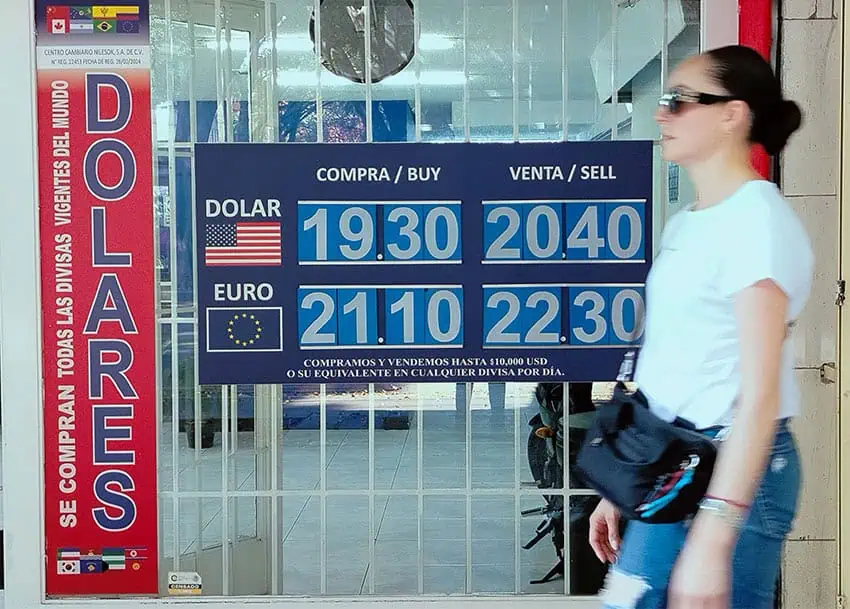
The Mexican peso continued a volatile week, falling sharply at the beginning of trading on Friday after U.S. employment data showed job losses in January that were much bigger than expected.
This week’s unpredictability highlights ongoing fluctuations as the market responds to economic factors impacting the currency’s valuation.
Among the factors impacting Mexico’s currency were tariff threats from U.S. President Donald Trump that were resolved at the beginning of the week and an interest rate decision by Mexico’s central bank on Thursday.
Friday’s news that the U.S. unemployment rate fell to 4% in January from 4.1% the month prior, but that only 143,000 new jobs were created in January supported the U.S. Federal Reserve’s decision to hold stable on interest rates.
This buoyed the US dollar even though the number of new jobs created was less than the 170,000 expected by economists (and lower than the 307,000 seen in December). Still, the news settled nerves that had been rattled by the potential of a trade war.
As a result, the peso weakened to 20.61 to the US dollar from Thursday’s close of 20.46, a decline of 0.49%. It was unable to significantly recover before closing at 20.57 Friday evening.
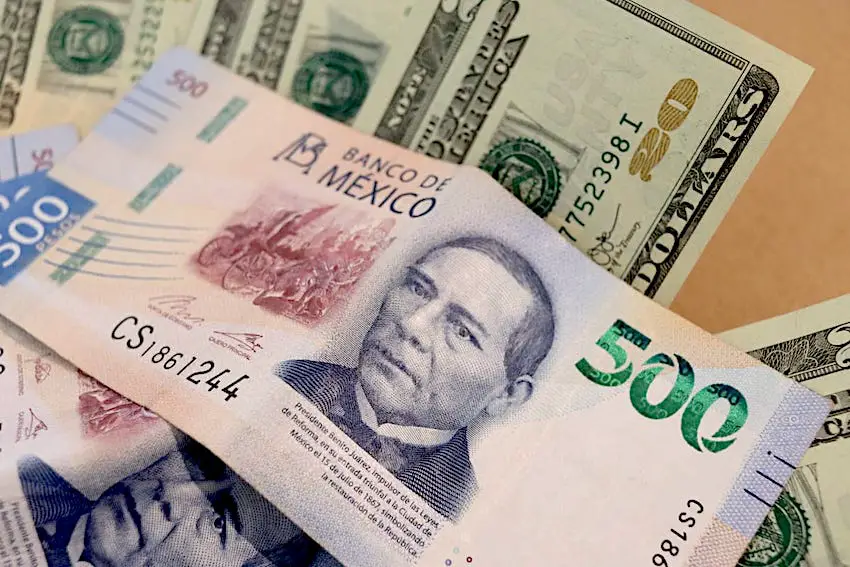
“Today, the peso is impacted by the strengthening of the dollar and Mexico’s inflation figures which confirm the downward trend of inflation which in turn could justify another reduction in Banxico’s interest rate,” wrote the Monex financial institution, according to the newspaper El Economista.

The peso entered Friday on a three-day losing streak, a drop that marked a cumulative loss of approximately 1.5%.
The slump occurred after an up-and-down Monday that saw the peso close up 1.5% after Mexican President Claudia Sheinbaum struck a deal to avoid tariffs on exports to the United States. Mexico’s currency had weakened by 3% against the dollar heading into Monday’s trading day before climbing on the news of the agreement.
The peso fell for a second straight day on Wednesday even as trade war fears began to fade. The anticipation of upbeat U.S. jobs data exerted pressure on the Mexican currency, which had failed to capitalize on broad US dollar weakness.
Mixed investment data and an anticipated rate cut by Banxico put further pressure on the peso.
The peso surged momentarily on Thursday following the rate cut but could not make up for earlier losses.
Higher interest rates are generally positive for the Mexican peso as they lead to higher yields, making the country a more attractive place for investors. On the contrary, lower interest rates tend to weaken the peso.
With reports from El Economista and El Financiero