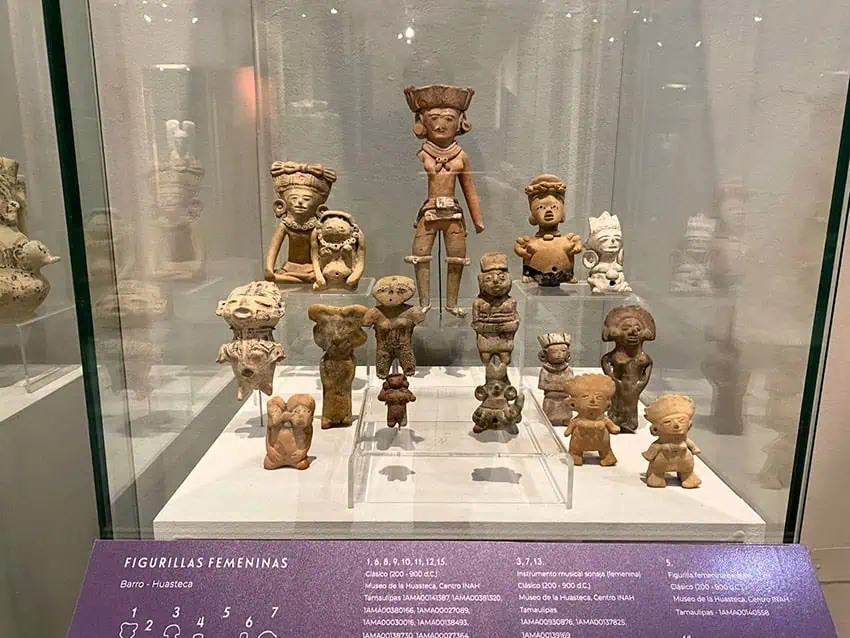
In pre-Columbian times, Huastec women living along the Gulf Coast were influential members of their society, holding significant roles in politics and other realms of public life. Now, a new exhibition coming to Torreón, Coahuila, is showcasing that power thanks to a collaboration with Chicago’s National Museum of Mexican Art.
Dubbed “Mesoamerican Huastec Women: Goddesses, Warriors, and Governors,” the exhibition examines 132 archeological objects through iconographic and symbolic analysis, showing women’s positions and influence within the social structure of their time.

This exhibition is the result of a bilateral collaboration between the National Institute of Anthropology and History (INAH) and the National Museum of Mexican Art in Chicago (MNAMC) in the United States, that stemmed from the discovery of two sculptures of “La Joven de Amajac” (The Young Woman of Amajac) in Veracruz. One of the statues was unearthed in a citrus grove in 2021 while the other one was discovered below a street in 2023, in Hidalgo Amajac.
The project aims to explore the role of women in Mexican society over time.
The exhibition, led by museographer David Morales Gómez and INAH researcher María Eugenia Maldonado Vite, seeks to make visible the political, military, religious, social and family role of women in the Huastec culture before the Spanish colonization.
The 132 pieces in exhibition were recovered from excavations along the Gulf of Mexico and in the states of Hidalgo, San Luis Potosí, Tamaulipas, and Veracruz. These findings showcase the remarkable skills of jewelers and potters, who skillfully captured, shaped, and embodied the role of women in the public and private spheres.
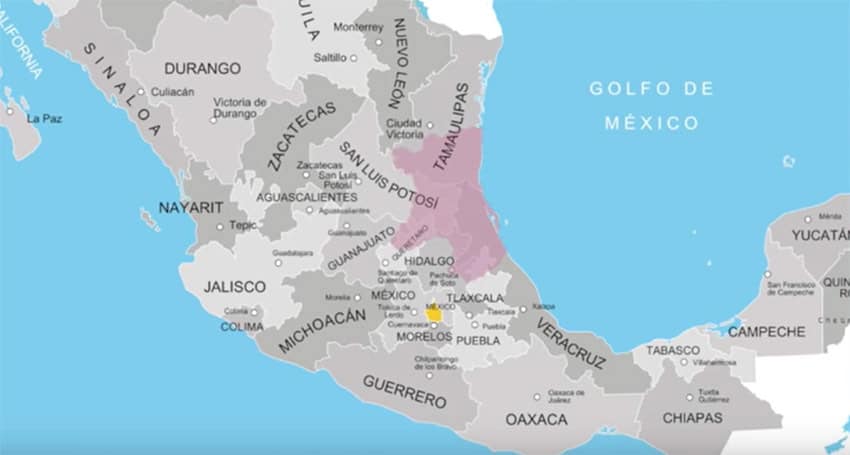
The Huastec (or Téenek) culture flourished in the modern-day states of Veracruz, Hidalgo, Puebla, Tamaulipas and San Luis Potosí. They were the only group whose language was of Mayan affiliation despite not belonging to this region, and were renowned asexcellent potters, a reputation confirmed by the numerous clay vessels they made.

Before opening in Torreón, the exposition was shown in Chicago from April 26 to July 21 last year. It drew 22,661 visitors who learned about female roles and representations through pieces such as jewelry, pectorals, clay figurines, vases and large-format sculptures dating from the Preclassic to the Postclassic periods (1500 B.C.- A.D. 1521).
While in Chicago, the exhibition made headlines for the display of a rare relic of a female ballplayer — the first life-size representation of a ritual ballplayer found to date in the Huasteca region. It is also the first representation of a female ballplayer and the first at this scale holding a decapitated head.
The statue is expected to be part of the Coahuila exhibition, which will open Feb. 2 at the Regional Museum of La Laguna in Torreón.
The exhibition will open on Feb. 2 at the Regional Museum of La Laguna in Torreón.
With reports from Milenio and The New York Times