INAH provides updates on new Tulum and Calakmul museum sites

Construction of two museum sites in Tulum and at the Calakmul archaeological zone in Campeche — part of the Maya Train project — are moving forward, said National Institute of Anthropology and History (INAH) head Diego Prieto Hernández.  

During President López Obrador’s Monday morning press conference, Prieto provided an update on the new sites.
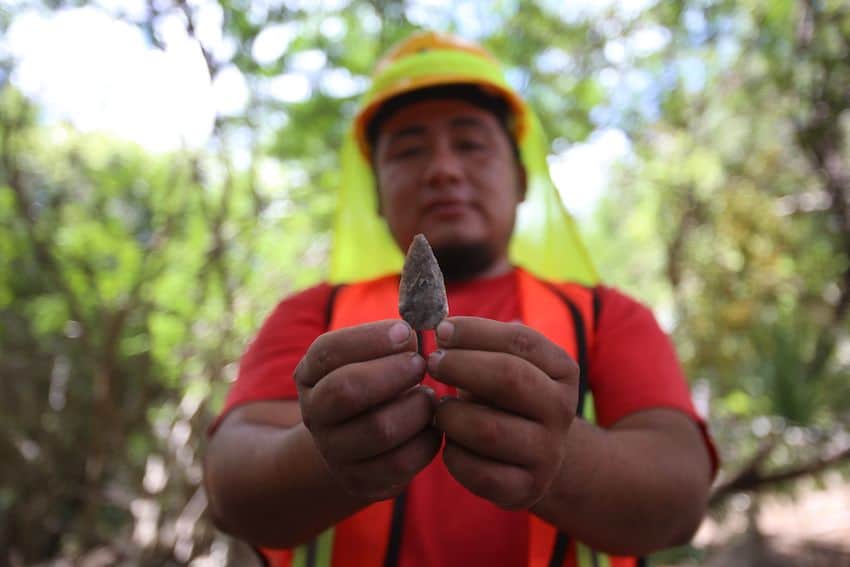
Mexican archaeologist holding newly discovered Mayan artifact
Construction work on the Maya Train project has led to a wealth of new archeological discoveries, which the government will showcase in two new museums. (Martín Zetina/Cuartoscuro)

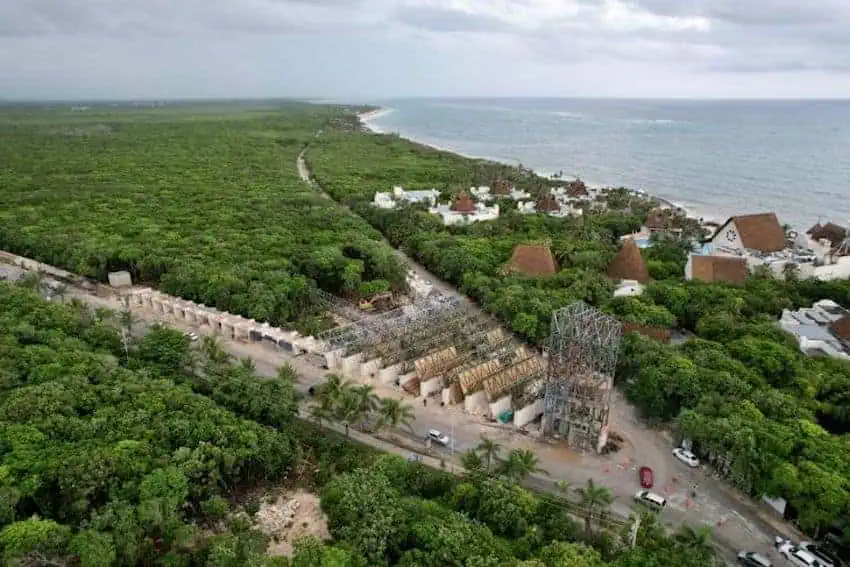
The Tulum museum will be located in the under-construction nature reserve, Jaguar National Park. According to Prieto, the Tulum museum’s sample script — a visual guide to navigating from room to room in a museum — is 90% complete.

Meanwhile, “the Calakmul [museum] will display many of the archeological objects that have been discovered thanks to the participation of hundreds of specialists,” Prieto said. 

An onsite museum will be built at the Calakmul archaeological site, INAH announced. The current museum is located nearby but offsite. Prieto said that research work in this area was 22% complete, with infrastructure and signage at 20% and 10% completion respectively. 

Prieto also provided updates on the 12 archaeological zones along Sections 5,6 and 7 of the Maya Train route that are benefitting from the Program for the Improvement of Archaeological Zones (Promeza), a government initiative to restore sites along the train route in preparation for increased tourism.

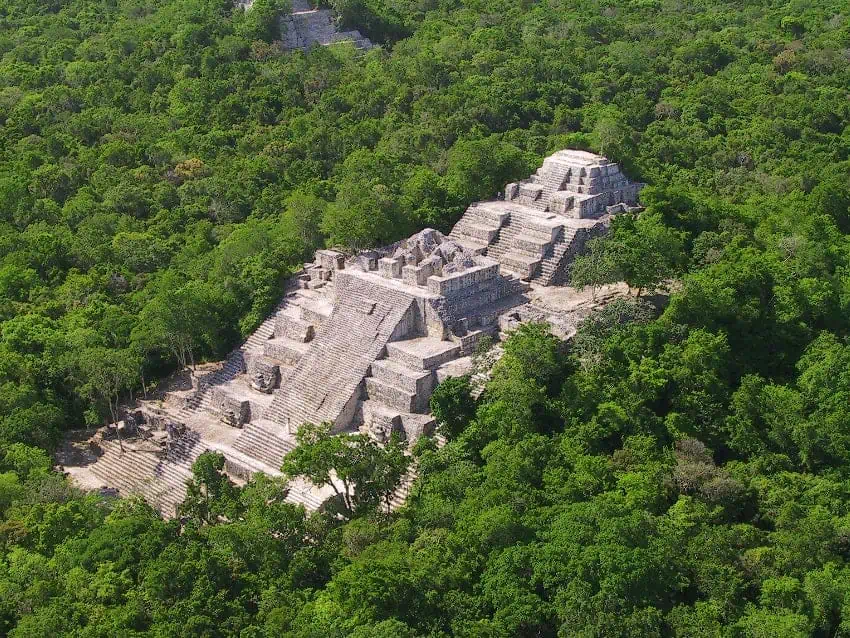
 

Calakmul
The ancient city of Calakmul, Campeche is a World Heritage Site. (INAH)

To date, archaeologists working with Promeza have uncovered thousands of artifacts in these three sections, Prieto said. These include more than 35,000 ruins and/or structures; over 500 artifacts, 200,00 pottery shards; 106 gravesites and more than 1,600 associated natural features.

“Without a doubt, the largest number of vestiges in terms of ruins, dwellings, roads, platforms, housing units, palaces and other types of building have been found in these areas,” Prieto said.

“Recovering its materials will give us a new vision of the future of the Maya civilization in our territory.”

With reports from La Jornada Maya

 

Have something to say? Paid Subscribers get all access to make & read comments.
Manzanillo, Colima, México, 13 de marzo de 2026. La doctora Claudia Sheinbaum Pardo, presidenta Constitucional de los Estados Unidos Mexicanos en conferencia de prensa matutina, “Conferencia del Pueblo” desde Colima. La acompañan Indira Vizcaíno Silva, gobernadora Constitucional del Estado de Colima; Omar García Harfuch, secretario de Seguridad y Protección Ciudadana (SSPC); Raymundo Pedro Morales Ángeles, secretario de Marina (Semar); Bulmaro Juárez Pérez, divulgador de lenguas originarias, presentador de la sección “Suave Patria”; Ricardo Trevilla Trejo, secretario de la Defensa Nacional (Sedena); Jesús Antonio Esteva Medina, secretario de Infraestructura, Comunicaciones y Transportes; Bryant Alejandro García Ramírez, fiscal general del Estado de Colima; Fabián Ricardo Gómez Calcáneo; Rocío Bárcena Molina, subsecretaria de Desarrollo Democrático, Participación Social y Asuntos Religiosos de la Secretaría de Gobernación; Efraín Morales López, director general de la Comisión Nacional del Agua (Conagua); Marcela Figueroa Franco, secretaria ejecutiva del Sistema Nacional de Seguridad Pública (SESNSP) y Guillermo Briseño Lobera, comandante de la Guardia Nacional (GN). Foto: Saúl López / Presidencia

Mexico’s week in review: Congress deals Sheinbaum her first legislative defeat

0
The week of March 9 in Mexico was marked by standoffs between allies in Congress and adversaries at the airport. Here's what you missed.
A soldier displays seized handguns

The US and Mexico, growing together and growing apart: A perspective from our CEO

1
From a historic drop in homicides to opposite bets on electric vehicles, Mexico News Daily's CEO breaks down where the U.S. and Mexico are converging — and where they're not.
Silk sanctuary of Oaxaca

San Pedro Cajonos: The silk sanctuary of Oaxaca

0
The Silk Sanctuary of San Pedro Cajonos in Oaxaca turns out some of the world's most beautiful silk, courtesy of Indigenous Zapotec artisans and of course native silkworms.
BETA Version - Powered by Perplexity