As 58,000 university applicants sit a rerun of an entrance exam this month, it’s worth asking where exactly they are competing to enter. Their goal, the National Autonomous University of Mexico (UNAM), is an institution with 475 years of history, a campus built on a lava field, and a claim on Mexican public life that no other university comes close to.
Between Aug. 12 and 19, tens of thousands of Mexican teenagers are filing into convention centers in León, Oaxaca, Tijuana and Mexico City to take an entrance exam most of them had already passed. UNAM ran its undergraduate admissions test entirely online for the first time this year, with AI-supervised proctoring.
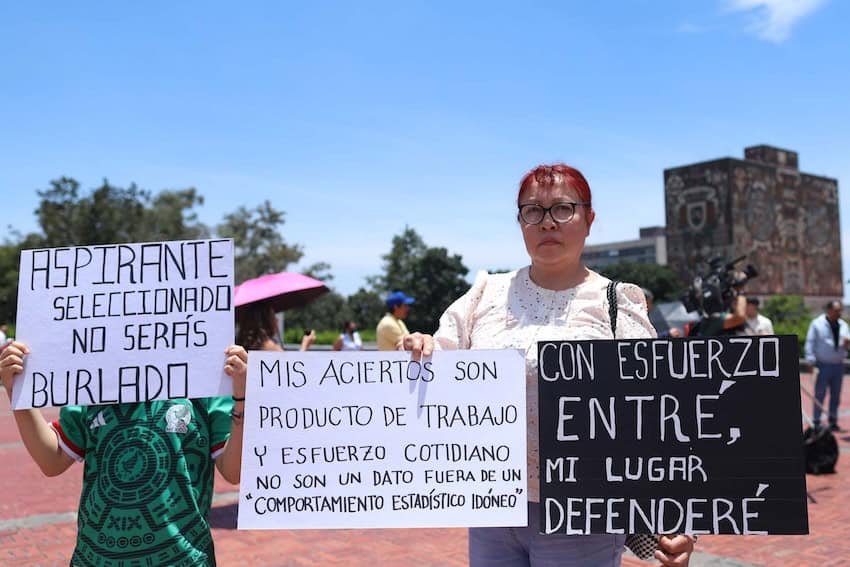
It did not hold. Some 2% of exams were annulled outright, score distributions looked nothing like the previous five years, enrollment was frozen across every degree program, and a technical commission recommended that a large slice of the applicant pool prove their results again, in person, with human invigilators watching.
That a single university can pause its own school year and hold the country’s attention for a month is itself the story. Here is why it can.
A university older than the country
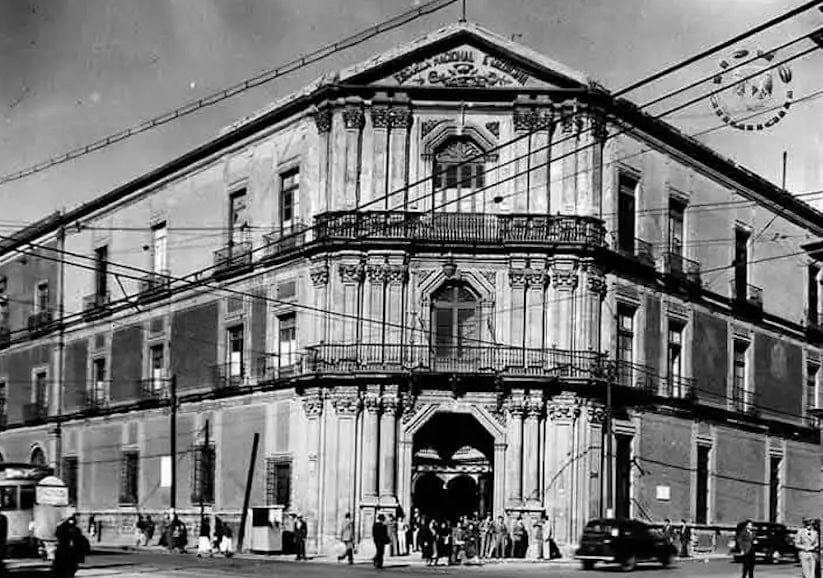
On Sept. 21, 1551, Charles V signed a decree creating the Royal and Pontifical University of Mexico. Classes began in January 1553 in a building near the Zócalo, with a faculty teaching theology, canon law, arts and medicine to the sons of the colonial elite. It was among the first universities in the Americas, founded the same year as San Marcos in Lima, and for nearly three centuries it produced the priests, jurists and administrators who ran New Spain.
Independence nearly finished it. To 19th-century liberals, a scholastic institution licensed by the Spanish Crown and blessed by the Pope was precisely the sort of thing a modern republic should dismantle.
So the university was closed, reopened, closed again — four or five times, depending on how you count — until it was shut for good in the 1860s and stayed shut for the better part of half a century. What survived in the gap were the professional schools that had spun off from it: jurisprudence, medicine, engineering, fine arts. In 1867, Gabino Barreda added the Escuela Nacional Preparatoria, which trained generations of Mexicans to think of science as a civic project.

The university came back on Sept. 22, 1910, as one of the last acts of the Porfiriato. Justo Sierra, education minister under then-President Porfirio Díaz, gathered the scattered schools into a National University of Mexico and added a School of Higher Studies for research and graduate work. In his inaugural address, he made a point of insisting the new institution was not the heir of the colonial one — that it had no pedigree, only a mandate to serve the nation. Six weeks later the Revolution began.
What followed is a long argument about independence. Students went on strike in 1929, and the government of Emilio Portes Gil granted the university autonomy: the right to name its own authorities, set its own curricula and manage its own budget without the president’s approval. That is when the “A” entered the acronym.
The 1945 Organic Law, still in force, locked the arrangement in place. Autonomy has been tested by nearly every administration since, and it has held — imperfectly, noisily, but it has held.
The shield and motto came from José Vasconcelos, rector in 1920–21, who put an Aztec eagle and an Andean condor over a map of Latin America and wrote beneath them “Por mi raza hablará el espíritu,” or “The spirit will speak for my race.”
The city on the lava
By the 1940s, the university was bursting out of roughly 40 buildings scattered across the historic center. The site chosen for a purpose-built campus was, by any conventional measure, absurd: the Pedregal de San Ángel, a black basalt wasteland in the south of the city laid down when the Xitle volcano erupted around 280 CE. The same lava had buried the pyramid at Cuicuilco, a few hundred meters away. Nothing had been built there in 17 centuries.
That was rather the point. Construction ran from 1950 to 1952 under Mario Pani and Enrique del Moral, with Carlos Lazo managing the works and more than 50 architects, engineers and artists involved — Luis Barragán and Pedro Ramírez Vázquez among them. Rather than clear the rock, they built around it, letting the lava run between the buildings and using volcanic stone in the walls.
Two hundred and thirty-seven hectares of the Pedregal survive inside the campus today as an ecological reserve, one of the last fragments of the ecosystem that once covered the southern valley.
The organizing idea was integración plástica: architecture, engineering, landscape and monumental art conceived as a single work rather than decorated after the fact.
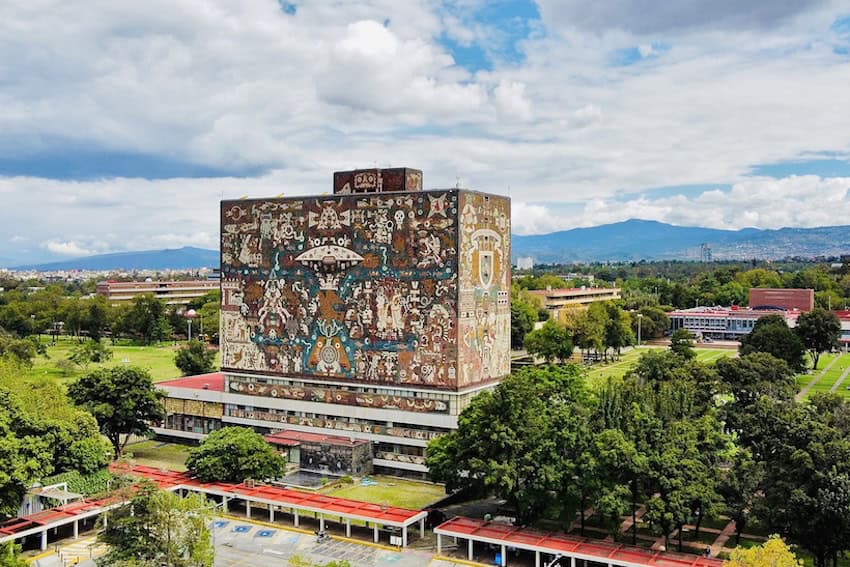
There are roughly 110 murals on campus. Juan O’Gorman covered all four windowless faces of the Central Library with a mosaic assembled from natural colored stone he collected from across the country — no pigment, just rock — depicting the pre-Hispanic past, the colonial period, the modern world and the university itself. Siqueiros worked the Rectoría tower in relief that changes as you walk past it. Diego Rivera left a high-relief mosaic on the Olympic Stadium, unfinished. Francisco Eppens did Medicine, José Chávez Morado the Alfonso Caso auditorium.
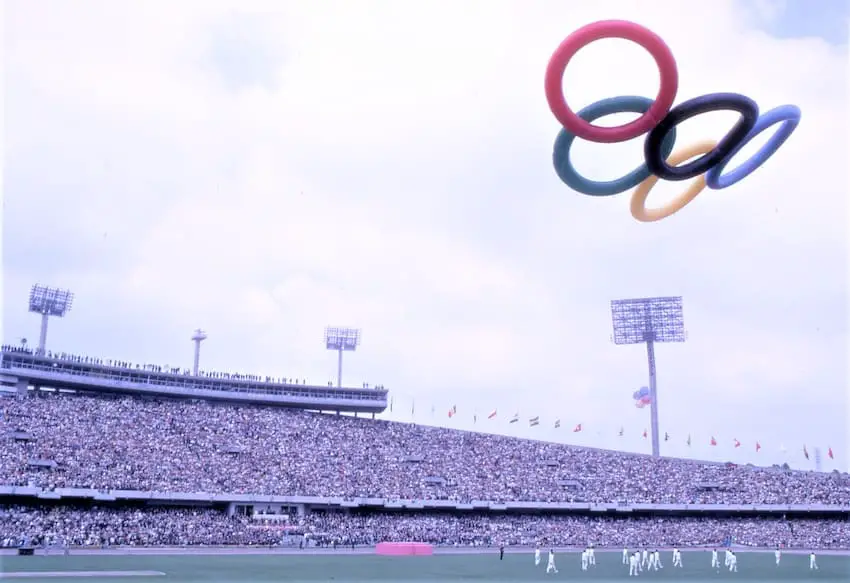
Ciudad Universitaria was dedicated in November 1952 and occupied in 1954. In 2007, UNESCO inscribed the central campus on the World Heritage list — 176.5 hectares of the 730 — calling it one of the defining symbols of modernity in Latin America. Its stadium hosted the opening ceremony of the 1968 Olympics.
What it has meant
Which brings us to the more interesting question: what a university this size actually does to a country.
In 1935, Mexico had almost no doctors outside its cities. Gustavo Baz Prada, then director of the School of Medicine, told his graduating students that instead of collecting their degrees they would spend six months in towns without physicians, on a government stipend of 90 pesos a month, working as doctor and sanitation officer at once.
The experiment became mandatory social service for every UNAM student within two years, was written into Article 5 of the Constitution in 1942, and remains a graduation requirement at every university in the country. It is arguably the most consequential policy the institution ever exported.
Then there is 1968. When riot police blew open the 18th-century door of the Escuela Nacional Preparatoria with a bazooka that July, Rector Javier Barros Sierra lowered the university flag to half-staff and, on Aug. 1, led a march down Insurgentes at the head of his own students.
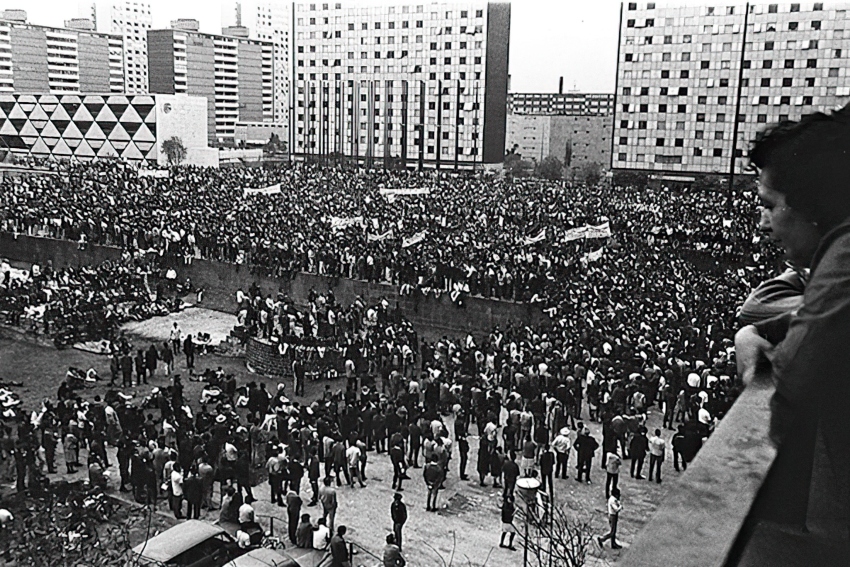
The army occupied Ciudad Universitaria on Sept. 18. Two weeks after that came Tlatelolco: on Oct. 2, 10 days before the Olympic flame arrived at the university’s own stadium, troops opened fire on a student rally in the Plaza de las Tres Culturas. The death toll has never been settled — official counts at the time ran to a few dozen, independent estimates into the hundreds.
In 1985, student brigades were among the first into the rubble after the earthquake; the seismological service that still warns the city when the ground moves is run out of the Institute of Geophysics. Between 1999 and 2000, a proposal to charge modest tuition triggered a strike that closed the campus for nearly 10 months, and ended with federal police walking onto it. Tuition remained free. No rector has proposed changing that since.
The alumni list runs to all three Mexican Nobel laureates. Alfonso García Robles (Peace, 1982) studied law in the old Escuela de Jurisprudencia and went on to negotiate the Treaty of Tlatelolco, which kept nuclear weapons out of Latin America. Octavio Paz (Literature, 1990) enrolled in law and letters and left without finishing. Mario Molina (Chemistry, 1995) took a chemical engineering degree before the work on CFCs that produced the Montreal Protocol.
President Claudia Sheinbaum did her physics degree at the Faculty of Sciences, as well as her doctorate in energy engineering. She was also a researcher at the Institute of Engineering — as were, in one faculty or another, most of her predecessors and a large share of the country’s judges, novelists, epidemiologists and cabinet ministers.
Today, some 380,000 students are enrolled, from junior high through doctoral programs, and tuition is effectively free. Which is why the exam matters.
This year UNAM will admit around 50,000 first-year undergraduates, more than half of them automatically from its own high schools. That leaves roughly 22,000 places for the 158,727 people who sat the test — an admission rate near 14%. Classes for the incoming class begin Aug. 31, two weeks late.
The institution will absorb this the way it has absorbed closure, occupation and strike. The applicants have rather less margin.
Maria Meléndez writes for Mexico News Daily in Mexico City.