Going back to the mid-1980s, there has been a devotional zeal in Mexico regarding the Nissan Tsuru — the Japanese sedan known for its economic affordability and robust durability. Outside of the Volkswagen Beetle, which has had an equally dominant grasp on Mexican consumers for decades, the Tsuru has long been an emblematic vehicle for Mexicans.
That’s especially amplified by the fact that the vehicle never made it to the U.S. or Canadian markets — at least not under the same iconic Tsuru title. Instead, Nissan rebranded it as the Sentra elsewhere. But in Mexico and Latin America, it forever remained the Tsuru.
The golden age of the Nissan Tsuru
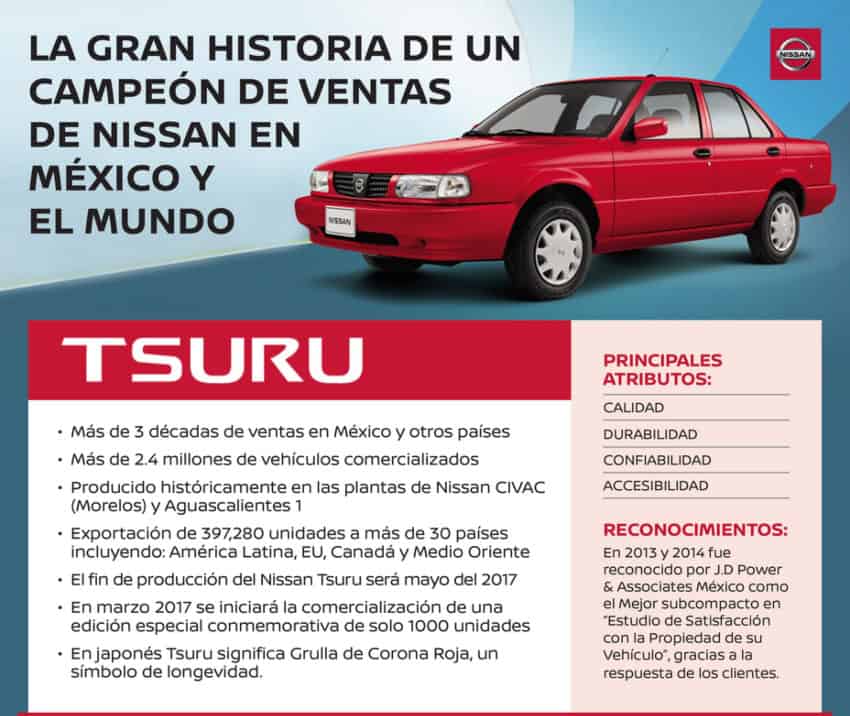
The result? Tsurus have abounded throughout Mexico, where it became a best-selling vehicle and was manufactured from 1984 to 2017, the year it ceased production. Ever since, the car has remained highly sought after. Part of the Tsuru’s appeal has always been in its humble, no frills quality — a bare-bones, low price machine seemingly made for the common person.
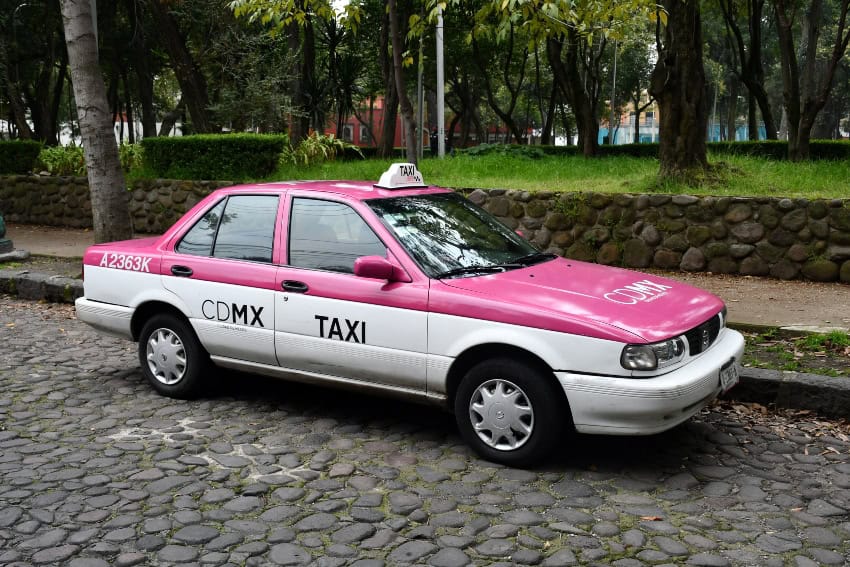
It’s not only Mexican families who bought the car by the droves, either. The little Nissan that could is equally beloved by the nation’s taxistas. For anyone who has ever visited Mexico, there’s a high likelihood that the first taxi you’ve flagged down is a Tsuru, no matter what part of the country you’ve been in. The sleek, 4-door ride is big enough to comfortably fit a sizable group, but compact enough to maneuver Mexico’s tightest corners and traffic-congested lanes, making it an ideal choice for a taxi driver in every sense.
The Tsuru returns as a Hot Wheels collectible
The Tsuru fervor has now reached a new level in Mexico with the introduction of the legendary CDMX taxi in the form of a Hot Wheels diecast, officially listed as a “‘91 Nissan Sentra SE-R.”
At the very end of 2025, the popular toy company announced the addition of a 1991 Mexico City-themed Nissan Tsuru taxi, available only in a limited supply of 3,500 and exclusively for sale in Mexico through Mercado Libre. The car features the pink colorway of CDMX’s taxis (a controversial design choice that was first implemented in Mexico City at the end of 2014 in an effort to standardize taxis and rebrand the city’s safety appeal to tourists) rather than its former green or yellow variations.
The Mexican internet went bonkers for it, posting videos and reactions to the Hot Wheel release, with rampant jokes about the high cost (originally listed at 5,000 Mexican pesos, but reselling for as much as 20,000) being worth an actual Tsuru.

The Tsuru Hot Wheels’ reception
There have been a few online criticisms: for one, the Hot Wheels Tsuru is a two-door coupe version rather than the more popular four-door sedan. Indeed, Nissan did make two-door variations of the Tsuru, but they are far less common, particularly for taxis, which are typically four-door for easy passenger access. Second, Hot Wheels has released the Tsuru in prior years, but not in taxi form — leaving some Mexican customers wondering if the color change is worth the egregious price differential.

Despite the jokes and pushback, the car’s viral appeal was boosted by Mexican influencers like Marvin Bara posting videos on Instagram of the anticipated Hot Wheels unboxing, showcasing the careful thought and design that went into it all, which includes a collector’s case and other memorabilia.
The high price of nostalgia
If you’re thinking of getting one, it’s possible, but it’ll cost you. The lowest price I’ve seen online is for 5,500 pesos (not too bad), but you’ll likely be paying upward of 7,000 to 20,000.
Though the Tsuru hasn’t been manufactured for nearly a decade, its return in miniature form was a fun surprise to end the year. No other car has held such an alluring charm over Mexican drivers during that time. The next time you’re on the road in Mexico, I challenge you to count how many Tsurus you see in one outing. Who knows, maybe you’ll want to get one yourself to keep the mythology going.
Alan Chazaro is the author of “This Is Not a Frank Ocean Cover Album,” “Piñata Theory” and “Notes From the Eastern Span of the Bay Bridge” (Ghost City Press, 2021). He is a graduate of June Jordan’s Poetry for the People program at UC Berkeley and a former Lawrence Ferlinghetti Fellow at the University of San Francisco. His writing can be found in GQ, NPR, The Guardian, L.A. Times and more. Originally from the San Francisco Bay Area, he is currently based in Veracruz.