Confluences is a book you can’t possibly put down, once you start paging through it. Whether you come across photos of prairie dogs or flamingos, blue whales or blue-footed boobies, you know immediately that Guadalajara native Alejandro Prieto loves all the members of the animal kingdom.
“My father would take us out into nature, and that’s where I fell in love with animals,” Prieto told Mexico News Daily. As a result, I studied veterinary medicine and zootechnology, but then along came a course in photography in the Colegio de Fotografía del Occidente. And I found my niche.”
Confluences is a hard-backed, large-format book of 208 pages published by Artes de México, 2024. It has 65 color photos, all taken by Alejandro Prieto, with seven chapters of text written by various naturalists.
Photographing jaguars in the wild
Prieto’s extraordinary skill at taking photos both on land and underwater brought him into projects that might have discouraged many another photographer.
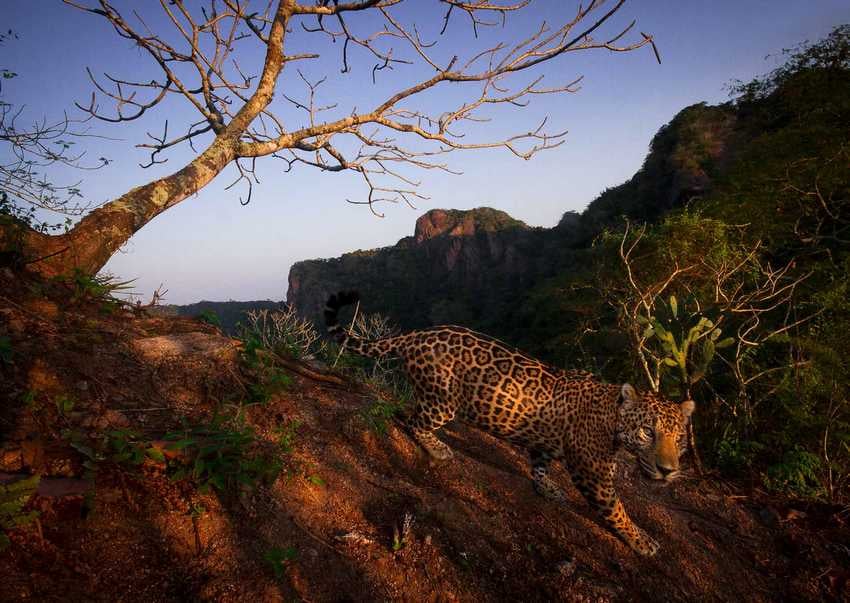
One of these is the work he carries out for Alianza Jaguar, an organization that needed quality photos of jaguars in their natural habitats, to promote their projects to protect and ensure them a future in Mexico. To get those pictures, endless hours of effort and patience were the order of the day. Later, when Prieto got involved with photographing certain elusive species of the Mexican axolotl, which live in the remote mountains of Michoacán, the problem was surviving ice-cold temperatures underwater.
The roadrunner and the border wall
One of Prieto’s more recent projects, photographing animals whose habitat has been cut in two by the border fence separating the USA from Mexico, brought a new sort of problem.
“It’s a dangerous place,” the photographer confided. “On one hand, you’ve got border patrols that will grab you and take you out of there, and on the other, you’ve got drug runners who will do something even worse if they catch you… and on top of that, you have to put up with both extreme heat and extreme cold.”

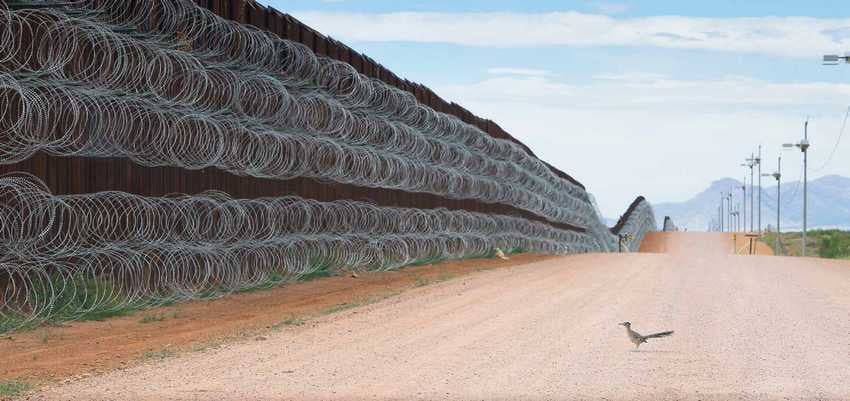
Nevertheless, from that hostile environment came Prieto’s unforgettable photo of a roadrunner eyeballing an insurmountable wall wrapped in great coils of razor wire: winner of the 2020 World Press Photo Award for Nature.
That’s just one of 53 International awards that Alejandro Prieto has received so far, an assurance that Confluences is just the sort of book you’ll want to leave lying on your coffee table accidentally.
Canyons, forests, deserts and swamps
Why is this book entitled Confluences?
University of Wisconsin Professor Eduardo Santana makes this clear in the first chapter. West Mexico, he says, “does not have a monolithic identity… What defines its essence is the confluence of dissimilarities.”
Santana is referring to the astounding variety of natural wonders lying in wait for anyone who wanders about West Mexico.
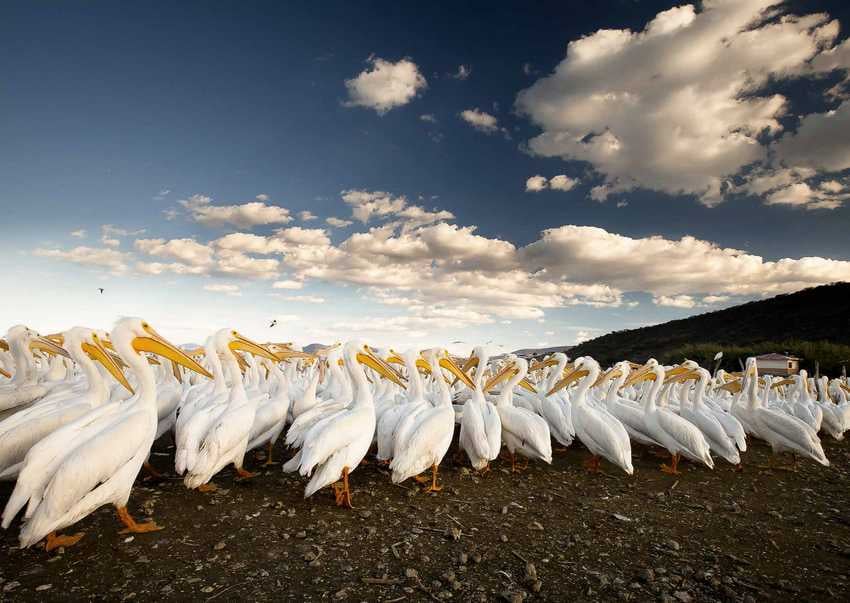
These include smoldering volcanoes, 500-meter-deep canyons, mangrove swamps, tropical jungles, grasslands, hot springs, oak and coniferous forests, desert scrub lands, and much more. Each environment has its own flora and fauna, not to mention the long-distance migrants: flying creatures of all sorts from hawks and pelicans to bats and butterflies. Put all these together in a relatively small space, and you have geodiversity and biodiversity in abundance.
And, of course, wherever two or more systems come together, you have confluences.
A jungle on a mountain top
Academic studies are not required to appreciate what happens in the many places where ecosystems merge. An excellent example was given to me by another Santana named Aldo, a member of the Cuzalapa people living in the heart of the picturesque Manantlán Biosphere Reserve, located along the state line dividing Jalisco from Colima:
“The Sierra de Manantlán is unique!” exclaims Aldo Santana. “In it, you will find things that are normally seen only in Chiapas, or you’ll find other things typical of Sonora. So, it is mega-diverse! It is as if you were seeing all the ecosystems together in one place. And if you are here during the rainy season, you will find everything green, a jungle. It’s a tropical jungle on a mountain top!”
Underwater in the Gulf of California
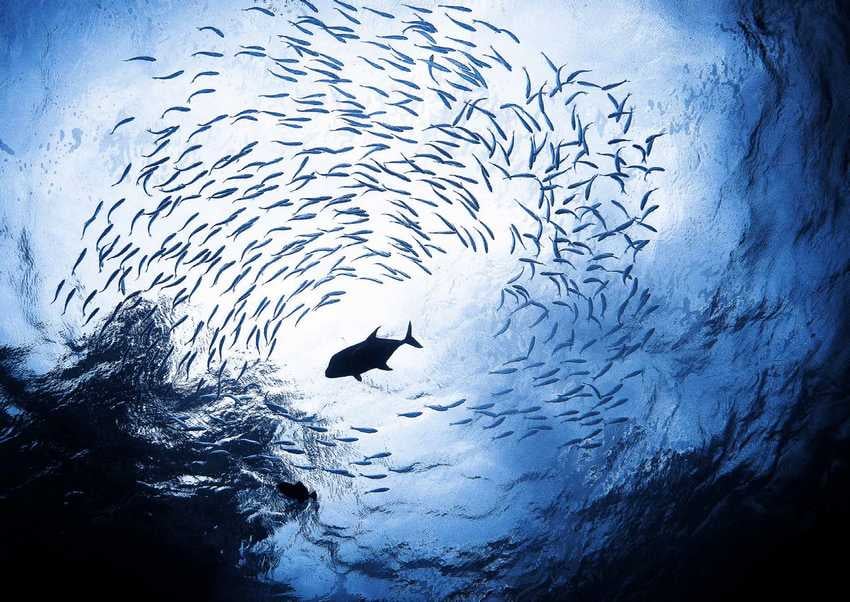
The photographs in Confluences take us on a tour of West Mexico’s extraordinary geo and biodiversity, whether on land, in the air or, underwater.
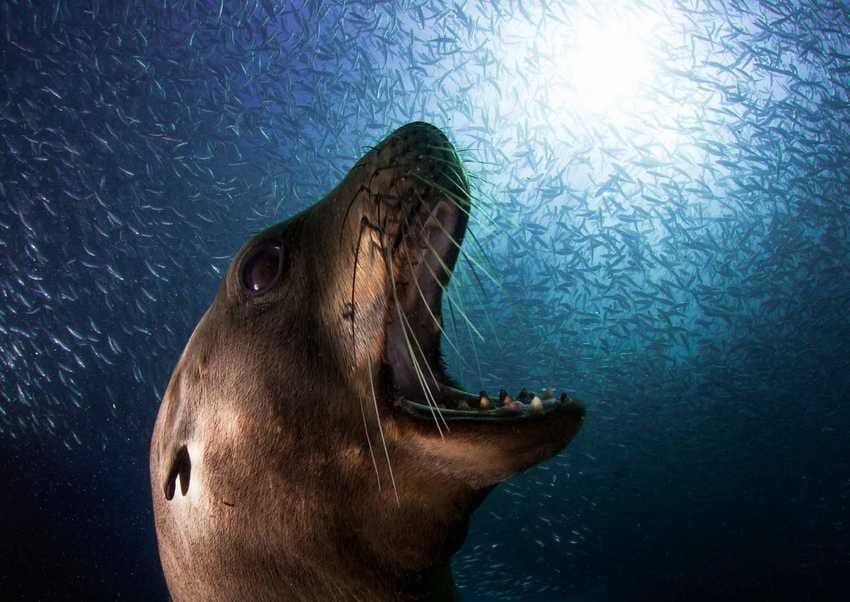
We are introduced to marine life in the Sea of Cortés, home to an enormous array of environments, from deep basins to some of the largest tidal zones in the world. Thanks to Prieto’s skills as a diver and underwater photographer, we are introduced to silky sharks, dolphins, sea lions, surgeon fish, needle fish… as well as the marine birds flying overhead.
Among the many delightful creatures we find photographed in this book, three fascinating species stand out: jaguars, axolotls, and “flying white sheep,” otherwise known as American pelicans to those of us with less imagination than the Mexicans living on the shores of Lake Chapala.
Friends of the jaguars
An entire chapter is dedicated to this emblematic feline. Award-winning journalist Agustín del Castillo dives into the story of why and how the Jaguar Alliance came into being, and what they are doing today to transform hostile ranchers into friends of the big cats. We also follow Alex Prieto in his quest to photograph these magnificent animals in their natural surroundings: no easy task!
Flying sheep and walking fish
Del Castillo devotes two additional chapters to axolotls and American pelicans.
Axolotls — incorrectly known as “Mexican walking fish” — are among the strangest creatures on the planet. These photogenic amphibians are famed for their ability to regenerate just about every part of their bodies, including their brains and hearts. Once abundant in Mexico, their numbers are now dwindling due to the ever-increasing pollution of the country’s lakes, ponds, and rivers.
The American pelicans, on the other hand, seem to be doing better than ever. These huge birds live in Canada and along the northern US border. Every year around September, they begin their 4000-kilometer migration to warmer climes, in particular to Lake Chapala.
By chance, there is a successful fish-filleting operation on the tiny island of Petatán, Michoacán, at the southeast end of the lake, and here the pelicans gather by the thousands to enjoy the scraps. Among the many visitors to Petatán — fascinated by the site and sound of ten thousand “flying white sheep” taking off and landing — was photographer Alejandro Prieto, and thanks to him, owners of Confluences can vicariously enjoy the show.
To get your own copy of this extraordinary book — whether in English or in Spanish, you are asked to donate to the Jaguar Alliance. For full information, send an email to alianzajaguar@gmail.com.
John Pint has lived near Guadalajara, Jalisco, for more than 30 years and is the author of “A Guide to West Mexico’s Guachimontones and Surrounding Area” and co-author of “Outdoors in Western Mexico.” More of his writing can be found on his website.