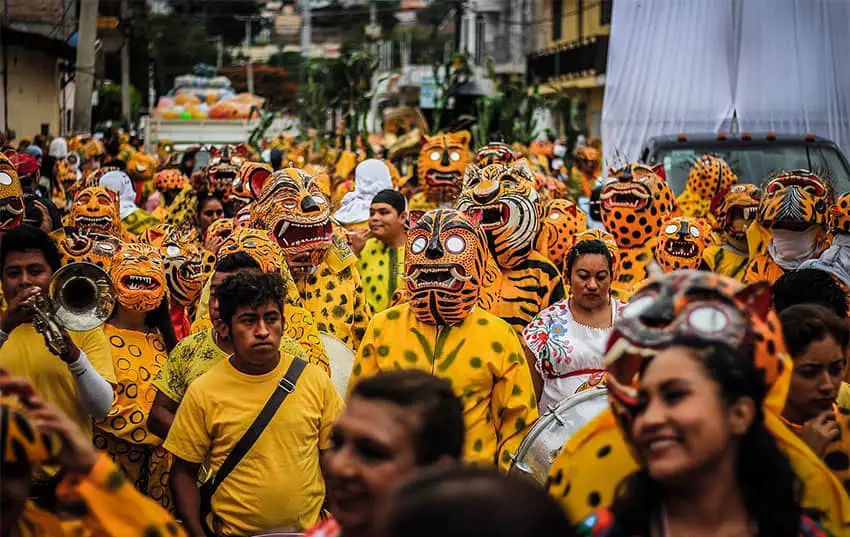
There are no tigers native to Mexico, but there are “tiger” rituals in the form of dance.
They go by various names including Tecuanes, Tlalcololeros, Tlaminques, Tigres, Cimarrón and Lobitos, but they have two things in common: the image of a fierce wildcat (most often called a tiger) and a purely pre-Hispanic origin.
The misnaming of the central character most likely comes from early colonial chronicling, which incorrectly called the native wildcats tigers.
Lacking formal research, knowledge of the history of tiger dances is spotty at best. It is known that the jaguar was revered in all of Mesoamerica, and one theory is that the dances have Olmec roots. Modern tiger dances are unknown in the territory of the former Olmec Empire — the Gulf of Mexico lowlands of what is now Veracruz and Tabasco — but appear in areas where the Olmecs had contact. If there is an Olmec origin, how it got transmitted is unknown.
Colonial documents indicate efforts to eliminate tiger rituals, but not only do they survive, they show minimal Catholic influence. There are no invocations to the saints or the virgin, and performances on patron saint days seems to be a more recent phenomenon.
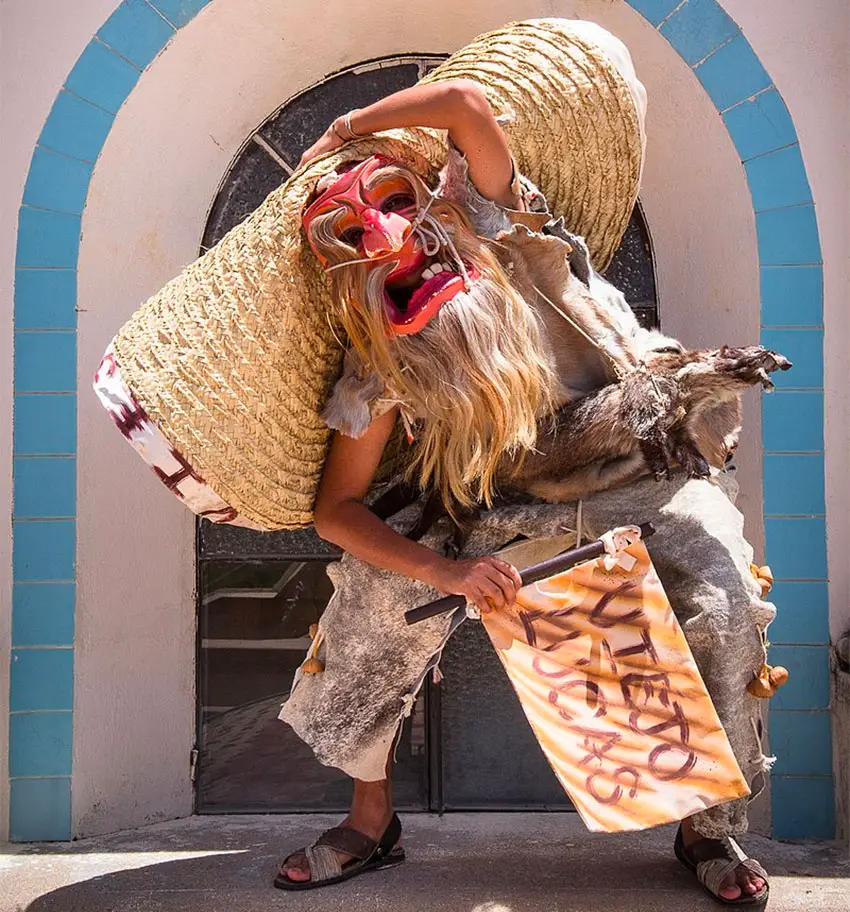
The dance is most commonly performed in the state of Guerrero, but it appears to have spread from there into Morelos, Puebla and the state of México. It migrated out of Guerrero about 100 years ago, but no one seems to know how this occurred. There are also tiger dances in Chiapas and Central America but it is unknown if they are related.
The tiger dance may be originally connected to the agricultural cycle. Rural Guerrero is rugged and isolated, allowing it to maintain much of life from before the Conquest. In subsistence agriculture, on which 80% of the population still depends, a good rainy season is essential to survival.

In almost all cases, participants wear masks and costumes. Masks are of lightweight wood or leather but in Morelos they are made of heavy papier-mache. The main character wears a feline mask and often a jumpsuit that mimics the cat’s hide.
The most common name related to the dance is Tecuanes, a Náhuatl word which historically meant any dangerous animal, not necessarily a wildcat. The dance appears in different forms among the various indigenous, mestizo and even Afro-Mexican communities that practice it, but it always revolves around a hunt for the dangerous animal, which is often eating the livestock of a rich landowner.
Other characters include one or more hunters, assistants, and many other animal species. It may be comical or serious, and the tiger is almost always killed.
The dance’s importance in Morelos is highlighted by the fact that the state worked to have Tecuanes dancer and teacher Florentino Sorela Severiano declared a Living Human Treasure by UNESCO. The dance is also an integral part of the identity of Acatlán de Osorio, Puebla. In both states there are important festivals related to the dance, bringing together dozens of dance groups and thousands of dancers.
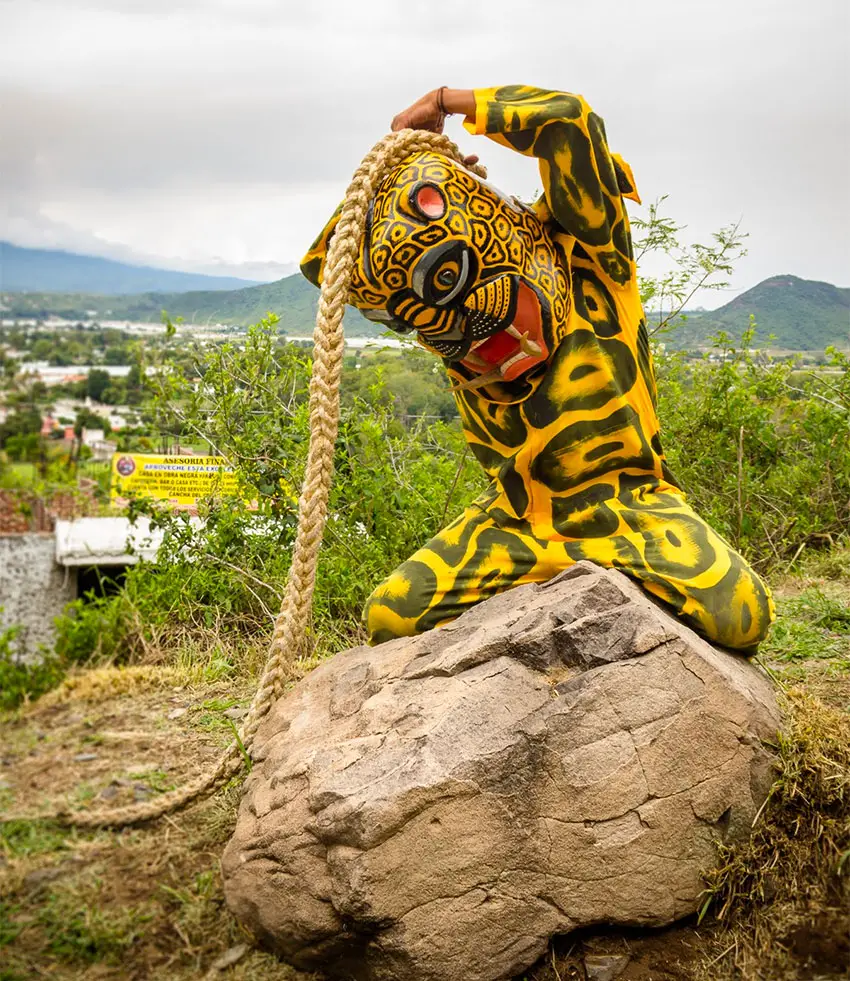
And the dance continues to spread as people migrate out of those states. It can now be found in various neighborhoods in Mexico City, and north of the border in California and New York. The dance continues to evolve as well, with changes to dance moves, costumes, and accessories.
Almost all of the other names are for regional variations. One, Tlacololeros, is a shorter version held exclusively in June and July to petition for rain in various parts of central Guerrero.
Perhaps the most interesting petition for rain is not a dance at all. The Tigrada is performed in Chilapa, San Luis Acatlán and Zitlala as a violent ritual with origins related to festivals in honor of the rain god Tláloc. It is performed somewhat differently in the three towns, but townspeople pour onto the streets at the beginning or middle of the rainy season basically to fight.
Most wear tiger costumes or masks, and the blood and/or sweat spilled is a kind of sacrifice. The harder people fight, the better the rainy season.
Leigh Thelmadatter arrived in Mexico 17 years ago and fell in love with the land and the culture. She publishes a blog called Creative Hands of Mexicoand her first book, Mexican Cartonería: Paper, Paste and Fiesta, was published last year. Her culture blog appears weekly on Mexico News Daily.