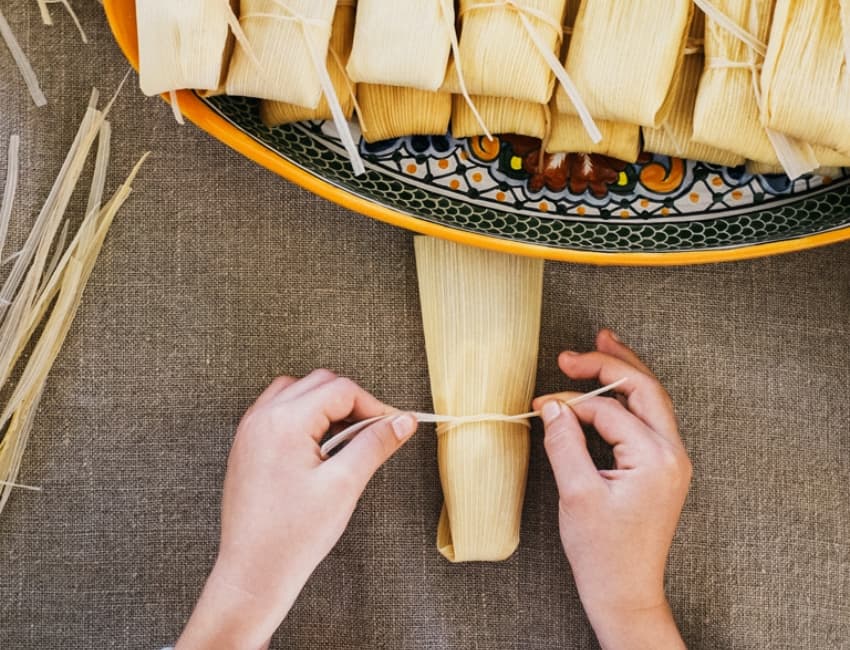
Surrounding the Día de Muertos celebrations in San Miguel de Allende, we were invited to cook some tamales for the first time and it was an amazing experience. They were actually easier to make than I thought!
We began by gathering the essential ingredients. First, we mixed lard (manteca) into the masa, the dough that forms the heart of the tamale. We kneaded the dough until it reached a velvety smoothness, a crucial step in achieving the perfect tamale texture. Then came the delightful additions: sugar (azúcar), raisins (pasas), nuts (nueces), cinnamon (canela), and a touch of milk (leche).
Ver esta publicación en Instagram
Tamales can be either salty or sweet, filled with chicken, cheese, pork, raisins, or nuts. For our maiden tamale-making venture, we chose the sweet route — nosotros decidimos hacer la versión dulce.
Once the dough had been perfected, we carefully spread it onto corn husks to finally wrap them up and put them in the steamer for about an hour and a half.

Tamales not only are a delicious treat, but they were also a nourishing food on the go for the Mexica, Inca, and Maya tribes to take into battle. Plus, they are incredibly affordable, making them a beloved choice for family gatherings, festive occasions, and everyday indulgences. They are very cheap and delicious! ¡Son súper baratos, y súper ricos!
For more Spanish lessons check out The Spanish you need to know at a Mexican fair.
Paulina Gerez is a translator-interpreter, content creator, and founder of Crack The Code, a series of online courses focused on languages. Through her social media, she helps people see learning a language from another perspective through her fun experiences. Instagram: paulinagerezm / Tiktok: paugerez3 / YT: paulina gerez