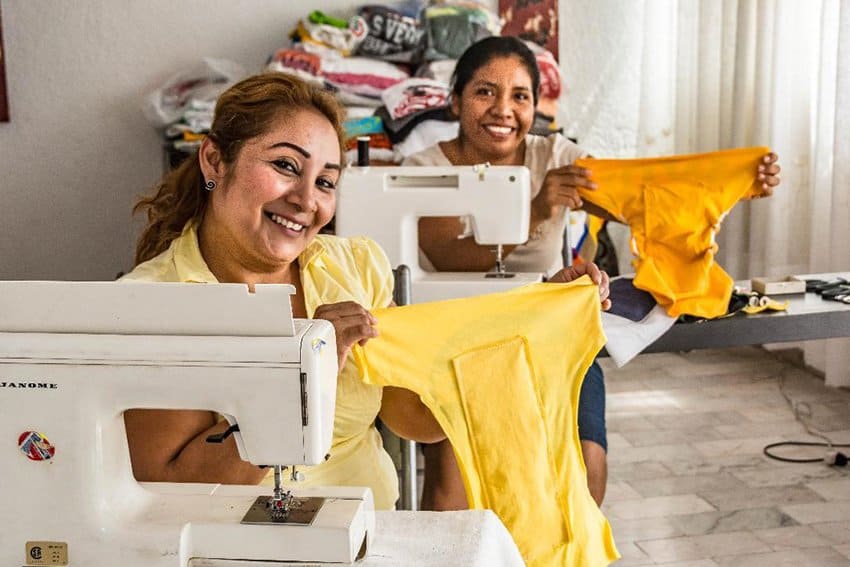
Cloth diapers are making a comeback in Zihuatanejo, Guerrero.
It all began with the birth of Eryn Rose, daughter of local teacher Rosario Leyva, who worked long, hard hours at a rural school outside Zihuatanejo for very little pay.
Making ends meet was a struggle and using disposable diapers meant the difference for buying formula and providing other necessities for her newborn.
Enter longtime friend and activist, American expat Maryellen Jackson, who purchased enough cloth diapers to get Eryn Rose through the next two years. With that came the idea that cloth diapers would be the answer for other poor, working mothers as well. (Today, those same diapers have been passed on to seven other families and were last heard of at the home of a distant cousin near Tecpan.)
The problem was finding someone who would take on the project to make and supply cloth diapers to expectant mothers in the area.
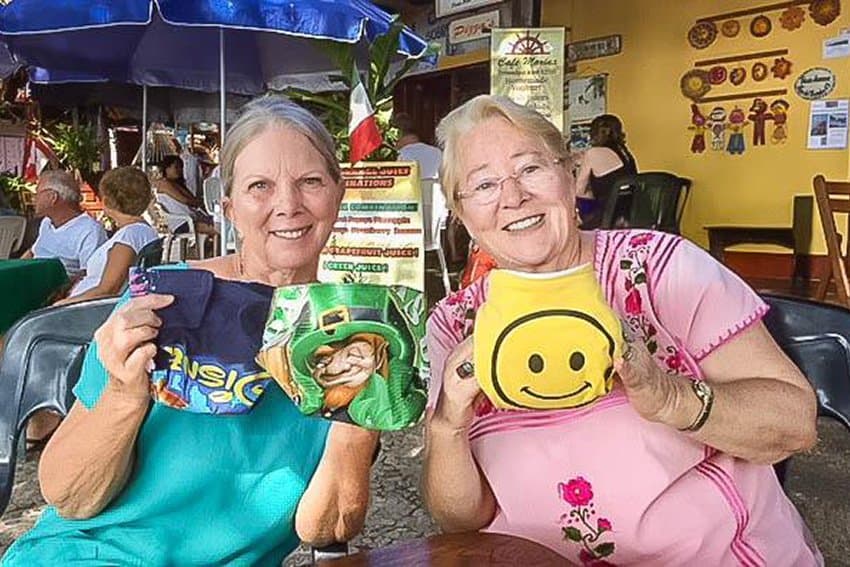
Jackson called on a friend, Canadian Margaret Reid, well known for her creative “Fascinators” that she sells each year at a local “Chick Party” to raise money for the charity best known as Sailfest.
Her designs have been so well received, with women vying each year for the latest creation, that Jackson felt she was the obvious choice to help get the diaper project off the ground.

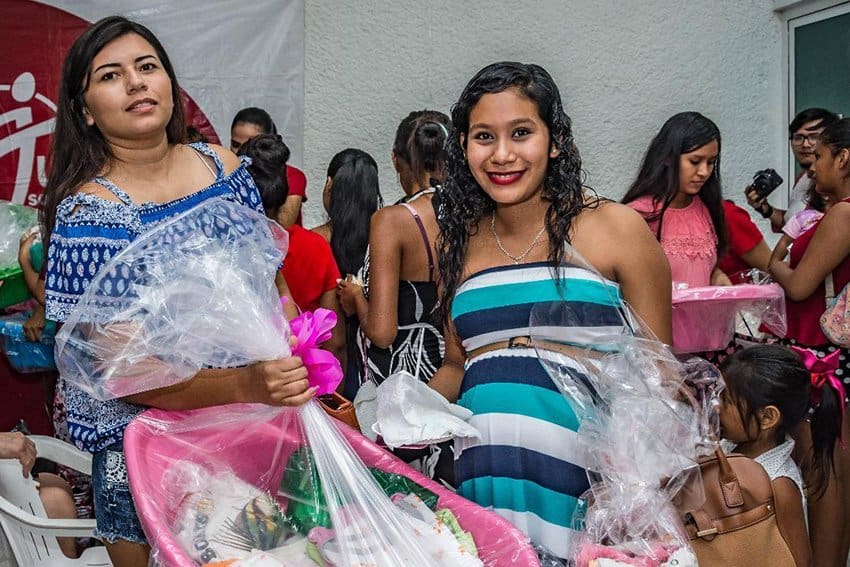
With the assistance of local organization Somas Zihua, under the direction of Lizette Tapia Sánchez, the women organized a baby shower for some of Zihuantanejo’s poorest mothers-to-be.
Several volunteers, mostly friends and relatives, were given the task of sewing the cloth diapers using donated t-shirts as the material. Each mother received a sample of three adorable creations, along with other useful items in a giant gift pack.
By incorporating the logos of the donated shirts, the diapers have caught the hearts and imaginations of women from Canada and the United States. Women in Mexico have been a little harder to convince because, surprisingly, using cloth diapers is not a part of the culture.
Those who do appreciate them, however, realize an opportunity to save money as well as the environment by keeping toxic plastic out of landfills.
At the same time there is the possibility of turning this into a micro-business as has been done in other parts of the world. Jackson and Reid are convinced that over time this will be a success in Mexico, too.
To be sure, the project has had its share of criticism, some valid, such as the lack of water in areas where some of these women live.
The most important challenges include encouraging women to use them and providing enough sewing machines to women who wish to participate as a business owner in the micro-industry.
One thing is certain: as long as there are babies in the world there is a need for diapers. Finding a way to capitalize on that will be the key.
How to participate:
• Donate t-shirts.
• Make the diapers and donate them using an easy to follow pattern.
• Donate a sewing machine or send money to purchase one.
Contact: Maryellen Jackson: zihgirl@yahoo.com
The writer is a Canadian who has lived and worked in Mexico for many years.