It’s not the coronavirus that is killing people in the mountains of Guerrero, it’s violent gun battles between community vigilantes, police and soldiers and the Cartel del Sur.
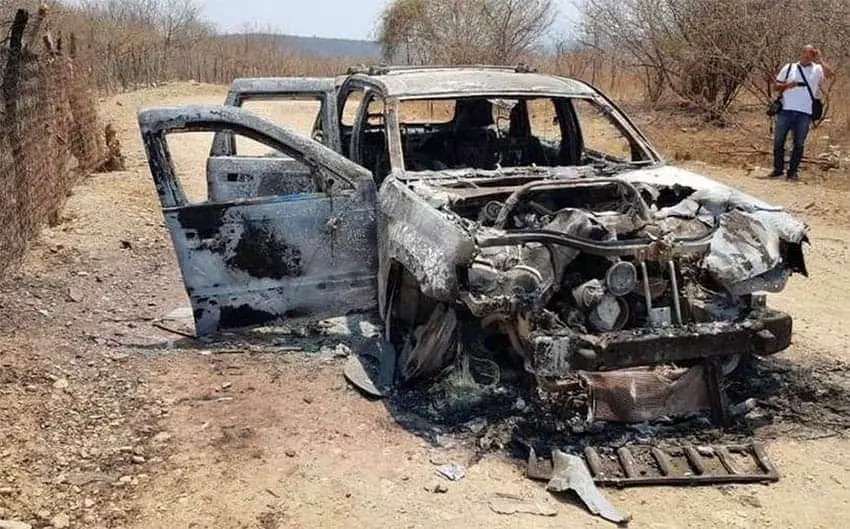
Clashes over the weekend in El Naranjo, an agricultural town where poppies grown for opium gum and heroin are a big crop, left burnt-out cars and 13 dead in another wave of extreme violence that has been plaguing the region for years.
Residents say the latest attack began Saturday morning with a gun battle that lasted for hours, punctuated from time to time by the sound of explosions.
On one side, the violent Cartel del Sur, on the other, a group called the United Front of Community Police of Guerrero State (FUPCEG), a grassroots citizens militia of 11,700 fighters who patrol 39 municipalities in Guerrero.
The Cartel del Sur’s hold on this region is particularly brutal. Led by Isaac Navarette Celis, the cartel is particularly known for producing and trafficking a potent form of heroin known as China White for which the region’s poppy crop is essential, and for virtually enslaving small towns in this region through extortion and violence.
FUPCEG, headed up by former electrical engineer Salvador Alanis, has taken on the cartel in El Naranjo before.
Last summer the vigilante group, armed with AK-47s, attempted to liberate the small town from the cartel’s grip.

“We fight to free communities that have been isolated by the criminals,” a FUPCEG leader known as “El Burro” told The Daily Beast as they prepared to engage in a gun battle with cartel forces in the town last July. “The people of this town have asked us for help, and so that’s what we’re going to do.”
But the unrest in the region continues, despite FUPCEG’s best efforts.
Last weekend, after a full day of violence, someone decided to call in the cavalry.
A 911 call on Sunday morning reporting the presence of armed civilians in the area prompted a flyover by a Ministry of Public Security helicopter which then called on ground forces, consisting of the National Guard, soldiers and state police to move in. A gun battle ensued, resulting in the deaths of four of the gunmen, presumably cartel members.
Authorities arrested two other men and seized an arsenal of military-grade weapons, ammunition, drugs and explosives. Later another four bodies were found, killed execution-style at least one day prior. It appears an attempt was made to burn them.
On Monday, authorities discovered the bodies of five more men covered in blankets at the bottom of a ravine, as well as hundreds of shell casings and five stolen and two burnt-out vehicles.
This brought the toll to 13 killed in this small town in just two days, while 14 people have been killed by the coronavirus in the entire state since the pandemic began.
Source: Milenio (sp), The Daily Beast (en)