More than 220 small towns and municipalities across 10 states in Mexico have shut their borders to outsiders due to fear of the spread of the coronavirus.
While trucks bringing supplies and some service providers are allowed past the often barricaded checkpoints, any other visitor is decidedly persona non grata.
In Baja California Sur, Oaxaca, Guerrero, Morelos, San Luis Potosí, Veracruz, México state, Sinaloa, Michoacán and Quintana Roo access to certain communities has been severely limited.
In Tlaxiaco, Oaxaca, residents who travel outside the community have to present a medical certificate that guarantees they are virus-free before they can return home.
One hundred communities in the state have locked down their borders, according to state ombudsman Bernardo Rodríguez Alamilla. Fifteen regional bus lines in Oaxaca have halted service as a result.
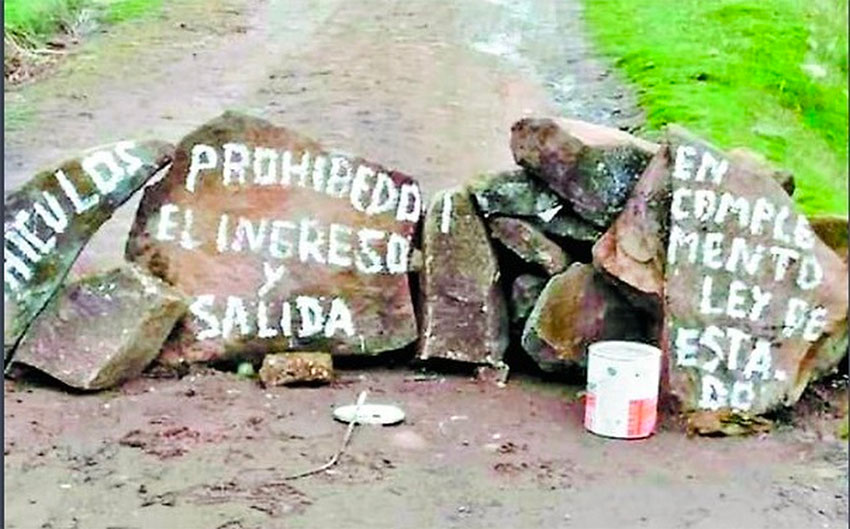
In addition to these restrictions, in at least 70 municipalities a curfew has been imposed to keep people off the streets after dark. In Zimatlán de Álvarez, Oaxaca, a woman who left her home to sell ice cream was jailed and fined by local police.
Some communities have banned entry for migrants returning to their home cities after working in the United States, and anyone who has visited Mexico City.

In Tecolutla, a resort town on the Gulf of Mexico in Veracruz, the local government issued a statement warning that “for security reasons and to ensure the health of all, people and tourists are informed that vehicles and foreigners may not enter this municipality as part of coronavirus preventative measures. We appreciate your understanding and support, please postpone your trip, we will be waiting for you another time.”
In Guerrero, 166 communities in 68 municipalities have closed access.
San Luis Potosí has six municipalities with security checkpoints to keep out non-residents.
Small towns in Baja California Sur are also not allowing visitors in, including San Juanico, San Javier, Miraflores, Cabo Pulmo and Mulegé.
Residents of Todos Santos took it upon themselves to close both northern and southern access roads into their town, blocking the roads with vehicles, piles of dirt and hazard tape. Food and other supplies are still welcome in this Pueblo Mágico, or Magical Town. Visitors are clearly not.
Source: El Milenio (sp)